

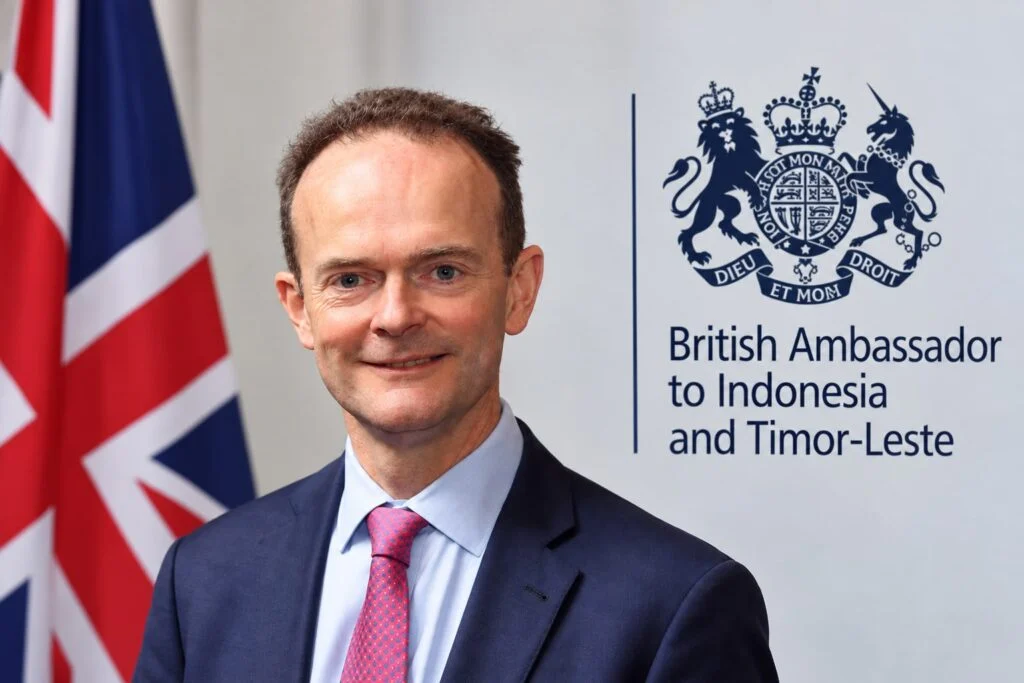
EN.MUHAMMADIYAH.OR.ID, UNITED KINGDOM – Across Britain, Muslim charities, educational institutions, professional associations, and community organizations contribute to public life and serve communities everyday. British Ambassador to Indonesia and Timor Leste, Dominic Jermey CVO OBE made the remarks in a statement received by the editorial team on Saturday (3/10).

He also noted that people from different religious and cultural backgrounds often work side by side to build their communities.
“Muslims, Christians, Hindus, Sikhs, Jews, Buddhists and others regularly collaborate through youth programmes and supporting their neighbours and the vulnerable in society. In many cases, these practical partnerships build understanding more effectively than formal dialogue alone,” he said.
One concrete example of interfaith cooperation is Inter Faith Week, which will take place this year from November 8 to 15, 2026.
The event brings together organizations from across Britain to strengthen cooperation and celebrate the contributions of diverse religious communities. Such efforts reflect the values of mutual respect and Freedom of Religion or Belief (FoRB), which are an important part of modern British society.
Jermey said he had witnessed similar dynamics during his time in Indonesia and had come to appreciate the meaning of Bhinneka Tunggal Ika, the national motto of unity in diversity.
“As the United Kingdom continues to build an increasingly diverse society, there is much we can learn from each other on fostering unity, cultures, and identities,” he said.
He said Indonesia’s commitment to maintaining unity amid diversity offers valuable lessons for countries around the world, including Britain.
Muhammadiyah as a Bridge between Communities
Muhammadiyah’s presence in Britain, he said, has made significant contributions to discussions on education, community services, and civic participation. At the same time, the Indonesian diaspora helps facilitate the exchange of ideas and experiences between Indonesia and Britain, allowing the two countries to continue learning from one another.
“These connections are particularly visible in education and service to society. Prof. Syafiq Mughni’s recent engagement with institutions such as the Oxford Centre for Islamic Studies and East London Mosque have highlighted shared interests in scholarship, community empowerment, and social welfare.” he said.
Jermey also mentioned Abdul Mu’ti, Indonesia’s Minister of Primary and Secondary Education, who received a Chevening Fellowship supported by the British government to study at the University of Birmingham in 2004.
“Such exchanges help develop leaders, strengthen professional networks and deepen understanding between societies, while creating opportunities to learn from one another’s experience,” Jermey said. (Bhisma)