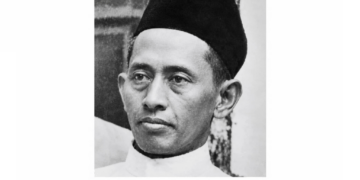
MUHAMMADIYAH.OR.ID, YOGYAKARTA – Among Islamic scholarly and fatwa institutions in the modern world, Muhammadiyah’s Council for Religious Opinion and Reform (Majelis Tarjih dan Tajdid) holds a uniquely distinguished position. Established in 1927, it stands as one of the oldest centers of collective ijtihad and fatwa in modern Islamic history, predating institutions such as the Majma’ al-Fiqh al-Islami, which was founded at the international level in the 1980s.

Since its inception, the Tarjih Council has pioneered the practice of ijtihad jama’i (collective reasoning), a method of deriving religious rulings through collaboration among scholars and intellectuals from diverse disciplines.
This approach has become a hallmark of Muhammadiyah’s reformist (tajdid) movement, positioning the Council not only as a center of fatwa, but also as a center of progressive Islamic thought in Indonesia and the wider Muslim world.
This was reaffirmed by Muhamad Rofiq Muzakkir, Secretary of the Council, during the Seminar on Maqasidic Tafsir featuring renowned scholar Prof. Dr. Jasser Auda as keynote speaker. The seminar, held on Monday (10/11) at the Muhammadiyah Central Office in Yogyakarta, was attended by students of the Muhammadiyah Tarjih Ulama Education Program (PUTM) and members of Majelis Tarjih dan Tajdid.
In his remarks, Rofiq warmly welcomed the participants, both in person and online, and extended his appreciation to Prof. Auda, whom he described as a long-time friend of Muhammadiyah.
“He’s not a stranger to us, our first meeting was around 2015 or 2016 in Malioboro, where we discussed al ijtihad al-mu’asir (contemporary ijtihad). About three years ago, he also gave a talk on the methodology of maqasid al-shariah,” Rofiq recalled.
He added that Prof. Auda’s visit was an honor for the Council, especially at the chosen theme, “Tafsir Maqasidi”, represents a new interpretive approach to the Qur’an emphasizing the values and objectives of Islamic law.
Rofiq also shared that he had spoken with Prof. Auda the previous day about his upcoming work, Tafsir al-Mulk, which is in near completion. He expressed hope that the project would soon be published and bring wide benefit to the Muslim community.
Also attending the event was Dr. Basma Abdul Ghaffar, an expert on public policy and maqasid al-shariah, and wife of Prof. Auda. Rofiq conveyed his admiration, noting that he had once been her student during his studies at the International Institute of Islamic Thought (IIIT) in Virginia in 2018.
“Dr. Basma is a leading scholar on public policy and maqasid al-shariah. She even wrote Public Policy and Maqasid al-Shariah. I strongly encourage anyone interested in politics or public policy from a maqasid perspective to engage with her,” Rofiq said.
He went on to emphasize that Muhammadiyah’s tradition of ijtihad has been deeply rooted since the founding of the Council for Religious Opinion and Reform.
“The concept of ijtihad jama’i has been practiced by the council since 1927. This is one of the clearest manifestations of Muhammadiyah’s reformist spirit,” he affirmed.
Today, the spirit continues through the development of Tafsir at-Tanwir, a collective Qur’anic exegesis currently being finalized by the Council. Rofiq noted that the project is about 90% complete and expected to be published next year.
“We hope that when Prof. Jasser returns to Indonesia, we can launch and discuss this tafsir together,” he added.
Rofiq concluded by expressing hope that academic forums like this will continue to strengthen intellectual collaboration between global Islamic thinkers and the Muhammadiyah scholarly community. (Bintang Adrian)