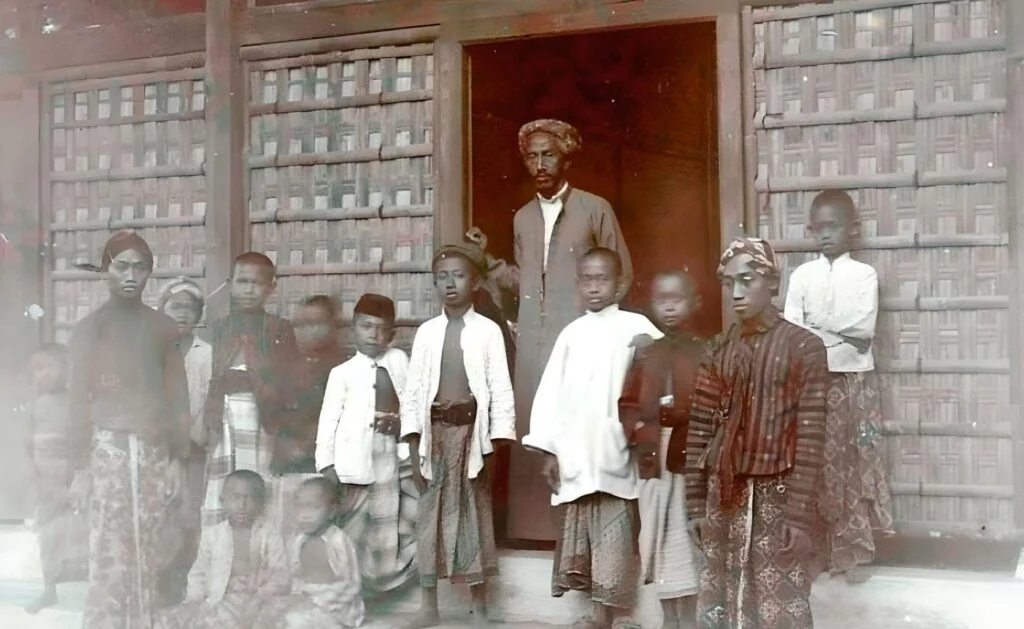
At the 17th Muhammadiyah National Congress in Yogyakarta in 1928, Muhammadiyah President Kiai Ibrahim proposed that Kiai Ahmad Dahlan’s photograph should be removed from the walls of Muhammadiyah members’ homes.

The proposal was prompted by concerns that members might begin to venerate Ahmad Dahlan’s image. However, Kiai Ibrahim emphasized that the proposal was not motivated by any lack of respect for Muhammadiyah’s founder.
The proposal inevitably sparked a heated discussion at the 17th National Congress in 1928. Nevertheless, through Kiai Ibrahim’s skillful leadership and a prayer for Allah’s protection, the atmosphere gradually calmed.
Lifting the Ban
At the 1968 Tarjih Conference held in Sidoarjo, the ban on displaying photographs of Kiai Ahmad Dahlan was officially lifted.
The decision followed a review by the Tarjih Council of its previous ruling on the legal status of images, as published in the 1964 edition of Beberapa Masalah (Several Issues), Chapter 2.
The 1964 Himpunan Majelis Tarjih (Compilation of Tarjih Council Decisions), Chapter 2, state that because photographs of Kiai Ahmad Dahlan, the founder of Muhammadiyah, were feared to potentially lead to shirk (associating partners with Allah), the Tarjih Council ruled that displaying his photograph as decoration was prohibited.
Muhammadiyah’s Views on the Legal Status of Images
In the Islamic world, there are differing opinions on the legal status of images. Some scholars consider them categorically prohibited, while others regard them as discouraged (makruh) or permissible (mubah), subject to certain conditions.
The Tarjih Council explained that the legal status of images depends on their purpose. The council divided the status of images into three categories. First, images intended for worship are prohibited based on textual evidence. Second, images used for educational purposes are permissible.
Third, images used as decoration are divided into two categories. First, if they are not feared to lead to religious transgression, they are permissible, but if they may lead to such transgression, the ruling depends on the nature of the concern: if they could lead to sinful acts, they are considered makruh and if they could lead to shirk, they are prohibited.
An Integral Approach to Deriving Religious Rulings
The Tarjih Council adopted an integral approach to understanding hadith. This approach is in contrast to the atomistic approach that had characterized Islamic thought for centuries.
Through an integral approach, religious issues are not understood by examining individual textual evidence in isolation from one another. When encountering a hadith, for example, it must be understood within the overall context of Islam.
This approach was first proposed by Al-Shatibi (d. 790 AH/1368 CE), who argued that deriving religious rulings should not rely solely on the literal and formal expressions found in the Qur’an and Hadith. Instead, rulings should be derived through thematic induction, known as istiqra’ ma’nawi, by identifying the meanings that permeate the entire body of religious sources.