Tuesday, October 6, 2026
  • AR
  • ENG
  • IDN
Muhammadiyah Media
  • EDUCATION
  • HEALTH
  • ECONOMY
  • HUMANITY
  • OTHERS
    • RELIGION
    • LAW & POLITICS
    • IDEOLOGY
    • SOCIO-CULTURE
    • ENVIRONMENT
    • MEDIA
No Result
View All Result
  • Login
Muhammadiyah Media
  • EDUCATION
  • HEALTH
  • ECONOMY
  • HUMANITY
  • OTHERS
    • RELIGION
    • LAW & POLITICS
    • IDEOLOGY
    • SOCIO-CULTURE
    • ENVIRONMENT
    • MEDIA
No Result
View All Result
  • Login
Muhammadiyah Media
No Result
View All Result
  • EDUCATION
  • HEALTH
  • ECONOMY
  • HUMANITY
  • OTHERS
Home Islamic Law

Four Sins Whose Punishment May Come in This World

by Persyarikatan Muhammadiyah
2 hours ago
in Islamic Law, News, Religion
Reading Time: 4 mins read
A A
Four Sins Whose Punishment May Come in This World

Four Sins Whose Punishment May Come in This World

EN.MUHAMMADIYAH.OR.ID, JAKARTA — The consequences of sin do not always have to wait until the afterlife. Some actions can bring punishment in this world before a person receives their ultimate reckoning in the hereafter. Muslims, therefore, are urged to be mindful of actions that may invite such punishment. 

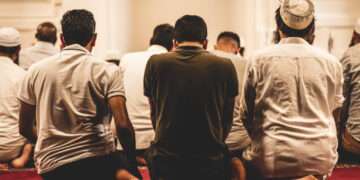
KH Muhyiddin Junaidi, an expert advisor to the Muhammadiyah Central Board’s Department of International Relations and Cooperation (LHKI), made the remarks during a Friday sermon (2/10). The sermon took place at the At-Tanwir Mosque of the Central Board of Muhammadiyah in Central Jakarta. 

“Those who commit these sins may face punishment in this world before the hereafter. In other words, there can be a down payment on punishment rather than having to wait until the Judgement Day,” Muhyiddin said. 

He identified at least four sins that Muslims should be wary of because they may bring punishment in this world before the final reckoning in the hereafter. 

Zalim (Committing Injustice) 

Muhyiddin warned that injustice is among the actions that can invite Allah’s punishment. It is not committed only by people who lack religious knowledge, but can also be committed by those with education, social standing, and power. 

One form of injustice that deserves particular attention, he said, is the abuse of trust and public office. Authority that should be used to fulfill a responsibility can instead be misused for personal or group interests. 

The issue becomes even more serious when such abuses are committed by educated and powerful individuals. Injustice, therefore, should not be viewed merely as an individual matter for its consequence can extend throughout society. 

Allah warns that a people can face destruction because of injustice. Quran 18:59 states that the communities that committed wrongdoing could be destroyed, with their destruction having an appointed time. 

RelatedArticle

Al-Istihsan Opens Room for Consideration in Islamic Legal Rulings

Muhammadiyah Receives Jamia Binoria Pakistan, Discusses Strengthening Education and Dakwah

British Ambassador Praises Muhammadiyah’s Growth and Expanding Role

Muhyiddin stressed that Muslims should not remain silent when witnessing injustice. Everyone has a moral responsibility to speak the truth and oppose injustice according to their ability. 

“If injustice is allowed to continue, we have an individual moral responsibility to speak the truth and oppose injustice in whatever form it takes, whether through writing, speech, sermons, or other means,” he said. 

Severing Family and Social Ties

The second sin is severing ties with others. According to Muhyiddin, maintaining good relationships applies not only among Muslims but also to people from different backgrounds. 

He explained that various factors can cause people to distance themselves from one another. These include differences in social conditions, economic circumstances, as well as political choices. 

Such differences, he said, should not become reasons to sever bonds or brotherhood. Political moments, in particular, can turn differences in political choices into polarization within society. 

“Differences in political choices should never make us grow distant from one another. Allah reminds us to maintain our ties even when we support different political parties,” he said. 

Differences in political choices, therefore, should not erase bonds of brotherhood in national life. Social ties should be maintained despite differences in political preferences and views. 

Disobeying One’s Parents

The third sin is mistreating or disobeying one’s parents. Islam places great importance on honoring parents as a form of obedience, requiring Muslims to be mindful of their words, attitudes, and treatment toward them.

Disobedience can take the form of words or actions that hurt, demean, or strip parents of the respect they deserve. For this reason, relationships with parents should be maintained with respect and compassion. 

Giving False Oath

The fourth sin to be avoided is giving false oaths. An oath should not be used to validate something untrue, conceal a lie, or obtain a particular benefit. 

Oaths are also closely connected to trust and responsibility, particularly, when someone makes an oath upon taking public office. An oath of office is not merely a part of formal ceremonies. It is a declaration of one’s commitment to carry out a responsibility and fulfill one’s duties properly. 

Therefore, when an oath is used to justify a lie or when a responsibility that one has sworn to uphold is abused, the matter involves more than a breach of official duty. It also carries accountability before Allah. 

According to Muhyiddin, anyone can commit these four sins, including people who identify as Muslims. A Muslim identity or family background does not automatically protect a person from actions that can lead to sin and punishment. 

Faith, therefore, cannot be demonstrated through religious identity alone. It must be reflected in conduct, particularly in honoring trust, maintaining relationships with others, respecting parents, and speaking truthfully. 

Muhyiddin reiterated that injustice must not be allowed to continue because its consequences can spread throughout society. Every Muslim has a responsibility to prevent wrongdoing and speak the truth according to their ability.

“If we allow it to continue, we become among those who commit injustice,” he concluded. (taufik)

Tags: islamic lawreligionsin
ShareTweetSendShareShare
Previous Post

Muhammadiyah Receives Jamia Binoria Pakistan, Discusses Strengthening Education and Dakwah

Next Post

Al-Istihsan Opens Room for Consideration in Islamic Legal Rulings

RelatedPosts

Al-Istihsan Opens Room for Consideration in Islamic Legal Rulings
News

Al-Istihsan Opens Room for Consideration in Islamic Legal Rulings

6 October 2026
Understanding Different Definitions of Hadith Can Foster Religious Tolerance
Islamic Law

Understanding Different Definitions of Hadith Can Foster Religious Tolerance

15 August 2026
Is It Permissible to Kiss the National Flag with Emotion? 
News

Is It Permissible to Kiss the National Flag with Emotion? 

11 August 2026
Can an Imam Lead Congregational Prayer While Seated?
Islamic Law

Can an Imam Lead Congregational Prayer While Seated?

5 August 2026
Next Post
Al-Istihsan Opens Room for Consideration in Islamic Legal Rulings

Al-Istihsan Opens Room for Consideration in Islamic Legal Rulings

Populer News

  • National Narcotics Agency Commends Muhammadiyah’s Efforts in Eradicating Drug Abuse

    National Narcotics Agency Commends Muhammadiyah’s Efforts in Eradicating Drug Abuse

    0 shares
    Share 0 Tweet 0
  • Catholic Nun Earns Master’s in Midwifery at UNISA Yogyakarta, Strengthening Interfaith Brotherhood

    0 shares
    Share 0 Tweet 0
  • Safa and Marwa: Uncovering the Historical Depths of Two Sacred Hills

    0 shares
    Share 0 Tweet 0
  • Is It Permissible for Muslims to Blow Out Birthday Candles?

    0 shares
    Share 0 Tweet 0
  • Fatwa on Using Mirin in Cooking for Muslims in Japan

    0 shares
    Share 0 Tweet 0
  • Man of Action, Man of Dialogue: The Legacy of KH Ahmad Dahlan

    0 shares
    Share 0 Tweet 0
  • Muhammadiyah and NU Are the Largest and Most Influential Religious Organizations in the World

    0 shares
    Share 0 Tweet 0
  • Ta’aruf in Islam: Ethical Guidelines for Getting to Know Potential Spouse

    0 shares
    Share 0 Tweet 0
  • Leader’s Profile: Prof. Dr. Haedar Nashir, M.Si.

    0 shares
    Share 0 Tweet 0
  • The Islamic Character of Lionel Messi

    0 shares
    Share 0 Tweet 0

Council

  • Religious Opinion & Tajdid
  • Religious Preaching
  • Higher Education, Research, & Development
  • Elementary, Secondary, & Non-Formal Education
  • Cadre & Human Resources
  • Public Health
  • Social Welfare
  • Economy, Business, & Tourism
  • Waqf Utilization
  • Community Empowerment
  • Law and Human Rights
  • Enviromental Preservation
  • Publications & Information

Institutions

  • Islamic Boarding School
  • Branch & Mosque Development
  • Strategic Studies & Partnerships
  • Financial Supervision & Development
  • Disaster Management Center
  • Charity Management
  • Micro, Small, & Medium Enterprise
  • Politics & Public Policy
  • Arts & Culture
  • Sports & Development
  • International Relations & Cooperation
  • Community Da'wah
  • Halal Auditing & "Halalan Thayyiban" Studies
  • Hajj & Umroh
  • Legal Aid & Public Advocacy

Bureau

  • Organization Development
  • Financial Management
  • Communication & Public Services

Ortom

  • 'Aisyiyah Woman Association
  • Muhammadiyah Youth Association
  • Nasyiatul 'Aisyiyah Young Woman Association
  • Muhammadiyah University Student Association
  • Muhammadiyah Student Association
  • Muhammadiyah Tapak Suci Martial Arts
  • Muhammadiyah Hizbul Wathan Scouts

Sumatra Region

  • Nanggroe Aceh Darussalam
  • Sumatra Utara
  • Sumatra Selatan
  • Sumatra Barat
  • Bengkulu
  • Riau
  • Kepulauan Riau
  • Jambi
  • Bangka Belitung

Kalimantan Region

  • Kalimantan Barat
  • Kalimantan Timur
  • Kalimantan Selatan
  • Kalimantan Tengah
  • Kalimantan Utara

Jawa Region

  • D.I. Yogyakarta
  • Banten
  • DKI Jakarta
  • Jawa Barat
  • Jawa Tengah
  • Jawa Timur

Bali & Kepulauan Nusa Tenggara

Region

  • Bali
  • Nusa Tenggara Barat
  • Nusa Tenggara Timur

Sulawesi Region

  • Gorontalo
  • Sulawesi Barat
  • Sulawesi Tengah
  • Sulawesi Utara
  • Sulawesi Tenggara
  • Sulawesi Selatan

Maluku dan Papua Region

  • Maluku Utara
  • Maluku
  • Papua
  • Papua Barat
  • Papua Barat daya

Special Branch

  • Kairo Mesir
  • Iran
  • Sudan
  • Belanda
  • Jerman
  • United Kingdom
  • Libya
  • Malaysia
  • Prancis
  • Amerika Serikat
  • Jepang
  • Tunisia
  • Pakistan
  • Australia
  • Rusia
  • Taiwan
  • Tunisia
  • TurkI
  • Korea Selatan
  • Tiongkok
  • Arab Saudi
  • India
  • Maroko
  • Yordania
  • Yaman
  • Spanyol
  • Hongaria
  • Thailand
  • Kuwait
  • New Zealand

Category

  • Education
  • Health
  • Economy
  • Humanity
  • Religion
  • Law & Politics
  • Ideology
  • Culture
  • Media

About

  • History
  • Brand Guideline

Services

  • Information

Apps

  • Muhammadiyah ID
  • MASA
  • EventMu
  • BukuMu
  • SehatMu
  • KaderMu
  • LabMu

More Information

  • Editorial
  • Contact
  • Privacy Policy
© 2024 Persyarikatan Muhammadiyah

Welcome Back!

Login to your account below

Forgotten Password?

Retrieve your password

Please enter your username or email address to reset your password.

Log In

Add New Playlist

No Result
View All Result
  • icon bendera arab
  • bendera indonesia
  • EDUCATION
  • HEALTH
  • ECONOMY
  • HUMANITY
  • OTHERS
    • RELIGION
    • LAW & POLITICS
    • IDEOLOGY
    • SOCIO-CULTURE
    • ENVIRONMENT
    • MEDIA
  • Login

© 2024 Persyarikatan Muhammadiyah - Cahaya Islam Berkemajuan.