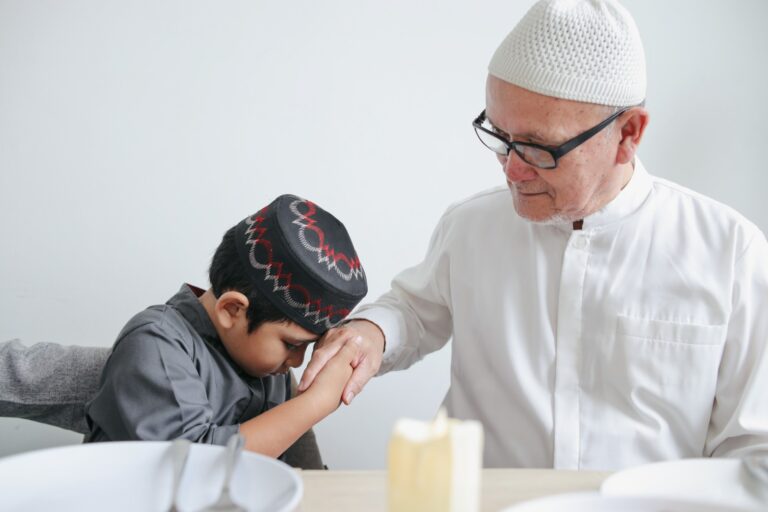
EN.MUHAMMADIYAH.OR.ID, YOGYAKARTA – Physical decline in old age does not automatically exempt older people from religious obligations. However, Islam offers accommodations that allow them to perform acts of worship according to their abilities. This principle is among the key topics in the Elderly Fiqh guidebook compiled by the Muhammadiyah Central Board’s Religious Opinion and Reform Council.

Ro’fah, a member of the Muhammadiyah Central Board’s Religious Opinion and Reform Council, explained that older people remain legally accountable as long as their mental and cognitive faculties remain functional. Although physical limitations may affect their ability to worship, they must still fulfill their religious obligations in accordance with their individual circumstances and capabilities.
During a Tarjih Study Session on Wednesday (18/11), Ro’fah explained that the principles of facilitation (taisir) and legal concessions (rukhsah) provide the basis practices. This approach aligns with Surah al-Baqarah, verse 286, which states that Allah does not burden a person beyond their capacity.
“The principle is that worship for older people should be guided by the concept of facilitation, or taisir, which is also expressed through the concept of rukhsah,” she said.
Adjusting Purification and Prayer
Regarding ritual purification (taharah), older people who have difficulty using water may adapt ablution (wudu) and ritual breathing to their physical abilities. If illness prevents them from using water, they may perform dry ablution (tayammum). Caregivers can also assist them with tayammum and ensure that they remove impurities before prayer.
For the obligatory prayers, older people who can still stand must pray while standing. However, if their physical condition prevents them from doing so, they may pray while sitting or lying down.
Those who pray while sitting may adopt positions such as cross-legged sitting, tawarruk, or iftirasy. They should still distinguish between bowing (ruku) and prostration (sujud), with the latter performed at a lower position than the former. When using a chair, they should keep their bodies as upright as possible, place their feet on the floor, and face the qibla to the best of their ability.
Those who pray while lying down should, if possible, lie on their right side facing the qibla. If their condition does not allow this, they may position their feet toward the qibla as far as they can.
Ro’fah also explained the rules for older people with dementia. If someone can no longer remember prayer times or distinguish between them, the obligation to pray no longer applies. However, if a person with dementia can still remember and understand prayer times at certain moments, the obligation remains in effect.
In such situations, family members or caregivers can remind them when it is time to pray, assist them with recitations, and guide them through the prayer according to their needs.
Accommodations for Fasting and Zakat
Islam also provides concessions for fasting. Older people who are physically unable to fast may refrain from fasting without having to make up the missed day (qada). Instead, they must pay fidyah by providing food to a poor person for each day of fasting they miss. The amount is one mud, equivalent to approximately 600 grams.
If an older person dies while still owing days of fasting, they heirs may make up the missed fasts on their behalf. Ro’fah referred to hadiths narrated by Bukhari and Muslim concerning people who die while still owing obligatory fasts.
Unlike prayer and fasting, the obligation to pay zakat does not depend on a person’s age or physical condition. Ro’fah explained that zakat is an act of worship tied to wealth. Its obligation therefore depends on specific requirements, including ownership of wealth, the minimum threshold (nisab), and other applicable conditions.
Consequently, old age does not exempt someone from paying zakat as long as they meet the requirements.
Creating Elderly-Friendly Worship Spaces
Beyond guidelines on religion practices, the Elderly Fiqh guidebook also addresses accessibility and assistance, clothing and covering the awrah during caregiving, and end-of-life care. These discussions aim to ensure that older people can practice their religion comfortably, safely, and in accordance with their circumstances.
Ro’fah emphasized that meeting older people’s religious needs also requires a supportive environment. Mosques and prayer rooms should provide elderly-friendly facilities, including ramps, handrails, prayer chairs, safe toilets, non-slip ablution areas, and Qur’ans with large print.
She said accessible worship facilities would help older people remain involved in religious activities. Families, communities, and public service institutions all share responsibility for meeting these needs.