

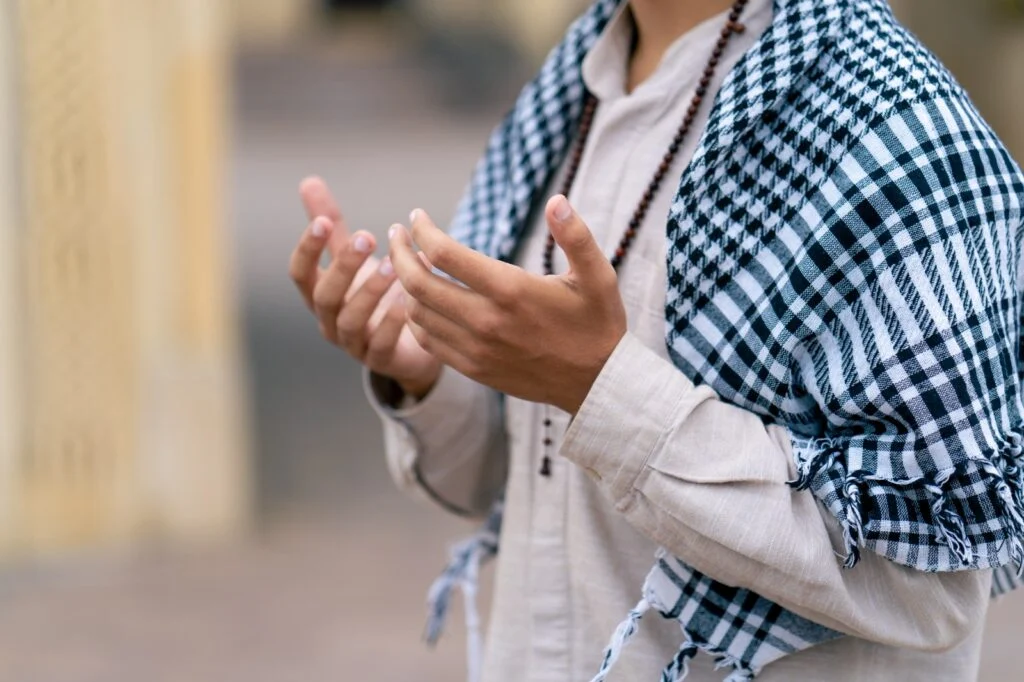
When discussing salat istiqsa, or the prayer for rain, a common question is not only how the prayer is performed, but also what happens after the two rakaat are completed. Is there a sermon like the one delivered during Friday prayers? If so, how many sermons are there? And is the sermon delivered before or after the prayer?

According to the guidance of Muhammadiyah’s Tarjih, the answer is clear: a sermon is part of the istiqsa observance. However, unlike the Friday sermon, the khutbah istiqsa is delivered only once. It may be given after the prayer or, based on a particular narration, before the prayer.
The Sermon Comes after the Prayer
The Tarhih Decision of the 20th Muhammadiyah National Congress in Garut in 1976 states that when istisqa is performed with a prayer, the imam goes with the congregation to an open prayer ground after sunrise. The congregation comes in simple clothing, displaying humility, and devotion. The imam then leads a two rakaat prayer without the adhan or iqamah, reciting the Qur’an aloud.
After the prayer, the imam delivers the sermon. During the sermon, istighfar, or prayers for forgiveness, and supplications are emphasized. The imam then raises both hands, faces the qiblah with his back toward the congregation, and prays. Afterward, he turns his outer garment around, placing the right side on the left and the left side on the right.
One of the sources for this practice is a hadith narrated by Abu Hurairah:
عَنْ أَبِي هُرَيْرَةَ أَنَّهُ قَالَ خَرَجَ نَبِيُّ اللَّهِ صَلَّى اللَّهُ عَلَيْهِ وَسَلَّمَ يَوْمًا يَسْتَسْقِي فَصَلَّى بِنَا رَكْعَتَيْنِ بِلَا أَذَانٍ وَلَا إِقَامَةٍ ثُمَّ خَطَبَنَا وَدَعَا اللَّهَ وَحَوَّلَ وَجْهَهُ نَحْوَ الْقِبْلَةِ رَافِعًا يَدَهُ ثُمَّ قَلَبَ رِدَاءَهُ فَجَعَلَ الْأَيْمَنَ عَلَى الْأَيْسَرِ وَالْأَيْسَرَ عَلَى الْأَيْمَنِ
“Abu Hurairah reported that one day the Prophet of Allah went out to perform istisqa. He led us in two rakaat without an adhan or iqamah. And then he delivered a sermon and supplicated to Allah. He turned his face toward the qiblah and raised his hands, then turned his garment around, placing its right side on the left and its left side on the right.”
The hadith was narrated by Ibn Majah and Ahmad
The hadith presents a straightforward sequence: two rakaat of prayer, followed by the sermon and supplication.
But the Sermon May Come Before the Prayer
Does this mean the sermon must always be delivered after the prayer?
Not Necessarily
A narration from ‘Aisyah offers a different account. When people complained of drought, the prophet ordered that a pulpit be prepared at the prayer ground. He then went out as the sun began to appear, sat on the pulpit, proclaimed takbir and praised Allah, spoke about the conditions facing the people, and then supplicated. He raised his hands, turned his garment around, then faced the people and descended from the pulpit to perform two rakaat of prayer.
This narration provides a basis for delivering the sermon before the salat istisqa. The Tarjih Decision itself states that the sermon may be delivered after the prayer, but may also be delivered beforehand based on the hadith narrated by ‘A’ishah.
Thus, the question is not whether there is a sermon, but rather where it falls in the sequence.
One Sermon, Not Two
Is the khutbah istisqa then delivered twice, as in the Friday sermon?
Tarjih sources explain that there is no narration stating that the Prophet delivered two sermons during istisqa. The hadiths concerning istisqa also contain no indication that he sat between two sermons as he did during Friday prayers. Therefore, the khutbah istisqa is understood as a single sermon.
One of the bases for this understanding is a hadith narrated by Ibn ‘Abbas:
خَرَجَ رَسُولُ اللَّهِ صَلَّى اللَّهُ عَلَيْهِ وَسَلَّمَ مُتَبَذِّلًا مُتَوَاضِعًا مُتَضَرِّعًا حَتَّى أَتَى الْمُصَلَّى زَادَ عُثْمَانُ فَرَقَى عَلَى الْمِنْبَرِ ثُمَّ اتَّفَقَا وَلَمْ يَخْطُبْ خُطَبَكُمْ هَذِهِ وَلَكِنْ لَمْ يَزَلْ فِي الدُّعَاءِ وَالتَّضَرُّعِ وَالتَّكْبِيرِ ثُمَّ صَلَّى رَكْعَتَيْنِ كَمَا يُصَلِّي فِي الْعِيدِ
“The Messenger of Allah went out wearing plain clothes, in humility and supplication, until he reached the prayer ground. ‘Uthman ibn Abi Shaybah, one of the narrators of this hadith, added, ‘Then the Messenger of Allah ascended the pulpit.’ The two narrations then agree that he did not deliver a sermon like the sermons you deliver. Rather, he continued to supplicate, humble himself before Allah and proclaim takbir. He then prayed two rakaat as he would pray on the two Eid occasions.”
The hadith was narrated by Abu Dawud, al-Nasa’i and al-Tirmidhi.
Syamsuddin Ibn Qudamah understood this narration as indicating that the khutbah istisqa is delivered once. Az-Zaila’i likewise explained that there is no report of the Prophet delivering two sermons during istisqa as he did during Friday prayers.
What Is Said in the Sermon?
The khutbah istisqa generally follows the form of a regular sermon. Its emphasis, however, is different. The sermon gives greater prominence to istighfar and supplication, while encouraging the congregation to repent and seek Allah’s forgiveness.
Among the verses included in the guidance for the sermon is Allah’s statement spoken through the Prophet Hud:
اسْتَغْفِرُوا رَبَّكُمْ ثُمَّ تُوبُوا إِلَيْهِ يُرْسِلِ السَّمَاءَ عَلَيْكُم مِّدْرَارًا وَيَزِدْكُمْ قُوَّةً إِلَىٰ قُوَّتِكُمْ وَلَا تَتَوَلَّوْا مُجْرِمِينَ
“Ask forgiveness from your Lord, then turn to Him in repentance. He will send down abundant rain upon you, increase you in strength upon your strength, and do not turn away as wrongdoers.”
So, when someone asks, “Is there a sermon in the salat istisqa?” the answer is yes. According to Tarjih guidance, the sermon is delivered once and may take place either before or after the prayer. Its content emphasizes istighfar, supplication, and asking Allah to send down rain that brings benefit.
Reference
This article is based on a copy of the Tarjih Decision of the 20th Muhammadiyah National Congress in Garut in 1976, Berita Resmi Muhammadiyah No. 76, 1977, and the discussion “Khutbah Istisqa’” in Suara Muhammadiyah No. 5, Year 84/1999.