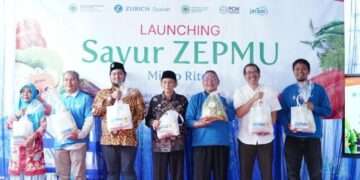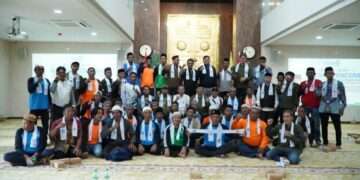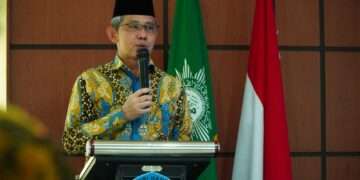


EN.MUHAMMADIYAH.OR.ID, YOGYAKARTA – The Muhammadiyah Nutrition Fulfillment Service Agency (BPPGM) of the Central Board of Muhammadiyah distributed nutritious meals through its Muhammadiyah Nutritious Meal (MBM) program to 24 Muhammadiyah-’Aisyiyah orphanages on Friday (26/6) at the Muhammadiyah Lowanu Orphanage (PAY Muhammadiyah Lowanu) in the Special Region of Yogyakarta.

BPPGM Chairperson M. Nurul Yamin explained that this phase of the MBM program involved the distribution of 250 kilograms of TelurMoe eggs. TelurMoe is one of MBM program produced by the JATAM Difabel network of laying-hen farmers.
According to Yamin, the initiative reflects Muhammadiyah’s commitment to improving the nation’s health and intellectual development not only through education and healthcare. At the same time, this initiative also by strengthening community nutrition, particularly for future generations.
Nutrition as a Religious and Social Responsibility
“Muhammadiyah has a theological foundation for emphasizing the importance of nutrition. One of them is the Qur’anic teaching that we must not leave behind a weak generation,” Yamin said.
For this reason, Muhammadiyah has established a new charitable institution alongside its education and healthcare sectors, BPPGM. The new institution is responsible for consolidating and coordinating the organization’s resources to enhance nutrition services and improve public nutritional welfare.
Yamin emphasized that the funding for this distribution program did not come from the state budget (APBN). Instead, it was financed entirely through the consolidation of resources within the Muhammadiyah organization itself.
Regarding the eggs distributed, Yamin explained that TelurMoe is a high-protein product because the hens are raised on chemical-free feed under an animal welfare-oriented farming system. The entire operation is managed by a supported group of persons with disabilities.
“This program is managed independently by Muhammadiyah as part of its nutritious meal initiative. God willing, we will replicate it in several other regions so that it becomes a nationwide Muhammadiyah movement,” he said.
During this initial stage, the program is being implemented in the Special Region of Yogyakarta as a pilot project. It is expected to expand to other regions in need, particularly Indonesia’s 3T areas (underdeveloped, frontier, and outermost regions).
Meanwhile, Tri Haryanto, Director of the Muhammadiyah Lowanu Orphanage, expressed his gratitude for the assistance provided to the institution.
He noted that the orphanage is also actively strengthening partnerships with various institutions, including Universitas Muhammadiyah Yogyakarta (UMY), Universitas ‘Aisyiyah Yogyakarta (UNISA), Universitas Ahmad Dahlan (UAD), and Atma Jaya University, particularly in support of campus mapping and collaborative development initiatives at the orphanage.