
EN.MUHAMMADIYAH.OR.ID, SIDOARJO – The challenges facing future generations are becoming increasingly diverse and complex. Parents naturally want their children to keep pace with the changing world rather than be left behind or overwhelmed by it. As a result, they make every effort to provide their children with the best possible education.

Children often leave for school as early as 6 a.m. and remain there until 3 p.m. Beyond formal schooling, they may also attend additional lessons to strengthen their understanding of academic subjects, along with other activities that can extend into the evening.
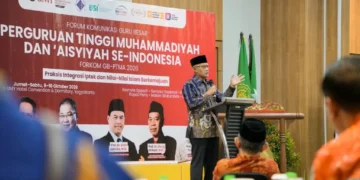
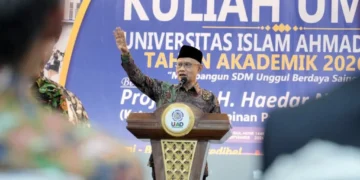
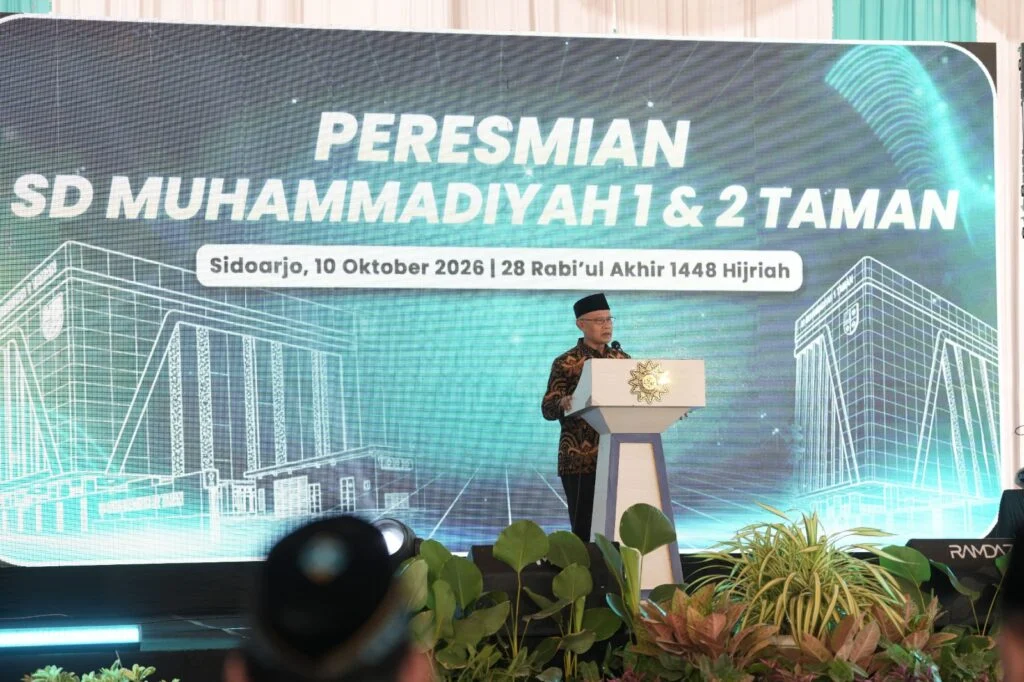
In response, Haedar Nashir, President of the Muhammadiyah Central Board, has urged parents to maintain a healthy balance in their children’s lives. The challenges these children will face in the future, he said, will be even greater than those of today. Their education is also becoming increasingly complex.
Natural and Parental Responsibility
Haedar reminded parents to pay close attention to the nutritional value of the food their children consume. In Islam, he explained, food must be not only halal (permissible) but also tayyib (wholesome), including in terms of nutritional value and cleanliness, from how it is obtained to how it is prepared.
“Hopefully, their food isn’t junk food. As parents, we should ensure that their meals are at least nutritionally balanced,” Haedar said, referring to the familiar Indonesian concept of empat sehat lima sempurna, or “four healthy foods and one perfect addition,” a traditional dietary guideline.
He also stressed that entrusting children’s education to schools does not mean parents can step away from their responsibilities. Parents must remain actively involved in educating their children and helping them develop their knowledge and abilities.
“In this context, we must safeguard their security, their safety, and their environment. That is our responsibility. Parents must not wash their hands of it, even after entrusting their children to a school. There is a tendency today, especially when children attend prestigious and expensive schools, for parents to let go of their responsibilities,” Haedar said.
Raising Children in the Age of Algorithm
Parenting has become more challenging in the digital age. Social media shapes how children see the world, while algorithms create conversational “bubbles” that can draw them into separate information environments. As a result, children may develop worlds of their own, increasingly shaped by the digital platforms they use.
“They are children of Android, children of algorithms, children of gadgets that are always with them. So instill kalimah thayyibah, or good words and expressions rooted in faith, and instill values in them. That is our responsibility as parents,” he said.
Haedar also referred to the Qur’anic message on raising future generations. He urged parents to nurture children into quwwah al-ta’ayun, a generation capable of drawing on and maximizing its potential, so that they can carry forward Muhammadiyah’s dakwah, or Islamic mission.
Conversely, through its educational work, Muhammadiyah hopes to avoid leaving behind dzurriyatan dhi’afan, or weak generations. Such weakness, Haedar explained, may take many forms, including mental, economic, educational, and religious vulnerability, particularly in matters of aqidah, or Islamic creed.