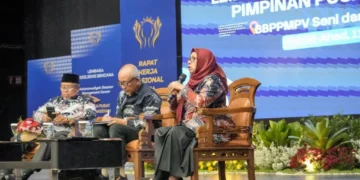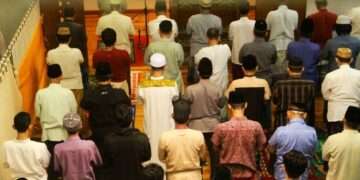


EN.MUHAMMADIYAH.OR.ID, CHICAGO — Muhammadiyah’s Special Branch in the United States of America (PCIM USA) held a religious study session on resilience and personal development among the Indonesian Muslim diaspora living in a multicultural society. The event took place in Chicago on Saturday (10/10).

The session featured Yayah Khisbiyah, a lecturer at the Faculty of Psychology of Muhammadiyah University of Surakarta and Secretary of the Central Board of Muhammadiyah’s Department of International Relations and Cooperation (LHKI).
Yayah emphasized that being a Muslim in the US involves more than preserving one’s cultural roots. Equally important is the ability to continue growing, build healthy families, and lead meaningful lives amid different cultural dynamics.
Moving from Indonesia to the US brings a range of experiences, languages, values, and habits shaped by one’s upbringing. At the same time, members of the diaspora must adapt to a new environment with different social and cultural characteristics.
Drawing on cross-cultural psychology, Yayah explained that adaptation does not require people to lose their sense of identity. Instead, an approach known as integration can help them build a harmonious relationship between their Indonesian, American, and Islamic identities.
“Through the concept of integrated bicultural identity, members of the diaspora are expected to bring these identities together in harmony. Cultural differences is not threats, but as opportunities to learn from one another and enrich our life experiences,” she explained.
From Surviving to Flourishing
Beyond cultural adaptation, the session explored resilience as the ability to cope with pressure and recover from hardship. For members of the diaspora, these challenges can arise from within themselves, interpersonal relationships, their social environment, or the broader structures of life in a new society.
In this context, verses 5–6 of Surah Al-Insyirah serve as a reminder of Allah’s promise that ease accompanies hardship. This message can provide spiritual strength as members of the diaspora navigate life’s challenges.
The discussion then shifted from merely surviving to flourishing. Yayah drew on the PERMA framework of positive psychology. The framework encompasses Positive Emotion, Engagement, Relationships, Meaning, and Accomplishment. Yayah further encouraged the diaspora to pursue psychological well-being rooted in faith and taqwa or God-consciousness.
From an Islamic perspective, well-being extends beyond happiness or personal achievement. A meaningful life is also reflected in one’s closeness to Allah and the benefits one brings to others.
The value aligns with Surah Al-Hujurat verse 13. The verse teaches that humanity was created as diverse peoples and tribes so that people come to know one another. Cultural and social differences are not reasons to grow apart. It is instead an opportunity to build relationships grounded in mutual understanding and respect.
Yayah also highlighted the importance of mutuality, or reciprocal relationships in which people learn from one another and enrich their experiences through cross-cultural encounters. Through this approach, tolerance moves beyond simply allowing differences to exist. It develops into a willingness to learn and cooperate.
Building Collective Resilience through Faith and Community
Collective resilience is another essential aspect of life for the Muslim diaspora. Mosques and congregational groups, in this regard, serve not only as places of worship but also as spaces for building solidarity, sharing experiences, and receiving psychological and social support.
Drawing on the message of Surah Al-Ma’idah verse 2 which calls on believers to cooperate in righteousness and piety, Yayah encouraged the diaspora to strengthen their families and communities through five pillars of resilience: faith, family, community, meaning in life, and tangible contributions to society.
Strengthening these five pillars is expected to help members of the diaspora navigate life’s pressures while creating an environment that supports the growth of every community member, including younger generations.
Yayah therefore called for a shift from a defensive identity, which tends to focus on protecting oneself against perceived threats, toward a confident and contributing Identity, built on self-assurance and expressed through positive contributions.
Young Muslims in the diaspora should not merely be encouraged to recognize and preserve their Islamic identity. They should also be empowered to make tangible contributions through compassion, justice, social responsibility, and service to the wider community.
This spirit is consistent with the theology of Al-Ma’un, one of the foundations of the Muhammadiyah movement. Islam is expressed not only through individual piety but also through social concern and concrete actions to help others.
Even as a demographic minority, Muslim communities in the diaspora can make substantial contributions to society through integrity, kindness, service, and efforts to uphold justice. In this way, their presence can become a source of benefit to people from diverse backgrounds.
As a guiding principle for life, Yayah also recalled the message of Surah Al-‘Asr, which emphasizes faith, righteous deeds, mutual counsel in truth, and mutual counsel in patience.