Saturday, October 3, 2026
  • AR
  • ENG
  • IDN
Muhammadiyah Media
  • EDUCATION
  • HEALTH
  • ECONOMY
  • HUMANITY
  • OTHERS
    • RELIGION
    • LAW & POLITICS
    • IDEOLOGY
    • SOCIO-CULTURE
    • ENVIRONMENT
    • MEDIA
No Result
View All Result
  • Login
Muhammadiyah Media
  • EDUCATION
  • HEALTH
  • ECONOMY
  • HUMANITY
  • OTHERS
    • RELIGION
    • LAW & POLITICS
    • IDEOLOGY
    • SOCIO-CULTURE
    • ENVIRONMENT
    • MEDIA
No Result
View All Result
  • Login
Muhammadiyah Media
No Result
View All Result
  • EDUCATION
  • HEALTH
  • ECONOMY
  • HUMANITY
  • OTHERS
Home News

Muhammadiyah Scholar Clarifies Difference between Sharia and Fiqh

by Persyarikatan Muhammadiyah
3 years ago
in News
Reading Time: 2 mins read
A A
Muhammadiyah Scholar Clarifies Difference between Sharia and Fiqh

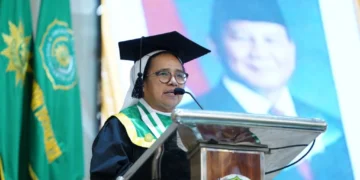
MUHAMMADIYAH.OR.ID, PEKALONGAN — A Muhammadiyah scholar, Al-Yasa’ Abubakar, addressed a common misconception: the blurring of lines between sharia and fiqh. At the 32nd National Conference of the Muhammadiyah Council for Fatwa and Renewal  at the Universitas Muhammadiyah Pekajangan Pekalongan (UMPP) on Saturday, February 24, he emphasized the crucial distinction between these two foundational concepts within Islamic law.

Al-Yasa’ Abubakar emphasized that sharia and fiqh are not interchangeable concepts, as many believe. He explained that sharia, in its purest form, refers solely to the divine teachings found in the Quran and the Sunnah. Fiqh, on the other hand, represents the interpretations and deductions drawn from these sources by human scholars.

Al-Yasa’ Abubakar elaborated on the distinction, stating that sharia should be understood as the core, unadulterated teachings originating from the Quran and hadith, free from any human influence. Fiqh, however, encompasses various elements of human reasoning and application, including legal rulings (fatwas), codified laws (kanun), established societal customs, and even academic research. He firmly stressed that sharia remains untouched by human interpretation, maintaining its divine essence.

“Previously, sharia was often understood as encompassing both the Quran and hadith, while fiqh was seen as encompassing human interpretations like fatwas, laws, customs, and research. However, I believe sharia is solely the Quran and hadith, while fiqh represents the realm of human understanding and application,” clarified Al-Yasa’ Abubakar.

RelatedArticle

Knowledge or Etiquette: Which Should Come First?

Cyberbullying Takes Many Forms, from Flaming to Doxing

Studying in Northern Ireland, Muhammadiyah Cadre Shares Insights on Campus Life and Community Engagement

Al-Yasa’ Abubakar’s insights offer a crucial step towards a more nuanced understanding of the relationship between sharia and fiqh. Amidst widespread misconceptions that can potentially hinder public comprehension of Islamic law, his explanation underscores the importance of accurately grasping these distinct concepts.

While sharia is considered an immutable entity, remaining unchanged since the Prophet’s passing, fiqh is characterized by its dynamic nature. Al-Yasa’ Abubakar emphasized that after the Prophet’s passing, new fiqh cases continued to emerge, necessitating ongoing interpretations and adaptations to meet evolving societal contexts and needs. He stressed the significance of ijtihad, a continuous process of renewed interpretation, as a crucial tool for ensuring the relevance of fiqh in the face of a constantly changing world.

One specific area where Al-Yasa’ Abubakar believes fiqh needs to adapt is the inclusion of legal entities within its scope. In today’s world, legal subjects extend beyond individuals to encompass corporations and other entities. He argues that the evolving cultural landscape and advancements of modern society call for corresponding changes in the structure and application of Islamic law. Therefore, Al-Yasa’ Abubakar sees the continuous development of fiqh as an essential means to ensure Islamic law remains aligned with the realities of the contemporary world.

By acknowledging the inherent flexibility of fiqh and advocating for ongoing ijtihad, Al-Yasa` Abubakar’s perspective provides valuable insights that can stimulate further dialogue and critical thinking around the relevance and application of Islamic law in our evolving world. His insights pave the way for ensuring that Islamic legal principles can continue to offer guidance and support to diverse communities in the modern era.


ShareTweetSendShareShare
Previous Post

A Time of Unity: Muhammadiyah Adoption of the Global Hijri Calendar

Next Post

The Legacy of Ahmad Dahlan: Bridging Tradition and Innovation in Islamic Thought

RelatedPosts

Knowledge or Etiquette: Which Should Come First?
News

Knowledge or Etiquette: Which Should Come First?

2 October 2026
Cyberbullying Takes Many Forms, from Flaming to Doxing
Media

Cyberbullying Takes Many Forms, from Flaming to Doxing

2 October 2026
Studying in Northern Ireland, Muhammadiyah Cadre Shares Insights on Campus Life and Community Engagement
Education

Studying in Northern Ireland, Muhammadiyah Cadre Shares Insights on Campus Life and Community Engagement

2 October 2026
Catholic Nun Earns Master’s in Midwifery at UNISA Yogyakarta, Strengthening Interfaith Brotherhood
Education

Catholic Nun Earns Master’s in Midwifery at UNISA Yogyakarta, Strengthening Interfaith Brotherhood

1 October 2026
Next Post
The Legacy of Ahmad Dahlan: Bridging Tradition and Innovation in Islamic Thought

The Legacy of Ahmad Dahlan: Bridging Tradition and Innovation in Islamic Thought

Rising Rice, Falling Prosperity: The Paradox Facing Indonesian Farmers

Rising Rice, Falling Prosperity: The Paradox Facing Indonesian Farmers

Perlis and Muhammadiyah Unite: Exploring Economic and Healthcare Collaborations

Perlis and Muhammadiyah Unite: Exploring Economic and Healthcare Collaborations

Populer News

  • National Narcotics Agency Commends Muhammadiyah’s Efforts in Eradicating Drug Abuse

    National Narcotics Agency Commends Muhammadiyah’s Efforts in Eradicating Drug Abuse

    0 shares
    Share 0 Tweet 0
  • Fatwa on Using Mirin in Cooking for Muslims in Japan

    0 shares
    Share 0 Tweet 0
  • Is It Permissible for Muslims to Blow Out Birthday Candles?

    0 shares
    Share 0 Tweet 0
  • Safa and Marwa: Uncovering the Historical Depths of Two Sacred Hills

    0 shares
    Share 0 Tweet 0
  • Man of Action, Man of Dialogue: The Legacy of KH Ahmad Dahlan

    0 shares
    Share 0 Tweet 0
  • The Islamic Character of Lionel Messi

    0 shares
    Share 0 Tweet 0
  • Catholic Nun Earns Master’s in Midwifery at UNISA Yogyakarta, Strengthening Interfaith Brotherhood

    0 shares
    Share 0 Tweet 0
  • Muhammadiyah and NU Are the Largest and Most Influential Religious Organizations in the World

    0 shares
    Share 0 Tweet 0
  • Leader’s Profile: Drs. H. A. Dahlan Rais, M.Hum.

    0 shares
    Share 0 Tweet 0
  • Can One Animal Serve Both Aqiqah and Qurban? 

    0 shares
    Share 0 Tweet 0

Council

  • Religious Opinion & Tajdid
  • Religious Preaching
  • Higher Education, Research, & Development
  • Elementary, Secondary, & Non-Formal Education
  • Cadre & Human Resources
  • Public Health
  • Social Welfare
  • Economy, Business, & Tourism
  • Waqf Utilization
  • Community Empowerment
  • Law and Human Rights
  • Enviromental Preservation
  • Publications & Information

Institutions

  • Islamic Boarding School
  • Branch & Mosque Development
  • Strategic Studies & Partnerships
  • Financial Supervision & Development
  • Disaster Management Center
  • Charity Management
  • Micro, Small, & Medium Enterprise
  • Politics & Public Policy
  • Arts & Culture
  • Sports & Development
  • International Relations & Cooperation
  • Community Da'wah
  • Halal Auditing & "Halalan Thayyiban" Studies
  • Hajj & Umroh
  • Legal Aid & Public Advocacy

Bureau

  • Organization Development
  • Financial Management
  • Communication & Public Services

Ortom

  • 'Aisyiyah Woman Association
  • Muhammadiyah Youth Association
  • Nasyiatul 'Aisyiyah Young Woman Association
  • Muhammadiyah University Student Association
  • Muhammadiyah Student Association
  • Muhammadiyah Tapak Suci Martial Arts
  • Muhammadiyah Hizbul Wathan Scouts

Sumatra Region

  • Nanggroe Aceh Darussalam
  • Sumatra Utara
  • Sumatra Selatan
  • Sumatra Barat
  • Bengkulu
  • Riau
  • Kepulauan Riau
  • Jambi
  • Bangka Belitung

Kalimantan Region

  • Kalimantan Barat
  • Kalimantan Timur
  • Kalimantan Selatan
  • Kalimantan Tengah
  • Kalimantan Utara

Jawa Region

  • D.I. Yogyakarta
  • Banten
  • DKI Jakarta
  • Jawa Barat
  • Jawa Tengah
  • Jawa Timur

Bali & Kepulauan Nusa Tenggara

Region

  • Bali
  • Nusa Tenggara Barat
  • Nusa Tenggara Timur

Sulawesi Region

  • Gorontalo
  • Sulawesi Barat
  • Sulawesi Tengah
  • Sulawesi Utara
  • Sulawesi Tenggara
  • Sulawesi Selatan

Maluku dan Papua Region

  • Maluku Utara
  • Maluku
  • Papua
  • Papua Barat
  • Papua Barat daya

Special Branch

  • Kairo Mesir
  • Iran
  • Sudan
  • Belanda
  • Jerman
  • United Kingdom
  • Libya
  • Malaysia
  • Prancis
  • Amerika Serikat
  • Jepang
  • Tunisia
  • Pakistan
  • Australia
  • Rusia
  • Taiwan
  • Tunisia
  • TurkI
  • Korea Selatan
  • Tiongkok
  • Arab Saudi
  • India
  • Maroko
  • Yordania
  • Yaman
  • Spanyol
  • Hongaria
  • Thailand
  • Kuwait
  • New Zealand

Category

  • Education
  • Health
  • Economy
  • Humanity
  • Religion
  • Law & Politics
  • Ideology
  • Culture
  • Media

About

  • History
  • Brand Guideline

Services

  • Information

Apps

  • Muhammadiyah ID
  • MASA
  • EventMu
  • BukuMu
  • SehatMu
  • KaderMu
  • LabMu

More Information

  • Editorial
  • Contact
  • Privacy Policy
© 2024 Persyarikatan Muhammadiyah

Welcome Back!

Login to your account below

Forgotten Password?

Retrieve your password

Please enter your username or email address to reset your password.

Log In

Add New Playlist

No Result
View All Result
  • icon bendera arab
  • bendera indonesia
  • EDUCATION
  • HEALTH
  • ECONOMY
  • HUMANITY
  • OTHERS
    • RELIGION
    • LAW & POLITICS
    • IDEOLOGY
    • SOCIO-CULTURE
    • ENVIRONMENT
    • MEDIA
  • Login

© 2024 Persyarikatan Muhammadiyah - Cahaya Islam Berkemajuan.