
Monday, September 21, 2026
  • AR
  • ENG
  • IDN
Muhammadiyah Media
  • EDUCATION
  • HEALTH
  • ECONOMY
  • HUMANITY
  • OTHERS
    • RELIGION
    • LAW & POLITICS
    • IDEOLOGY
    • SOCIO-CULTURE
    • ENVIRONMENT
    • MEDIA
No Result
View All Result
  • Login
Muhammadiyah Media
  • EDUCATION
  • HEALTH
  • ECONOMY
  • HUMANITY
  • OTHERS
    • RELIGION
    • LAW & POLITICS
    • IDEOLOGY
    • SOCIO-CULTURE
    • ENVIRONMENT
    • MEDIA
No Result
View All Result
  • Login
Muhammadiyah Media
No Result
View All Result
  • EDUCATION
  • HEALTH
  • ECONOMY
  • HUMANITY
  • OTHERS
Home Islamic Law

What’s Behind the Hijri Calendar Debate?

by Persyarikatan Muhammadiyah
1 year ago
in Islamic Law, News, Religion
Reading Time: 3 mins read
A A
What’s Behind the Hijri Calendar Debate?

MUHAMMADIYAH.OR.ID, MAKASSAR — In Islam, determining prayer times and the direction of the Qibla has relied on astronomical calculations, known as hisab. These calculations are widely accepted by scholars and are seen as accurate tools to support daily worship.

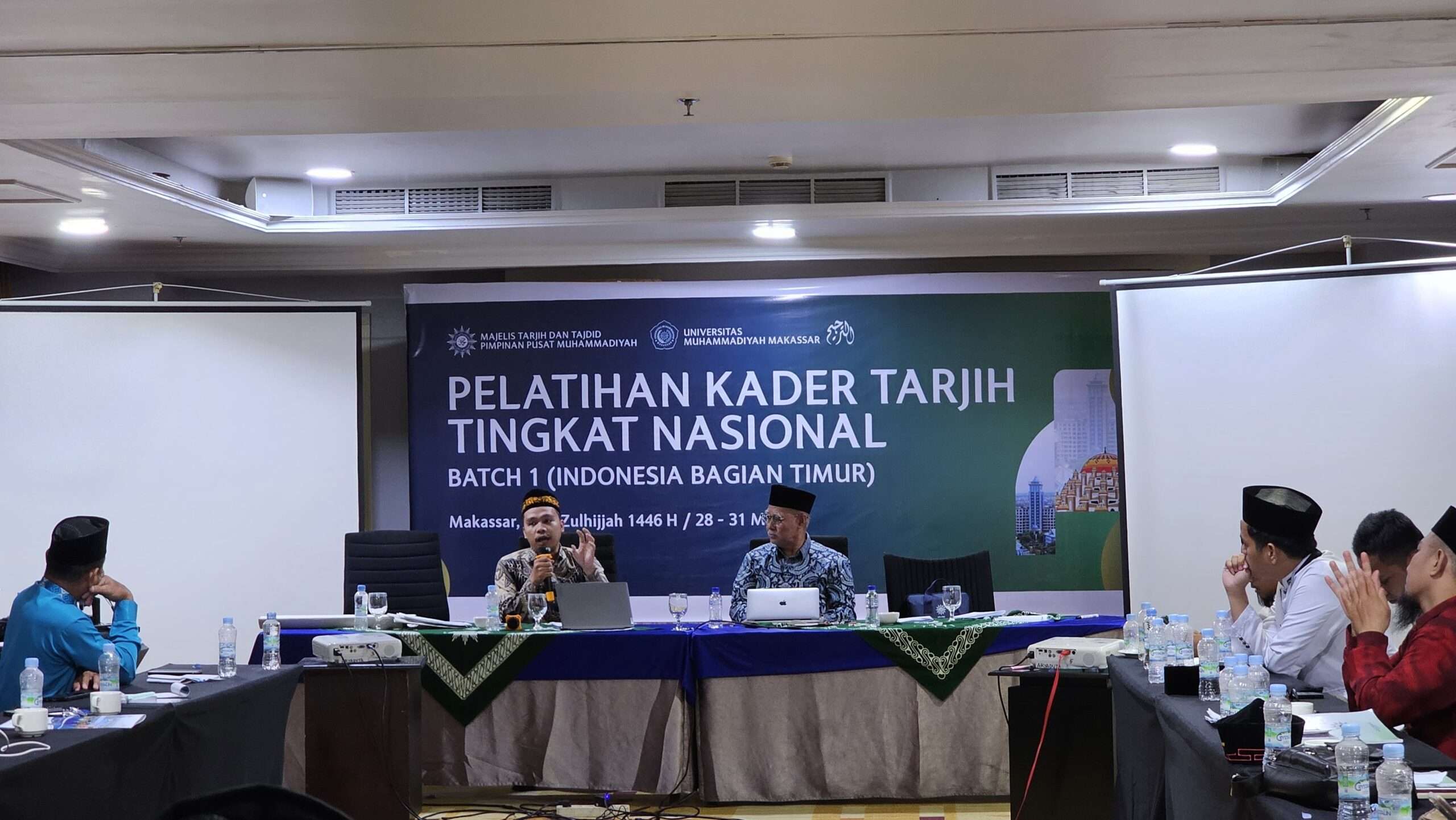
However, when it comes to determining the start of Ramadan and Shawwal, opinions often differ. Speaking at the National Tarjih Cadre Training in Makassar on Friday, May 30, the Chairperson of the Muhammadiyah Provincial Board of South Sulawesi, Ambo Asse, explained the root of this ongoing debate.

The disagreement centers on two main approaches to calculating the Islamic lunar calendar: hisab urfi and hisab hakiki. Each method reflects a different understanding of the moon’s movement.

Hisab urfi is a simplified method that doesn’t rely on direct observation of the moon. Instead, it follows a fixed pattern based on average lunar cycles, assigning each month a set number of days. For example, Ramadan—being the ninth month—is always considered 30 days long using this method. However, in reality, as observed from the sky, Ramadan may only last 29 days. This means the hisab urfi calendar doesn’t always match the actual appearance of the new moon, or hilal. Sometimes, the calendar is ahead of, behind, or in sync with the moon’s actual cycle.

RelatedArticle

Muhammadiyah Volunteers are the First to Arrive and Last to Leave Flores

Wasathiyah Islam as a Foundation for Universal Dakwah in a Diverse World

Bullying in the Hadith: Harming Others Comes at a Cost

On the other hand, hisab hakiki is based on the moon’s actual position in the sky. It uses precise astronomical calculations to determine the start and end of each lunar month. While this method is more accurate in theory, it introduces new challenges due to the variety of criteria used to decide when the new month begins.

Ambo Asse outlined three commonly used criteria in hisab hakiki. The first is ijtima’ before dawn, which considers the new month to start if the conjunction of the sun and moon happens before dawn. If the conjunction occurs after dawn, the current month continues until the next day.

The second is ijtima’ before sunset, which follows the idea that the day begins at sunset. If the conjunction takes place before sunset, then the new month starts that evening. If it occurs afterward, the current month continues for one more day. This method does not consider whether the moon is visible.

The third approach is imkan rukyat, or the visibility of the crescent moon. In this method, the new month only begins if the moon is visible to the naked eye on the evening of the 29th day of the current month. However, scholars have not agreed on the minimum height the moon should be to qualify as visible, which makes this method less consistent.

Looking ahead to the Islamic year 1447 AH, Ambo Asse said that Muhammadiyah is planning to adopt the imkan rukyat method as part of its move toward a Unified Global Hijri Calendar. Under this plan, the new month will begin when the moon is at least 5 degrees above the horizon and has an elongation of 8 degrees, regardless of the observer’s location on Earth.

“This step reflects an effort to unite Muslims around the world under a unified calendar, while also integrating advancements in astronomical science with religious traditions,” said Ambo Asse.

Tags: hijri calendarhisabhisab hakikiHisab urfiKHGTunified global hijri calendar
ShareTweetSendShareShare
Previous Post

Nasyiatul Aisyiyah Plays a Vital Role in Advancing Family Resilience and Moral Integrity

Next Post

The Muhammadiyah Special Branches: Voices of Progressive Islam Worldwide

RelatedPosts

Eid al-Adha 1447 H to Fall on Wednesday, May 27, 2026
Islamic Law

Eid al-Adha 1447 H to Fall on Wednesday, May 27, 2026

29 April 2026
Dhu al-Hijjah 1447 to Begin on Monday, May 18, 2026, Under Global Hijri Calendar
Islamic Law

DzulHijjah 1447 H to Begin on Monday, May 18, 2026

28 April 2026
Muhammadiyah Study Center Partners PCIM Saudi to Promote the Unified Global Hijri Calendar
News

Muhammadiyah Study Center Partners PCIM Saudi to Promote the Unified Global Hijri Calendar

28 April 2026
Young Indonesians Back Muhammadiyah’s Unified Global Hijri Calendar to End Eid Disputes
Ideology

Young Indonesians Back Muhammadiyah’s Unified Global Hijri Calendar to End Eid Disputes

6 April 2026
Next Post
The Muhammadiyah Special Branches: Voices of Progressive Islam Worldwide

The Muhammadiyah Special Branches: Voices of Progressive Islam Worldwide

Graduates of Mu’allimaat Muhammadiyah: The Face of Progressive Muslim Women Scholars

Graduates of Mu’allimaat Muhammadiyah: The Face of Progressive Muslim Women Scholars

Worldly Effort, Eternal Reward: The True Meaning of Service in Muhammadiyah

Worldly Effort, Eternal Reward: The True Meaning of Service in Muhammadiyah

Populer News

  • Safa and Marwa: Uncovering the Historical Depths of Two Sacred Hills

    Safa and Marwa: Uncovering the Historical Depths of Two Sacred Hills

    0 shares
    Share 0 Tweet 0
  • Muhammadiyah Appoints Crown Prince of Perlis as UMAM’s First Chancellor

    0 shares
    Share 0 Tweet 0
  • Is It Permissible for Muslims to Blow Out Birthday Candles?

    0 shares
    Share 0 Tweet 0
  • Leader’s Profile: dr. H. Agus Taufiqurrohman, Sp.S., M.Kes.

    0 shares
    Share 0 Tweet 0
  • Ta’aruf in Islam: Ethical Guidelines for Getting to Know Potential Spouse

    0 shares
    Share 0 Tweet 0
  • Leader’s Profile: Dr. H. M. Busyro Muqoddas, S.H., M.Hum.

    0 shares
    Share 0 Tweet 0
  • Fatwa on Using Mirin in Cooking for Muslims in Japan

    0 shares
    Share 0 Tweet 0
  • Muhammadiyah and NU Are the Largest and Most Influential Religious Organizations in the World

    0 shares
    Share 0 Tweet 0
  • Is It Permissible to Listen to Songs Sung by Women?

    0 shares
    Share 0 Tweet 0
  • Leader’s Profile: Prof. Dr. Haedar Nashir, M.Si.

    0 shares
    Share 0 Tweet 0

Council

  • Religious Opinion & Tajdid
  • Religious Preaching
  • Higher Education, Research, & Development
  • Elementary, Secondary, & Non-Formal Education
  • Cadre & Human Resources
  • Public Health
  • Social Welfare
  • Economy, Business, & Tourism
  • Waqf Utilization
  • Community Empowerment
  • Law and Human Rights
  • Enviromental Preservation
  • Publications & Information

Institutions

  • Islamic Boarding School
  • Branch & Mosque Development
  • Strategic Studies & Partnerships
  • Financial Supervision & Development
  • Disaster Management Center
  • Charity Management
  • Micro, Small, & Medium Enterprise
  • Politics & Public Policy
  • Arts & Culture
  • Sports & Development
  • International Relations & Cooperation
  • Community Da'wah
  • Halal Auditing & "Halalan Thayyiban" Studies
  • Hajj & Umroh
  • Legal Aid & Public Advocacy

Bureau

  • Organization Development
  • Financial Management
  • Communication & Public Services

Ortom

  • 'Aisyiyah Woman Association
  • Muhammadiyah Youth Association
  • Nasyiatul 'Aisyiyah Young Woman Association
  • Muhammadiyah University Student Association
  • Muhammadiyah Student Association
  • Muhammadiyah Tapak Suci Martial Arts
  • Muhammadiyah Hizbul Wathan Scouts

Sumatra Region

  • Nanggroe Aceh Darussalam
  • Sumatra Utara
  • Sumatra Selatan
  • Sumatra Barat
  • Bengkulu
  • Riau
  • Kepulauan Riau
  • Jambi
  • Bangka Belitung

Kalimantan Region

  • Kalimantan Barat
  • Kalimantan Timur
  • Kalimantan Selatan
  • Kalimantan Tengah
  • Kalimantan Utara

Jawa Region

  • D.I. Yogyakarta
  • Banten
  • DKI Jakarta
  • Jawa Barat
  • Jawa Tengah
  • Jawa Timur

Bali & Kepulauan Nusa Tenggara

Region

  • Bali
  • Nusa Tenggara Barat
  • Nusa Tenggara Timur

Sulawesi Region

  • Gorontalo
  • Sulawesi Barat
  • Sulawesi Tengah
  • Sulawesi Utara
  • Sulawesi Tenggara
  • Sulawesi Selatan

Maluku dan Papua Region

  • Maluku Utara
  • Maluku
  • Papua
  • Papua Barat
  • Papua Barat daya

Special Branch

  • Kairo Mesir
  • Iran
  • Sudan
  • Belanda
  • Jerman
  • United Kingdom
  • Libya
  • Malaysia
  • Prancis
  • Amerika Serikat
  • Jepang
  • Tunisia
  • Pakistan
  • Australia
  • Rusia
  • Taiwan
  • Tunisia
  • TurkI
  • Korea Selatan
  • Tiongkok
  • Arab Saudi
  • India
  • Maroko
  • Yordania
  • Yaman
  • Spanyol
  • Hongaria
  • Thailand
  • Kuwait
  • New Zealand

Category

  • Education
  • Health
  • Economy
  • Humanity
  • Religion
  • Law & Politics
  • Ideology
  • Culture
  • Media

About

  • History
  • Brand Guideline

Services

  • Information

Apps

  • Muhammadiyah ID
  • MASA
  • EventMu
  • BukuMu
  • SehatMu
  • KaderMu
  • LabMu

More Information

  • Editorial
  • Contact
  • Privacy Policy
© 2024 Persyarikatan Muhammadiyah

Welcome Back!

Login to your account below

Forgotten Password?

Retrieve your password

Please enter your username or email address to reset your password.

Log In

Add New Playlist

No Result
View All Result
  • icon bendera arab
  • bendera indonesia
  • EDUCATION
  • HEALTH
  • ECONOMY
  • HUMANITY
  • OTHERS
    • RELIGION
    • LAW & POLITICS
    • IDEOLOGY
    • SOCIO-CULTURE
    • ENVIRONMENT
    • MEDIA
  • Login

© 2024 Persyarikatan Muhammadiyah - Cahaya Islam Berkemajuan.