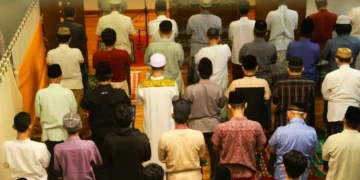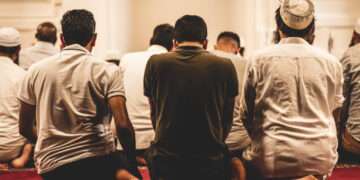


The practice of performing dhikr in organized groups under a designated leader has become increasingly visible in many Muslim communities. While the format may appear spiritually engaging, it raises an important question: does structured, guided group dhikr have a clear foundation in Islamic teachings?

To address this, it is essential to understand that dhikr in Islam is not confined toa single form. Rather, it encompasses a broad spectrum of expressions. Verbal dhikr includes utterances such as tasbih (glorification), tahmid (praise), and recitation of the Qur’an. Meanwhile, dhikr of the heart involves reflection on the greatness of God, His laws, and the mysteries of His creation.
In addition, dhikr through physical actions is embodied in acts of worship like prayer, which integrates all these dimensions simultaneously. Therefore, the concept of dhikr extends beyond ritual recitation into a holistic spiritual practice.
The Qur’an itself commands remembrance in general terms:
فَاذْكُرُونِي أَذْكُرْكُمْ وَاشْكُرُوا لِي وَلَا تَكْفُرُونِ
(البقرة: 152)
“So remember Me; I will remember you. Be grateful to Me and do not deny My blessings.” (Al-Baqarah: 152)
Notably, this verse does not specify the technical manner, structure, or format of dhikr. As a result, detailed guidance must be drawn from the teachings and practices of the Prophet Muhammad. Here lies a key point of scholarly caution: distinguished between general commands and specific forms of worship that require precise prophetic guidance.
Between General Encouragement and Specific Practice
Several hadiths do encourage remembrance of God, including in communal settings. However, a fixed and structured model of a guided group of dhikr–with synchronized recitation, set rhythms, and a formal leader–is not explicitly documented in the practices of the Prophet, his companions, or the early generation (salaf). Consequently, scholars have differed in their interpretations.
A significant reference comes from Muhammad ibn Idris al-Shafi’i in his work al-Umm. Commenting on dhikr after prayer, he explained that it should generally be performed quietly, except in specific circumstances:
“Indeed, the imam and the congregation perform dhikr after prayer in a low voice, unless the imam intends to teach them. In that case, he may raise his voice until they learn, after which it returns to being quiet.”
This view suggests that raising one’s voice in dhikr serves a functional and temporary purpose—namely, تعليم (instruction). In other words, audible recitation is a means, not an end.
Similarly, a widely cited hadith narrated by Abu Sa’id al-Khudri highlights the virtue of communal remembrance:
لَا يَقْعُدُ قَوْمٌ يَذْكُرُونَ اللَّهَ إِلَّا حَفَّتْهُمُ الْمَلَائِكَةُ وَغَشِيَتْهُمُ الرَّحْمَةُ وَنَزَلَتْ عَلَيْهِمُ السَّكِينَةُ وَذَكَرَهُمُ اللَّهُ فِيمَنْ عِنْدَهُ
(رواه مسلم)
“No people sit remembering God except that angels surround them, mercy envelops them, tranquility descends upon them, and God mentions them among those near Him.” (Narrated by Muslim)
However, this narration remains general in nature. It does not define whether dhikr should be performed in unison, under guidance, or according to a fixed structure. Therefore, using it as direct justification for formalized group dhikr requires careful methodological consideration.
Diverging Scholarly Views
Some early scholars viewed continuous loud dhikr as makruh (discouraged), and in certain cases even cautioned against it, as it did not align with the regular practice of the Prophet. Nevertheless, a minority of scholars have permitted it under strict conditions. These include the absence of ostentation (riya’), avoidance of disturbance, and the understanding that such a format does not hold special superiority over other forms of remembrance.
Thus, the issue is not simply whether group dhikr is permissible or forbidden. Rather, it concerns its alignment with prophetic guidance. A balanced approach, therefore, is to preserve the essence of dhikr: it should be sincere, humble, and free from excess or artificial structuring that resembles a fixed ritual without clear precedent.
If performed جماعة (in congregation) with a raised voice, it should remain limited to instructional purposes, not institutionalized as a routine form of worship. In this way, the practice stays faithful to both the spirit and methodology of Islamic teachings.