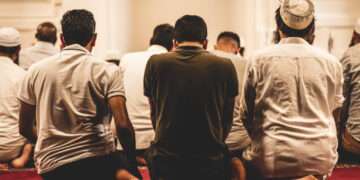


EN.MUHAMMADIYAH.OR.ID, YOGYAKARTA — The obligation to recite Al-Fatihah during prayer often raises questions when someone arrives late (masbuq) for a congregational prayer. What if a worshipper joins the congregation when the imam is already bowing and has no opportunity to recite Al-Fatihah?

Qaem Aulassyahied, a Member of the Muhammadiyah Central Board’s Religious Opinion and Reform Council, addressed the issue during a Tarjih Religious Sermon session on Wednesday (2/9).
According to him, the council considers the recitation of Al-Fatihah obligatory in prayer. This ruling applies both to those praying individually and those performing congregational prayers.
The view is based on a hadith of the Prophet:
لَا صَلَاةَ لِمَنْ لَمْ يَقْرَأْ بِفَاتِحَةِ الْكِتَابِ
“There is no prayer for one who does not recite the Opening of the Book.”
Why the Council Requires Al-Fatihah
Qaem explained that the council’s fatwa recognized two opinions regarding the recitation of Al-Fatihah by followers in congregational prayers. The first is the Hanafi school of thought. They believes that a follower praying behind an imam does not need to recite Al-Fatihah. One of its arguments is based on the Quran, Surah Al-A’raf, verse 204:
وَإِذَا قُرِئَ الْقُرْآنُ فَاسْتَمِعُوا لَهُ وَأَنْصِتُوا لَعَلَّكُمْ تُرْحَمُونَ
“And when the Quran is recited, listen to it and remain silent so that you may receive mercy.”
The second view, held by the majority of Islamic scholars, maintains that reciting Al-Fatihah remains obligatory for followers. This is the position adopted by the council.
According to Qaem, one reason for this choice is that the hadith requiring the recitation of Al-Fatihah is a specific textual basis that qualifies the general meaning of the verse requiring Muslim to listen when the Quran is recited.
This view is also supported by another hadith in which the Prophet asked his companions whether they recited behind him. After they replied that they did, the Prophet said:
فَلَا تَفْعَلُوا إِلَّا بِأُمِّ الْكِتَابِ
“Do not do so except with the Mother of the Book (Al-Fatihah).”
Therefore, in general, followers remain obligated to recite Al-Fatihah during congregational prayers.
An Exception for Latecomers
However, a specific exception applies to a masbuq, or a worshipper who joins the prayer late and arrives when the imam is already bowing (ruku’).
In such circumstances, the worshipper may not have enough time to recite Al-Fatihah. They must immediately follow the imam into the bowing position.
Qaem explained that a hadith concerning catching the imam in ruku’ provides an important basis for this ruling. The Prophet said:
مَنْ أَدْرَكَ الرَّكْعَةَ فَقَدْ أَدْرَكَهَا
“Whoever catches the bowing has caught that rak’ah.”
Therefore, a worshipper who arrives while the imam is bowing and manages to bow together with the imam is considered to have caught that rak’ah, even if they did not have time to recite Al-Fatihah.
Therefore, a worshipper who arrives while the imam is bowing and manages to bow together with the imam is considered to have caught that rak’ah, even if they did not have time to recite Al-Fatihah.
This provision serves as a specific exception to the general obligation to recite Al-Fatihah. Qaem explained that the hadith concerning catching the bowing is considered more specific to the circumstances of a latecomer than the hadith that generally requires the recitation of Al-Fatihah.
Thus, the Religious Opinion and Reform Council concludes that Al-Fatihah must be recited in every rak’ah of prayer, except when a latecomer joins the imam while the imam is bowing. In that situation, bowing with the imam is sufficient for the worshipper to catch the rak’ah, and they do not need to make up that rak’ah after the imam concludes the prayer.