Saturday, September 19, 2026
  • AR
  • ENG
  • IDN
Muhammadiyah Media
  • EDUCATION
  • HEALTH
  • ECONOMY
  • HUMANITY
  • OTHERS
    • RELIGION
    • LAW & POLITICS
    • IDEOLOGY
    • SOCIO-CULTURE
    • ENVIRONMENT
    • MEDIA
No Result
View All Result
  • Login
Muhammadiyah Media
  • EDUCATION
  • HEALTH
  • ECONOMY
  • HUMANITY
  • OTHERS
    • RELIGION
    • LAW & POLITICS
    • IDEOLOGY
    • SOCIO-CULTURE
    • ENVIRONMENT
    • MEDIA
No Result
View All Result
  • Login
Muhammadiyah Media
No Result
View All Result
  • EDUCATION
  • HEALTH
  • ECONOMY
  • HUMANITY
  • OTHERS
Home Islamic Law

Can an Imam Lead Congregational Prayer While Seated?

by Persyarikatan Muhammadiyah
1 month ago
in Islamic Law, News, Religion
Reading Time: 3 mins read
A A
Can an Imam Lead Congregational Prayer While Seated?

Can an Imam Lead Congregational Prayer While Seated?

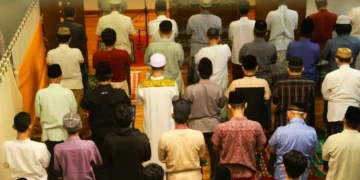
Congregational prayer is one of Islam’s central expressions of communal life. The imam holds a central position as the leader whom the congregation follows. 

For this reason, Muslim scholars have long discussed who has the strongest right to lead prayer and what conditions an imam must meet. They have also examined what happens when an imam is unable to stand and must lead the prayer while seated. 

In everyday life, worshippers may encounter mosque imams who are elderly, recovering from surgery, or living with an illness that makes standing for long periods difficult. So, is the prayer they lead still valid? And did the Prophet Muhammad ever do the same?

The answer is yes. Islamic tradition contains clear evidence from the Prophet’s practice.

In Islam, standing is a required element of prayer for those who are able to stand. However, Islamic law also grants concessions to people with legitimate physical limitations. The Prophet said to Imran ibn Husayn, who was ill:

عَنْ عِمْرَانَ بْنِ حُصَيْنٍ رَضِيَ اللَّهُ عَنْهُ قَالَ: كَانَتْ بِي بَوَاسِيرُ، فَسَأَلْتُ النَّبِيَّ ﷺ عَنِ الصَّلَاةِ، فَقَالَ: صَلِّ قَائِمًا، فَإِنْ لَمْ تَسْتَطِعْ فَقَاعِدًا، فَإِنْ لَمْ تَسْتَطِعْ فَعَلَى جَنْبٍ.

Meaning: Imran ibn Husayn reported: “I suffered from hemorrhoids and asked the Prophet about how I should pray. He said, ‘Pray standing. If you cannot, then pray sitting. If you still cannot, then pray lying on your side.’” (HR. al-Bukhari).

This hadith establishes a key principle: the obligation to stand no longer applies when a person genuinely cannot do so. The same concession applies to anyone, including an imam.

The Prophet Muhammad himself once led his Companions while seated because of illness. Aisyah reported:

عَنْ عَائِشَةَ رَضِيَ اللَّهُ عَنْهَا قَالَتْ: اشْتَكَى رَسُولُ اللَّهِ ﷺ، فَدَخَلَ عَلَيْهِ نَاسٌ مِنْ أَصْحَابِهِ يَعُودُونَهُ، فَصَلَّى رَسُولُ اللَّهِ ﷺ جَالِسًا، وَصَلَّوْا قِيَامًا، فَأَشَارَ إِلَيْهِمْ أَنْ اجْلِسُوا، فَلَمَّا انْصَرَفَ قَالَ: إِنَّمَا جُعِلَ الإِمَامُ لِيُؤْتَمَّ بِهِ، فَإِذَا رَكَعَ فَارْكَعُوا، وَإِذَا رَفَعَ فَارْفَعُوا، وَإِذَا صَلَّى جَالِسًا فَصَلُّوا جُلُوسًا.

Meaning: Aisyah reported that the Prophet once fell ill. Several Companions visited him, and he led them in prayer while seated. They initially prayed standing, so he gestured for them to sit. After the prayer, he said, “The imam is appointed to be followed. When he bows, bow. When he rises, rise. And when he prays while seated, pray while seated.” (HR. al-Bukhari and Muslim).

This report shows that the Prophet himself led prayer while seated because of illness. Therefore, an imam praying while seated is not an innovation. Rather, the practice has a strong basis in the Sunnah.

When Should the Congregation Sit?

At the same time, the Prophet also instructed those who were healthy to pray standing. Abu Hurairah reported:

وَإِذَا صَلَّى قَائِمًا فَصَلُّوا قِيَامًا، وَإِذَا صَلَّى قَاعِدًا فَصَلُّوا قُعُودًا أَجْمَعُونَ.

Meaning: “When the imam prays standing, pray standing. And when he prays while seated, then all of you should pray while seated.” (HR. Muslim).

Scholars later examined how these reports should be understood alongside the Prophet’s practice during his final illness. On that occasion, his Companions remained standing behind him. Several schools of Islamic jurisprudence emerged from this discussion. The majority of scholars hold that worshippers who are physically able should remain standing when an imam sits because of illness. Some scholars, however, understand the earlier hadith to mean that the congregation should also sit. This difference represents a longstanding area of ijtihad, or independent legal reasoning, within Islamic jurisprudence.

The question of who should lead prayer also has its own guidelines. The Prophet explained that the person with the strongest claim to lead is the one with the best knowledge and recitation of the Quran. If they are equal in recitation, preference goes to the person with greater knowledge of the Sunnah. If they are equal there, preference goes to the one who migrated earlier, followed by the oldest in age.

RelatedArticle

Muhammadiyah and Global Peace Foundation Strengthen Peacebuilding Efforts

Muhammadiyah Strengthens School Management through Training Program in China

Qada and Qadar Should Not Become an Excuse for Passivity

يَؤُمُّ الْقَوْمَ أَقْرَؤُهُمْ لِكِتَابِ اللَّهِ، فَإِنْ كَانُوا فِي الْقِرَاءَةِ سَوَاءً فَأَعْلَمُهُمْ بِالسُّنَّةِ، فَإِنْ كَانُوا فِي السُّنَّةِ سَوَاءً فَأَقْدَمُهُمْ هِجْرَةً، فَإِنْ كَانُوا فِي الْهِجْرَةِ سَوَاءً فَأَكْبَرُهُمْ سِنًّا.

Meaning: “The one who should lead a people in prayer is the one who recites the Book of Allah best. If they are equal in recitation, then the one most knowledgeable about the Sunnah. If they are equal in knowledge of the Sunnah, then the one who migrated earlier. If they are equal in migration, then the oldest among them.” (HR. Muslim).

This hadith shows that the primary qualification for an imam is not physical ability but knowledge and suitability to lead the prayer.

Therefore, a scholar or imam with stronger Quranic recitation and religious knowledge may still lead congregational prayer while seated because of illness or advanced age.

Reference:

Council for Religious Opinion and Reform of the Muhammadiyah Central Board, “Hukum Mengimami Shalat dalam Keadaan Duduk”, Suara Muhammadiyah Magazine, Ed. 108, 2023.


 

Tags: imamislamic lawjurisprudence
ShareTweetSendShareShare
Previous Post

Muhammadiyah Receives Award at Saudi Education Expo 2026

Next Post

Muhammadiyah and King Hussein Cancer Foundation Explore Support for Palestinian Cancer Patients

RelatedPosts

If a Masbuq Joins During the Imam’s Bowing, Must They Still Recite Al-Fatihah?
Islamic Law

If a Masbuq Joins During the Imam’s Bowing, Must They Still Recite Al-Fatihah?

4 September 2026
Understanding Different Definitions of Hadith Can Foster Religious Tolerance
Islamic Law

Understanding Different Definitions of Hadith Can Foster Religious Tolerance

15 August 2026
Different Forms of Worship Share the Same Prophetic Foundation, Muslims Must Not Judge One Another
Islamic Law

Different Forms of Worship Share the Same Prophetic Foundation, Muslims Must Not Judge One Another

14 August 2026
Is It Permissible to Kiss the National Flag with Emotion? 
News

Is It Permissible to Kiss the National Flag with Emotion? 

11 August 2026
Next Post
Muhammadiyah and King Hussein Cancer Foundation Explore Support for Palestinian Cancer Patients

Muhammadiyah and King Hussein Cancer Foundation Explore Support for Palestinian Cancer Patients

Nasyiatul ‘Aisyiyah Congress to Set New Direction for Progressive Young Women’s Movement

Nasyiatul ‘Aisyiyah Congress to Set New Direction for Progressive Young Women’s Movement

Din Syamsuddin: Women Education is a Pillar of Civilization

Din Syamsuddin: Women Education is a Pillar of Civilization

Populer News

  • Safa and Marwa: Uncovering the Historical Depths of Two Sacred Hills

    Safa and Marwa: Uncovering the Historical Depths of Two Sacred Hills

    0 shares
    Share 0 Tweet 0
  • Muhammadiyah Appoints Crown Prince of Perlis as UMAM’s First Chancellor

    0 shares
    Share 0 Tweet 0
  • Fatwa on Using Mirin in Cooking for Muslims in Japan

    0 shares
    Share 0 Tweet 0
  • Is It Permissible for Muslims to Blow Out Birthday Candles?

    0 shares
    Share 0 Tweet 0
  • Ta’aruf in Islam: Ethical Guidelines for Getting to Know Potential Spouse

    0 shares
    Share 0 Tweet 0
  • Leader’s Profile: Dr. H. M. Busyro Muqoddas, S.H., M.Hum.

    0 shares
    Share 0 Tweet 0
  • Leader’s Profile: dr. H. Agus Taufiqurrohman, Sp.S., M.Kes.

    0 shares
    Share 0 Tweet 0
  • Leader’s Profile: Prof. Dr. Haedar Nashir, M.Si.

    0 shares
    Share 0 Tweet 0
  • Punishing Corruption in Islam: Legal, Moral, and Spiritual Dimensions

    0 shares
    Share 0 Tweet 0
  • Not Ishaq, but Ishmael: Reexamining the History of Ibrahim’s Sacrifice

    0 shares
    Share 0 Tweet 0

Council

  • Religious Opinion & Tajdid
  • Religious Preaching
  • Higher Education, Research, & Development
  • Elementary, Secondary, & Non-Formal Education
  • Cadre & Human Resources
  • Public Health
  • Social Welfare
  • Economy, Business, & Tourism
  • Waqf Utilization
  • Community Empowerment
  • Law and Human Rights
  • Enviromental Preservation
  • Publications & Information

Institutions

  • Islamic Boarding School
  • Branch & Mosque Development
  • Strategic Studies & Partnerships
  • Financial Supervision & Development
  • Disaster Management Center
  • Charity Management
  • Micro, Small, & Medium Enterprise
  • Politics & Public Policy
  • Arts & Culture
  • Sports & Development
  • International Relations & Cooperation
  • Community Da'wah
  • Halal Auditing & "Halalan Thayyiban" Studies
  • Hajj & Umroh
  • Legal Aid & Public Advocacy

Bureau

  • Organization Development
  • Financial Management
  • Communication & Public Services

Ortom

  • 'Aisyiyah Woman Association
  • Muhammadiyah Youth Association
  • Nasyiatul 'Aisyiyah Young Woman Association
  • Muhammadiyah University Student Association
  • Muhammadiyah Student Association
  • Muhammadiyah Tapak Suci Martial Arts
  • Muhammadiyah Hizbul Wathan Scouts

Sumatra Region

  • Nanggroe Aceh Darussalam
  • Sumatra Utara
  • Sumatra Selatan
  • Sumatra Barat
  • Bengkulu
  • Riau
  • Kepulauan Riau
  • Jambi
  • Bangka Belitung

Kalimantan Region

  • Kalimantan Barat
  • Kalimantan Timur
  • Kalimantan Selatan
  • Kalimantan Tengah
  • Kalimantan Utara

Jawa Region

  • D.I. Yogyakarta
  • Banten
  • DKI Jakarta
  • Jawa Barat
  • Jawa Tengah
  • Jawa Timur

Bali & Kepulauan Nusa Tenggara

Region

  • Bali
  • Nusa Tenggara Barat
  • Nusa Tenggara Timur

Sulawesi Region

  • Gorontalo
  • Sulawesi Barat
  • Sulawesi Tengah
  • Sulawesi Utara
  • Sulawesi Tenggara
  • Sulawesi Selatan

Maluku dan Papua Region

  • Maluku Utara
  • Maluku
  • Papua
  • Papua Barat
  • Papua Barat daya

Special Branch

  • Kairo Mesir
  • Iran
  • Sudan
  • Belanda
  • Jerman
  • United Kingdom
  • Libya
  • Malaysia
  • Prancis
  • Amerika Serikat
  • Jepang
  • Tunisia
  • Pakistan
  • Australia
  • Rusia
  • Taiwan
  • Tunisia
  • TurkI
  • Korea Selatan
  • Tiongkok
  • Arab Saudi
  • India
  • Maroko
  • Yordania
  • Yaman
  • Spanyol
  • Hongaria
  • Thailand
  • Kuwait
  • New Zealand

Category

  • Education
  • Health
  • Economy
  • Humanity
  • Religion
  • Law & Politics
  • Ideology
  • Culture
  • Media

About

  • History
  • Brand Guideline

Services

  • Information

Apps

  • Muhammadiyah ID
  • MASA
  • EventMu
  • BukuMu
  • SehatMu
  • KaderMu
  • LabMu

More Information

  • Editorial
  • Contact
  • Privacy Policy
© 2024 Persyarikatan Muhammadiyah

Welcome Back!

Login to your account below

Forgotten Password?

Retrieve your password

Please enter your username or email address to reset your password.

Log In

Add New Playlist

No Result
View All Result
  • icon bendera arab
  • bendera indonesia
  • EDUCATION
  • HEALTH
  • ECONOMY
  • HUMANITY
  • OTHERS
    • RELIGION
    • LAW & POLITICS
    • IDEOLOGY
    • SOCIO-CULTURE
    • ENVIRONMENT
    • MEDIA
  • Login

© 2024 Persyarikatan Muhammadiyah - Cahaya Islam Berkemajuan.