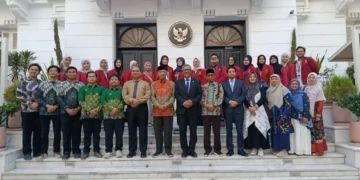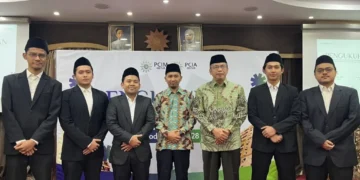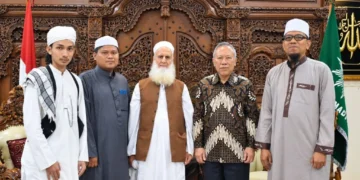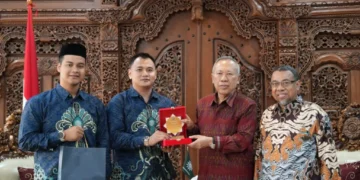

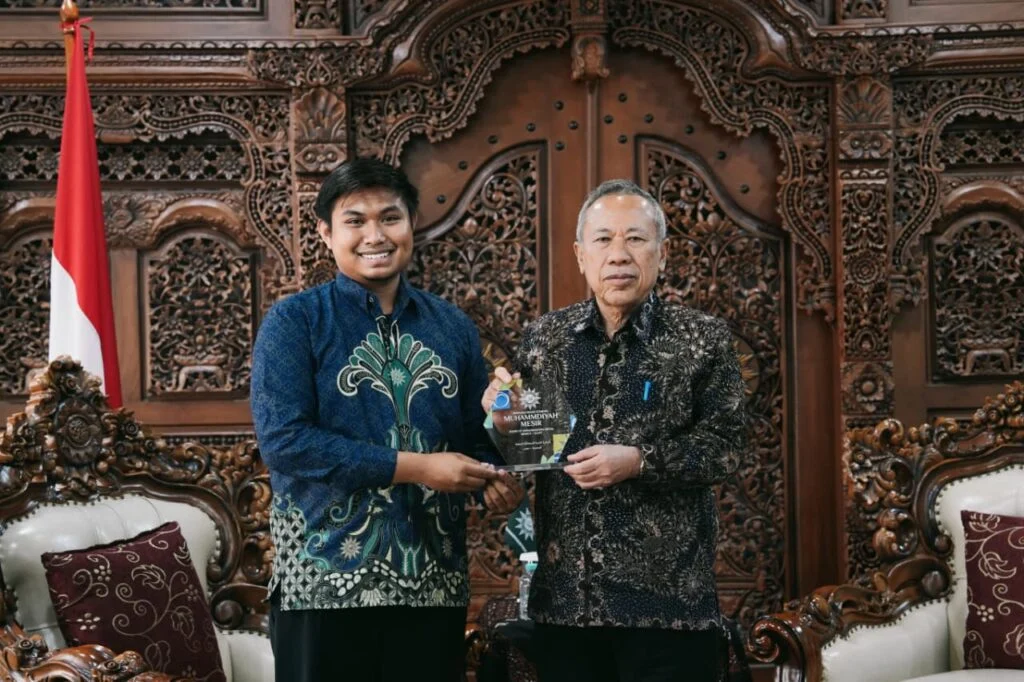
EN.MUHAMMADIYAH.OR.ID, JAKARTA – The Muhammadiyah Special Branch Board of Egypt (PCIM Egypt) presented updates on its organizational development and several strategic plans to the Muhammadiyah Central Board during a visit to its headquarters in Central Jakarta, on Tuesday (13/10).

The meeting covered plans to develop educational institutions, strengthen charitable enterprises, support students, and expand the organization’s dakwah in Egypt.
Muhammad Aslam Islami, the First Deputy Chair of PCIM Egypt, explained that the visit provided an opportunity to report on the progress of the new leadership, which had been in place for two and a half months. The proposed programs included establishing a Muhammadiyah elementary school in Egypt, developing a building for the ‘Aisyiyah Bustanul Athfal Kindergarten (TK ABA), and strengthening various business ventures to support organizational activities.
“We discussed several major projects, including the establishment of a Muhammadiyah elementary school in Egypt and the construction of an official building for TK ABA,” Aslam said.
He explained that the idea of establishing the elementary school arose from a request by the Indonesian Embassy in Cairo. Muhammadiyah was considered capable of managing educational enterprises overseas.
Strengthening Educational and Business Ventures
Beyond education, PCIM Egypt manages several business ventures: MD Inn, which provides accommodation; MD Travel & Tour, which provides travel services; and MD Catering, which provides catering services. These ventures are expected to strengthen the organization’s financial independence while serving the needs of Indonesians visiting Egypt.
Aslam also provided updates on scholarship programs at Al-Azhar University for Indonesian students. During the meeting, PCIM Egypt sought guidance from the Muhammadiyah Central Board on how to monitor and support Indonesian students pursuing their studies in Egypt.
Syafiq A. Mughni, Chairperson of the Muhammadiyah Central Board, welcomed PCIM Egypt’s progress, particularly its efforts to support Muhammadiyah cadres who study or work in the country.
“We are very pleased and proud of their activities in supporting Muhammadiyah cadres there. I really appreciate both those who are studying and those who are working there,” Syafiq said.
According to Syafiq, developing primary education has become increasingly important as the Indonesian diaspora in Egypt grows. However, he stressed that school development plans must be supported by careful calculations. Particularly, he was really concerned regarding the long-term sustainability of the institution.
The plan is very good, but we must assess it carefully, especially in terms of the institution’s sustainability. This is done to eliminate possible obstacle in the future,” he explained.
Syafiq also expressed support for student development programs, including sending students to Al-Azhar University and providing mentoring through Muhammadiyah’s charitable enterprises in Indonesia and PCIM Egypt.
Tapak Suci as Means of International Dakwah
The development of Tapak Suci, Muhammadiyah martial arts organization, in Egypt was another focus of the meeting. Syafiq praised the enthusiasm of local residents who regularly attend Tapak Suci training sessions. He described the activity as an effective means of expanding Muhammadiyah’s dakwah internationally.
“Many Egyptians are interested in joining this Tapak Suci group, and they hold regular training sessions. This is a very effective means of dakwah for Muhammadiyah there,” he said.
Looking ahead, PCIM Egypt hopes to realize its priority programs. The programs include developing educational facilities and adding buildings to accommodate its growing number of cadres. It also plans to strengthen collaboration with Indonesian universities through various activities, including the Community Service Program (KKN).
In closing, Syafiq encouraged Muhammadiyah students in Egypt to pursue academic excellence and deepen their knowledge. By doing so, they can contribute to Indonesia upon their return.
“Acquire as much knowledge as you can, so when you return to Indonesia, you can serve the community,” he said. (Taufik)