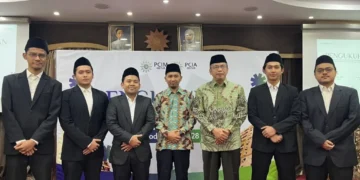

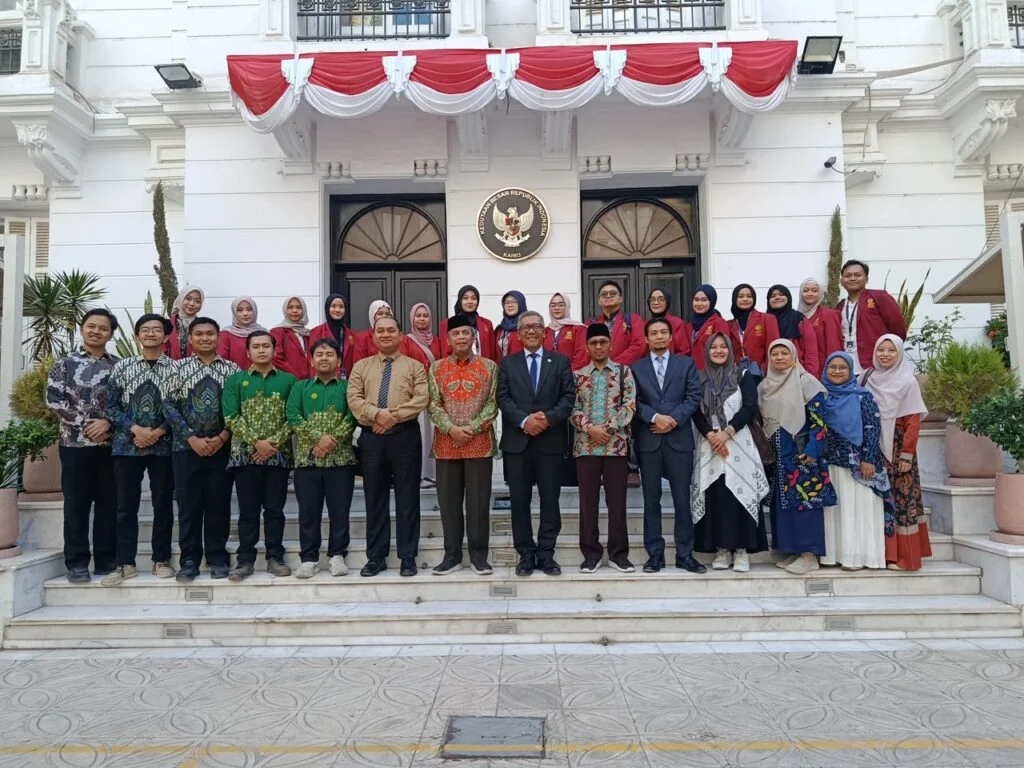
EN.MUHAMMADIYAH.OR.ID, CAIRO – During a visit to Egypt, the Muhammadiyah Central Board, together with Muhammadiyah Special Branch Board of Egypt (PCIM Egypt) and ‘Aisyiyah Special Branch Board of Egypt (PCIA Egypt), met with Indonesian Ambassador to Egypt Kuncoro Giri Waseso, as well as the coordinators for information, social, and cultural affairs and education and culture at Indonesian Embassy in Cairo. The meeting, held in the embassy’s conference room, focused on plans to establish a Muhammadiyah elementary school in Egypt.

The discussion drew on findings from a research team that had studied schools in Cairo and Muhammadiyah schools established abroad. Those are Muhammadiyah Australian College (MAC) and Sekolah Bina Mulia (SBM) in Malaysia.
Preliminary findings suggest that the Malaysian Muhammadiyah school model shares several similarities with conditions in Egypt. They share similarity in terms of government support. The Australian model, meanwhile, differs because it receives full support from the local government.
Muhammadiyah Leadership Supports the Plan
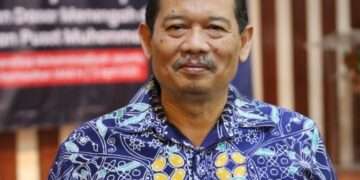
Responding positively to the findings, Agung Danarto, Chairperson of the Muhammadiyah Central Board, and his colleagues expressed support for establishing a Muhammadiyah elementary school in Egypt. They also urged the initiative to move forward promptly rather than wait for a major event such as the Muhammadiyah National Congress.
“The study should be followed up immediately. We hope the proposal will be prepared and submitted to the Muhammadiyah Central Board soon. It would not be necessary to wait for the Congress,” Agung said in a statement received on Tuesday (13/10).
Indonesian Ambassador to Egypt Kuncoro Giri Waseso also welcomed the plan, while emphasizing the need for a more comprehensive assessment.
“One important consideration is the experience of Muhammadiyah schools in Malaysia. This will help identify potential risks related to regulations, management, and financing before the school is established,” Kuncoro said.
Building a Sustainable Educational Ecosystem
The proposed elementary school is intended not only to expand access to Muhammadiyah education but also to strengthen the presence of the ‘Aisyiyah Bustanu Athfal Kindergarten (TK ABA), which was established in Egypt earlier.
This is particularly important because TK ABA continues to face several financial challenges, especially in covering operational costs. The establishment of a Muhammadiyah elementary school is therefore expected to help create a more sustainable Muhammadiyah educational ecosystem in Egypt.
As a next step, the elementary school team plans to present its research findings for further discussion in Indonesia with Haedar Nashir, President of Muhammadiyah, and Abdul Mu’ti, Minister of Primary and Secondary Education.
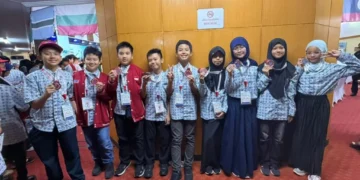
After visiting the Indonesian Embassy, the Muhammadiyah Central Board delegation visited TK ABA in Cairo. There, they met with teachers and interacted with the children in a warm and friendly atmosphere. The delegation then continued its journey to Egypt’s Luxor Governorate. (Bhisma)