EN.MUHAMMADIYAH.OR.ID, PALU — The Central Board of Muhammadiyah has called on all elements of Indonesian society to strengthen solidarity and preserve national unity amid the country’s social, political, and national dynamics. Unity is both a historical legacy and a key source of strength for Indonesia. It is the most essential instrument to build a peaceful, just, prosperous, and progressive society.

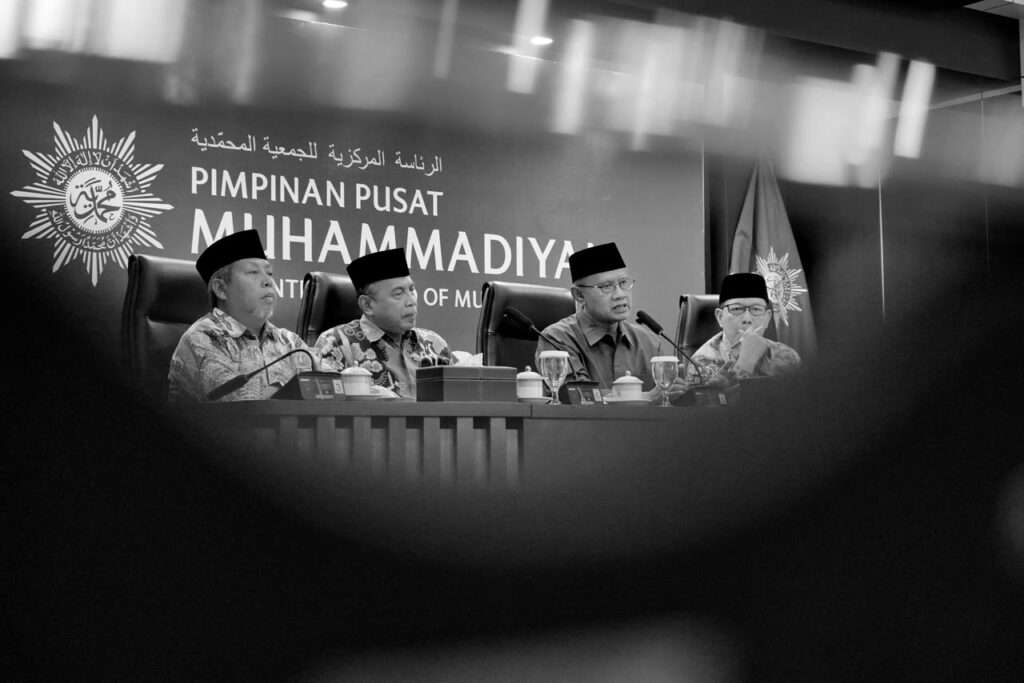
The message was delivered by Haedar Nashir, President of Muhammadiyah, during a press conference on the organization’s Tanwir and 114th Anniversary celebrations in Palu, Central Sulawesi. The press conference took place on Monday (9/11) at the Muhammadiyah Central Board’s headquarters in Yogyakarta.
Muhammadiyah will hold its Tanwir and Anniversary celebrations on November 13–15, 2026, under the theme “Together, Unifying the Nation.” The event is scheduled to be attended and officially opened by Indonesian President Prabowo Subianto, alongside national figures.
Haedar explained that solidarity and unity are deeply rooted in Indonesia’s history and cultural heritage. These values are reflected in the spirit of gotong royong (mutual cooperation), the national motto Bhinneka Tunggal Ika (Unity in Diversity), and the third principle of Pancasila, “The Unity of Indonesia.”
He stressed that this national foundation must be continually safeguarded and revitalized to strengthen the country’s integrity, prosperity, and progress. Poorly managed political and social dynamics, particularly those driven by excessive ambition, could otherwise trigger tensions and threaten national cohesion.
“We must continue to preserve national unity. Differences in interests are natural in a democratic society. However, they must not escalate into conflicts that undermine solidarity and the integrity of the nation,” he said.
Upholding Law and Social Ethics
Haedar also emphasized the importance of establishing social order through strong, fair, honest, objective, and transparent law enforcement. Beyond legal frameworks, collective ethics must guide citizens and national leaders alike in conducting public and state affairs.
Law enforcement and stronger social ethics are essential to preventing conflicts of interest among groups, organizations, and government institutions. These principles help ensure that national life remains orderly and justice is upheld for all members of society.
Amid the rapid development of information technology, Muhammadiyah has also raised concerns over the use of social media. It has increasingly become a platform for spreading misinformation, hatred, insults, hostility, and division.
Haedar reminded the public that social media should serve as a productive space for sharing knowledge, information, and positive values. Social media, he added, should not fuel disagreements instead.
Therefore, social media users must uphold noble morals and good character. Freedom of expression must go hand in hand with responsibility and the ability to distinguish between right and wrong, good and bad, and appropriate and inappropriate conduct.
Supporting Constitutional Leadership and National Cohesion
Regarding national leadership, Muhammadiyah expressed its support for President Prabowo Subianto in upholding the Constitution and legal system to achieve the nation’s goals as set out in the Preamble to the 1945 Constitution.
Muhammadiyah believes that national leadership must remain firmly grounded in the Constitution and fulfill its constitutional obligations. The President is expected to lead Indonesia in pursuing the Asta Cita agenda and realizing the nation’s aspirations for unity, sovereignty, justice, and prosperity.
At the same time, all state institutions, including the executive, legislative, and judicial branches, the Indonesian National Armed Forces (TNI), the National Police (Polri), and other government bodies, are expected to strengthen coordination and solidarity. Sectoral divisions that could undermine government cohesion and threaten national integration must be avoided.
All elements of society are also encouraged to uphold religious values, Pancasila, and Indonesia’s cultural heritage as guiding principles.
Muhammadiyah’s Commitment to Strengthening Unity
Haedar further affirmed that Muhammadiyah remains committed to contributing to the preservation and strengthening of national unity. The organization pursues this commitment through various fields of service, including education, social and healthcare services, economic empowerment, community development, and dakwah (Islamic outreach).
Muhammadiyah will also continue to strengthen communication, collaboration, and cooperation with religious and civil society organizations. These efforts form part of its broader commitment to building social cohesion and fostering closer ties among different elements of the nation.
For Muhammadiyah, unity is a strategic asset in Indonesia’s pursuit of becoming a progressive, peaceful, just, and prosperous nation. After all, a country cannot achieve meaningful progress if its people remain divided.