

MUHAMMADIYAH.OR.ID, SURABAYA – Health oriented da’wah has long stood as one of the central pillars of Muhammadiyah and ‘Aisyiyah’s mission since their early years. This enduring commitment stems from deep concern for marginalized communities who lack proper access to healthcare.

Chair of the Central Board of ‘Aisyiyah, Siti Noordjannah Djohantini, emphasized that Muhammadiyah’s attention to health began with Kiai Haji Ahmad Dahlan, the founder of the movement. From the start, healthcare was seen as an inseparable part of humanitarian da’wah grounded in Islamic values.
“If we reflect on Muhammadiyah’s history, our nation was still under colonial rule at the time. Access to healthcare was extremely limited, and medical services were mostly available only to people of certain social classes,” Noordjannah said.
She added that Muhammadiyah was founded to serve people from all walks of life, regardless of their social or economic background. This principle, she noted, embodies the message of Q.S. Ali Imran 3:108, which calls on believers to promote good and prevent wrongdoing.
“Muhammadiyah was the first Islamic organization to establish public healthcare services in Indonesia. From that initiative emerged the PKO Muhammadiyah Hospital in Yogyakarta, the country’s first Islamic hospital founded by our great organization,” she explained.
Muhammadiyah’s da’wah in healthcare continues to evolve with the times. Today, around 20 medical faculties have been established under Muhammadiyah and ‘Aisyiyah Universities (PTMA), standing as living proof of KH Ahmad Dahlan’s vision to improve the nation’s quality of life.
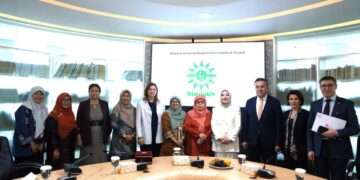
Speaking at the National Consolidation Meeting of the ‘Aisyiyah Health Council, Noordjannah expressed hope that the event would serve as a moment of reflection to strengthen future strategies for health-centered da’wah.
“Leadership must be continuously reflected upon. We should not become complacent or remain in our comfort zones. Health da’wah requires innovation, courage, and a steadfast commitment to serve the people,” she concluded. (Bintang Adrian)