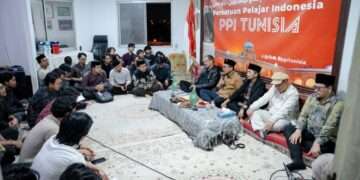


MUHAMMADIYAH.OR.ID, TUNISIA — The celebration of Eid al-Fitr in Tunisia offers a distinct experience for members of Muhammadiyah living abroad. For the Indonesian diaspora affiliated with the Muhammadiyah Special Branch Board in Tunisia, the arrival of 1 Shawwal 1447 H aligned with Muhammadiyah’s calendar. Yet the atmosphere differed notably from celebrations back home.

Unlike in Indonesia, where the night before Eid resounds with chants of takbir, the mood in Tunisia remains relatively subdued. Cafés and markets continue their usual rhythm, and mosques do not see the same surge of worshippers. Still, these differences create a unique cultural texture in a country known as the birthplace of Ibn Khaldun.
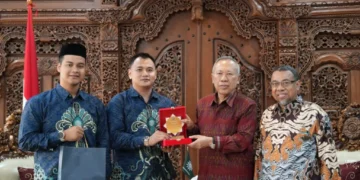
Despite the quieter setting, the spirit of Eid endures among Indonesians in Tunisia. During Eid prayers at the Indonesian Embassy residence, Ambassador Zuhairi Misrawi emphasized that the holiday retains its solemn and spiritual essence regardless of location.
He noted that takbir is not merely a chant, but a declaration of faith in God’s greatness and a source of optimism. Moreover, he encouraged Muslims to translate the spirit of Eid into meaningful contributions across fields such as education, economics, and diplomacy.
A Convergence of Faith and Independence
Furthermore, Misrawi described Eid as a return to fitrah, or human purity, which serves as a foundation for personal and collective growth. He added that these values resonate with Indonesia’s national character, particularly in its traditions of tolerance, mutual cooperation, and peaceful coexistence.
This year’s celebration in Tunisia carried additional significance. Eid coincided not only with Friday—considered the most blessed day of the week in Islam—but also with Tunisia’s Independence Day on March 20.
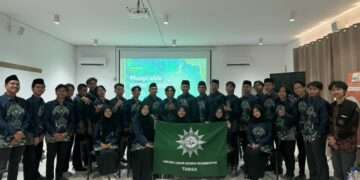
According to Naufal Sholahudin, Chairperson of the Muhammadiyah Special Branch Board in Tunisia, this convergence creates a powerful blend of spiritual devotion and national pride. He argued that Eid should not only mark the completion of Ramadan, but also inspire reflection on the broader struggles for freedom and dignity.
“For us, religious and national values must go hand in hand in advancing humanitarian and communal missions,” he said.
For Tunisians, March 20 symbolizes resilience, honor, and courage in achieving independence. Therefore, the overlap with Eid reinforces the meaning of victory—one born from patience, perseverance, and devotion to God.
Ultimately, Eid al-Fitr 1447 H serves as a moment to return to one’s essential nature, seek forgiveness, and strengthen bonds of kinship. It also calls for a broader sense of empathy and solidarity that transcends borders.
More than a celebration, Eid becomes an invitation to care for others, including those facing hardship in different parts of the world. In this way, the universal values of Islam—as a mercy to all creation—continue to resonate long after Ramadan has ended.