

MUHAMMADIYAH.OR.ID, BANGKOK – Muhammadiyah Special Branch Board of Thailand (PCIM Thailand) is moving to expand its role among Indonesian diaspora communities through closer collaboration with diplomatic representatives, following a meeting with Indonesia’s ambassador to Thailand.

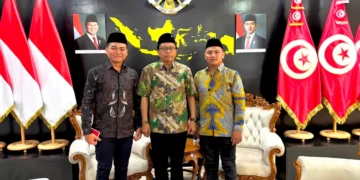
During an official visit on Friday (10/4), PCIM Thailand representatives held talks with Hari Prabowo, Indonesia’s ambassador to the Kingdom of Thailand and permanent representative to the United Nations Economic and Social Commission for Asia and the Pacific (UNESCAP).
The meeting followed a formal request submitted by PCIM Thailand and aimed to strengthen institutional synergy between Indonesian diaspora organizations and diplomatic missions abroad. As a result, both sides expressed interest in building a more structured and sustained partnership.
Ambassador Hari welcomed the initiative and praised the organization’s commitment to contributing to Indonesia’s broader interests. “We hope this can lead to concrete and sustainable collaboration, particularly in activities that directly engage local communities in Thailand,“ he said.
Expanding Collaboration Across Key Sectors
Meanwhile, Andi Subhan Husain, Chairperson of PCIM Thailand, described the meeting as an opportunity to present the organization’s profile, strategic programs, and long-term vision. He emphasized the importance of strengthening the role of the Indonesian diaspora through targeted initiatives.
According to Andi, the collaboration will focus on three priority sectors: education, health care, and agro-industry. These areas aim to improve access, enhance service quality, and empower local communities. Moreover, such programs are expected to create tangible benefits not only for Indonesians abroad but also for the wider Thai society.
He added that the partnership reflects a broader effort to promote people-to-people diplomacy, an approach that fosters mutual understanding through direct community engagement rather than formal state channels alone.
In addition, Andi highlighted the growing importance of diaspora organizations as strategic partners in strengthening bilateral relations. By working alongside diplomatic missions, groups like PCIM Thailand can help bridge cultural and social gaps while advancing shared development goals.
“PCIM Thailand is optimistic that this synergy will serve as a starting point for broader and more sustainable collaborative programs,” he said. “We hope these initiatives will deliver meaningful impacts for communities in both countries,” he concluded. (bhisma)