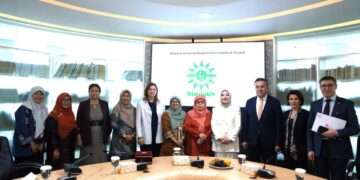


MUHAMMADIYAH.OR.ID, YOGYAKARTA – One of Muhammadiyah’s most distinctive achievements is its establishment of ‘Aisyiyah, an organization that embodies a progressive spirit and affirms women’s equal role in public life.

Islam teaches that men and women stand equal in the public sphere. That principle inspired the founding of ‘Aisyiyah in 1917. At a time when social spaces were dominated by men, the organization emerged as a pioneer of gendered justice.
Siti Syamsiyatun, Chairperson of the Central Board of ‘Aisyiyah, said the group gave women and children a voice when society denied them space. She spoke on Tuesday (3/3) at the Walidah Dahlan Mosque of ‘Aisyiyah University (UNISA) Yogyakarta.
“This is evident in ‘Aisyiyah’s effort to give women and children a voice and space,” Syamsiyatun said. “One hundred years ago, they did not have a place.”
In the late 19th century, public spaces remained largely inaccessible to women. Many families even barred girls from attending school. However, ‘Aisyiyah challenged those norms and opened doors to education for women.
Expanding Access and Shaping Civilization
Beyond education, Syamsiyatun highlighted ‘Aisyiyah’s role in promoting literacy and civilizational learning. She argued that knowledge and religion together shape the foundations of civilization.
“If women are not involved in conversations within social spaces, civilization often tilts to one side,” she said. “In past centuries, it frequently favored male interests.”
Therefore, the literacy movement championed by ‘Aisyiyah carried deep significance. It helped build a more inclusive public sphere. As women became educated, public spaces grew more welcoming to women and children. In turn, access to education and participation became more equitable.
For example, Syamsiyatun pointed to building design as a tangible outcome of women’s involvement. With women contributing to public discourse, buildings have become more accommodating. They serve not only women, but also the elderly, people with disabilities, and children.
“Women’s participation in social spaces makes that change possible,” she said. “Without it, transformation may never happen.”
Moreover, ‘Aisyiyah pioneered a modernist and inclusive Islamic women’s movement. At that time, much of the Muslim population faced intellectual stagnation. Women were excluded from public roles and often treated as second-class citizens. Through education and advocacy, ‘Aisyiyah challenged that order and advanced a vision of equality rooted in faith and social responsibility.
Translator: Bintang Adrian