

MUHAMMADIYAH.OR.ID, SURAKARTA – Muhammadiyah Central Board has appointed Muhammadiyah University of Surakarta (Universitas Muhammadiyah Surakarta/UMS) as its Center for the Development of Geospatial Infrastructure.

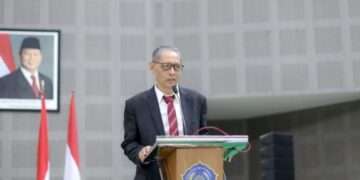
Marpuji Ali, Treasurer of the Central Board of Muhammadiyah and a Member of Muhammadiyah Governance Board, welcomed the appointment and praised the trust placed in UMS. Speaking on Tuesday (27/01) at the Siti Walidah Main Building in Surakarta, he expressed hope that improved regulation and organizational structuring would keep pace with Muhammadiyah’s rapid expansion.
“I hope that stronger regulations and organizational arrangements will increasingly support the growing needs of the association,” Marpuji said.
He also highlighted Muhammadiyah’s unique position, noting that the organization is often compared to a state institution because of its scale and systems. In fact, several concepts developed within Muhammadiyah have influenced public policy and terminology in Indonesia’s education sector.
According to Marpuji, Muhammadiyah’s institutional growth reflects its broader commitment to national development. At the same time, he emphasized that adaptation to national dynamics must not dilute the organization’s core identity.
UMS to Play Strategic Role
Meanwhile, Punang Amaripuja, Chairperson of the Organizational Development Bureau of Muhammadiyah Central Board, said the bureau’s extensive responsibilities require close collaboration with Muhammadiyah Charitable Enterprises, particularly affiliated universities.
Discussion during the meeting included an overview of the bureau’s mandate, an in-depth explanation of UMS’s new role, and joint work on draft regulations. These regulations cover organizational procedures, digital data and information security, and the development of human resource competencies.
Currently, the bureau oversees five key areas: regulation and arbitration; quality management and performance improvement; organizational information systems; geospatial information infrastructure; and training and organizational resources.
Through integrated information systems and strengthened certification programs, Muhammadiyah aims to enhance coordination across its institutions. Leaders are expecting UMS’ involvement to reinforce professional, standardized, and sustainable governance throughout the organization.
Translator: Bintang Adrian