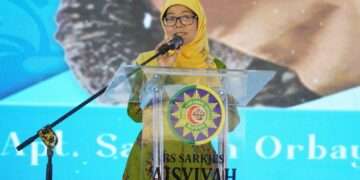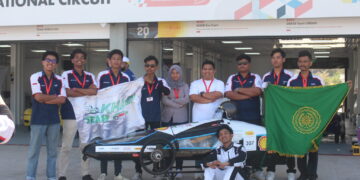


MUHAMMADIYAH.OR.ID, HONG KONG – Muhammadiyah University of Yogyakarta (Universitas Muhammadiyah Yogyakarta/UMY), in collaboration with Sahabat Migran Berkemajuan (SaranMU) and ‘Aisyiyah Special Branch Board of Hong Kong (PCIA Hongkong), organized a training program on progressive digital content production.

The initiative formed part of UMY’s international community service program and took place at the Ali Alatas Room, first floor of the Indonesian Consulate General building in Hong Kong.
A total of 20 Indonesian migrant workers, actively involved in Muhammadiyah-affiliated communities in Hong Kong, participated in the training. The program aimed to strengthen participants’ capacity to utilize digital media as a platform for da’wah, education, and empowerment.
The training featured three UMY lecturers: Tri Hastuti Nur Rochimah, Senja Yustitia, and Ine Yudhawati. Participants were encouraged not only to consume social media, but also to produce positive, ethical, and progressive content.
Digital Media as a Space for Ethical and Progressive Da’wah
The materials covered included the principles of progressive digital da’wah, social media ethics, and content ideation. The agenda was followed with a hands-on practice session in creating simple videos using mobile phones. Participants learned that their daily experiences as migrant workers, community activities, and religious engagement could serve as sources of meaningful and inspiring content when presented effectively.
Tri Hastuti Nur Rochimah, Chairperson of UMY’s Community Service Team, emphasized the importance of transforming digital media into a space for enlightening da’wah. She urged Muhammadiyah cadres to become Netizen of Muhammadiyah (NetizMu), who are not only active online but also uphold ethical conduct.
“Cadres must become NetizMu who use social media to call for goodness, disseminate accurate information, and embody the values of progressive Islam in the digital sphere,” she said on Wednesday (6/5).
She added that the character of NetizMu is reflected in how individuals receive, process, and share information. According to her, good digital content is not defined solely by visual creativity, but also by its benefit, truthfulness, and moral responsibility.
“Social media must serve as a space for silaturahmi, tabayyun, and da’wah. Therefore, content containing fitnah, hate speech, bullying, or unverified information must be avoided,” she stressed.
From Everyday Stories to Meaningful Content
Meanwhile, Senja Yustitia noted the participants’ strong enthusiasm throughout the training. She observed that participants began to recognize the value of their everyday experiences as meaningful content.
“Stories about migrant life, community activities, and da’wah can become inspiring content when delivered honestly and creatively,” she said.
According to Senja, the participants’ main strength lies in their authentic lived experiences, which foster a strong connection with audiences.
During the practical session, Ine Yudhawati provided hands-on guidance using a “30-minute content creation” framework. Participants learned to structure simple videos as well as techniques for capturing clear, stable, and varied footage.
“Content can start from simple things. What matters is the message, a clear structure, and the courage to begin,” Ine explained.
Participants then directly practiced content production, from idea development to filming and basic editing. This approach aimed to ensure that the skills could be easily applied in daily life.
Empowerment Through Collaboration and Sustainability
Umaroh, Chairperson of SaranMU Hong Kong, expressed appreciation for the collaboration with UMY. She noted that the concept of NetizMu is highly relevant to the needs of migrant workers in using social media wisely and productively.
“This training reminds us that digital media can become a space for da’wah, silaturahmi, and sharing goodness,” she said.
She expressed hope that the community’s ongoing positive activities—such as religious study circles, social initiatives, and mutual support among migrant workers—could be better documented and shared as inspiration.
One participant, Aidah, said the training boosted her confidence to start creating digital content.
“I feel more confident now to create content and share inspiration from our experiences as migrant workers,” she said.
On the same occasion, UMY also provided a community service grant to support the sustainability of local programs. The assistance is expected to strengthen da’wah, empowerment initiatives, and capacity building among Indonesian migrant workers in Hong Kong.
SaranMU serves as a platform for connection and empowerment among Indonesian migrant workers in Hong Kong. The participants are also members of ‘Aisyiyah actively involved in PCIA Hong Kong.
Through this training, UMY hopes that social media will increasingly serve as a medium for da’wah, education, connection, and empowerment for Indonesians living abroad.