Tuesday, October 6, 2026
  • AR
  • ENG
  • IDN
Muhammadiyah Media
  • EDUCATION
  • HEALTH
  • ECONOMY
  • HUMANITY
  • OTHERS
    • RELIGION
    • LAW & POLITICS
    • IDEOLOGY
    • SOCIO-CULTURE
    • ENVIRONMENT
    • MEDIA
No Result
View All Result
  • Login
Muhammadiyah Media
  • EDUCATION
  • HEALTH
  • ECONOMY
  • HUMANITY
  • OTHERS
    • RELIGION
    • LAW & POLITICS
    • IDEOLOGY
    • SOCIO-CULTURE
    • ENVIRONMENT
    • MEDIA
No Result
View All Result
  • Login
Muhammadiyah Media
No Result
View All Result
  • EDUCATION
  • HEALTH
  • ECONOMY
  • HUMANITY
  • OTHERS
Home Islamic Law

Is It Permissible to Face Away from the Pulpit During the Friday Sermon?

by Persyarikatan Muhammadiyah
4 months ago
in Islamic Law, News, Religion
Reading Time: 3 mins read
A A
Is It Permissible to Face Away from the Pulpit During the Friday Sermon?

Is It Permissible to Face Away from the Pulpit During the Friday Sermon?

The Friday sermon (khutbah) is an inseparable part of the Friday prayer. Through it, the preacher delivers religious guidance, moral teachings, and reminders that serve as provisions for the lives of Muslims. Therefore, worshippers are instructed to listen attentively and avoid anything that may diminish their concentration and reverence. 

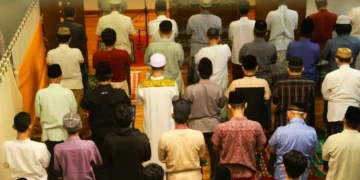
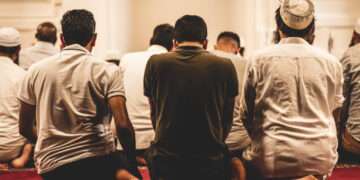
In some mosques, however, questions arise due to the physical layout of the prayer hall. Certain pulpits are positioned beside the mihrab and extend into the prayer rows. It causes some worshippers in the front rows to end up facing away from the pulpit during the Friday sermon. 

This raises an important question: Is it permissible to face away from the pulpit during the Friday sermon? 

The Sunnah of Facing the Preacher

In principle, facing the preacher while the sermon is being delivered is a recommended Sunnah practice. It was observed by the Companions of the Prophet Muhammad (peace be upon him). Abdullah ibn Mas’ud reported: 

عَنْ عَبْدِ اللَّهِ بْنِ مَسْعُودٍ رَضِيَ اللَّهُ عَنْهُ قَالَ: كَانَ رَسُولُ اللَّهِ صَلَّى اللَّهُ عَلَيْهِ وَسَلَّمَ إِذَا اسْتَوَى عَلَى الْمِنْبَرِ اسْتَقْبَلْنَاهُ بِوُجُوهِنَا

“Whenever the Messenger of Allah (peace be upon him) stood upright on the pulpit, we would turn our faces toward him.” (HR. at-Tirmidzi)

This narration shows that the Companions directed their attention toward the Prophet during his sermon. Such behavior reflected both respect and desire to listen carefully to his guidance. 

However, scholars explain this hadith indicates recommendation rather than obligation. There is no explicit textual evidence requiring every worshipper to physically face the preacher throughout the sermon. The primary objective of the Shariah is not merely bodily orientation but attentive listening and sincere engagement with the sermon. 

The Main Requirement: Listening Attentively

The central emphasis during the Friday sermon is listening carefully and maintaining silence. The prophet (peace be upon him) said: 

RelatedArticle

Al-Istihsan Opens Room for Consideration in Islamic Legal Rulings

Four Sins Whose Punishment May Come in This World

Muhammadiyah Receives Jamia Binoria Pakistan, Discusses Strengthening Education and Dakwah

عَنْ أَبِي هُرَيْرَةَ قَالَ قَالَ رَسُولُ اللَّهِ صَلَّى اللَّهُ عَلَيْهِ وَسَلَّمَ: مَنْ تَوَضَّأَ فَأَحْسَنَ الْوُضُوءَ ثُمَّ أَتَى الْجُمُعَةَ فَاسْتَمَعَ وَأَنْصَتَ غُفِرَ لَهُ مَا بَيْنَهُ وَبَيْنَ الْجُمُعَةِ وَزِيَادَةُ ثَلَاثَةِ أَيَّامٍ، وَمَنْ مَسَّ الْحَصَى فَقَدْ لَغَا

“Whoever performs ablution properly, then comes to Friday prayer, listens attentively and remains silent, will have his sins forgiven between that Friday and the next, plus three additional days. But whoever plays with pebbles has engaged in idle behavior.” (HR. Muslim)

This hadith highlights two key requirements: istima’ (listening attentively) and inshat (remaining silent and focused). Even playing with pebbles during the sermon in the Prophet’s time was considered a distraction.

In today’s context, activities such as talking, scrolling through a mobile phone, texting, or engaging in other distractions are even more likely to undermine the spirit of attentive listening. 

Therefore, a person who cannot physically face the pulpit because of the mosque’s layout can still attain the virtues of Friday prayer as long as they sincerely listen to the sermon and avoid distractions.

The Virtue of the Front Rows

In some cases, the pulpit extends into the prayer rows. It causes worshippers sitting in the front row may naturally find themselves facing away from it. This situation is often unavoidable because Islam strongly encourages Muslims to fill the front rows first. 

The Prophet (peace be upon him) said: 

لَوْ يَعْلَمُ النَّاسُ مَا فِي النِّدَاءِ وَالصَّفِّ الْأَوَّلِ ثُمَّ لَمْ يَجِدُوا إِلَّا أَنْ يَسْتَهِمُوا عَلَيْهِ لَاسْتَهَمُوا

“If people knew the reward of the call to prayer and the first row, and they could not obtain it except by drawing lots, they would certainly draw lots for it.” (HR. al-Bukhari)

This hadith demonstrates the immense virtue of praying in the first row. Consequently, worshippers are not encouraged to leave the front rows merely to find a position that allows them to face the pulpit more directly. The priority remains filling and straightening the front rows.

Understanding the Maqāṣid al-Sharī‘ah

From the perspective of the objectives of Islamic law (maqāṣid al-sharī‘ah), facing the preacher is a means of helping worshippers focus on the sermon. However, when mosque architecture makes this difficult, the primary objective can still be achieved through attentive listening.

For this reason, worshippers who happen to face away from the pulpit because of the mosque’s design should not be considered at fault. Their Friday prayer remains valid, and they continue to receive the reward of listening to the sermon as long as they observe the proper etiquette prescribed by Islam.

Nevertheless, if feasible, mosque administrators may wish to reconsider the placement of the pulpit so that worshippers can more easily face the preacher. It allows the worshipper to follow the practice of the Prophet (peace be upon him) and his Companions. Such arrangements would allow this Sunnah to be observed more completely while preserving the comfort of the congregation.

Reference:

The Council for Religious Opinion and Reform of the Central Board of Muhammadiyah, “Hukum Jamaah Salat Jumat yang Mendengarkan Khutbah sambil Membelakangi Mimbar”


Tags: friday prayerjurisprudence
ShareTweetSendShareShare
Previous Post

The Virtues and Recommended Practices of Muharram

Next Post

Preserving Human Nature amid the Growing Normalization of LGBT

RelatedPosts

What is the Prayer for Rain? The Prophet’s Supplication during Drought
Islamic Law

What is the Prayer for Rain? The Prophet’s Supplication during Drought

24 September 2026
If a Masbuq Joins During the Imam’s Bowing, Must They Still Recite Al-Fatihah?
Islamic Law

If a Masbuq Joins During the Imam’s Bowing, Must They Still Recite Al-Fatihah?

4 September 2026
Different Forms of Worship Share the Same Prophetic Foundation, Muslims Must Not Judge One Another
Islamic Law

Different Forms of Worship Share the Same Prophetic Foundation, Muslims Must Not Judge One Another

14 August 2026
Can an Imam Lead Congregational Prayer While Seated?
Islamic Law

Can an Imam Lead Congregational Prayer While Seated?

5 August 2026
Next Post
Preserving Human Nature amid the Growing Normalization of LGBT

Preserving Human Nature amid the Growing Normalization of LGBT

The 2026 FIFA World Cup

Enjoying the 2026 FIFA World Cup without Gambling

Is Virtual Condolence Permissible in Islamic Law?

Is Virtual Condolence Permissible in Islam?

Populer News

  • National Narcotics Agency Commends Muhammadiyah’s Efforts in Eradicating Drug Abuse

    National Narcotics Agency Commends Muhammadiyah’s Efforts in Eradicating Drug Abuse

    0 shares
    Share 0 Tweet 0
  • Catholic Nun Earns Master’s in Midwifery at UNISA Yogyakarta, Strengthening Interfaith Brotherhood

    0 shares
    Share 0 Tweet 0
  • Safa and Marwa: Uncovering the Historical Depths of Two Sacred Hills

    0 shares
    Share 0 Tweet 0
  • Is It Permissible for Muslims to Blow Out Birthday Candles?

    0 shares
    Share 0 Tweet 0
  • Fatwa on Using Mirin in Cooking for Muslims in Japan

    0 shares
    Share 0 Tweet 0
  • Man of Action, Man of Dialogue: The Legacy of KH Ahmad Dahlan

    0 shares
    Share 0 Tweet 0
  • Muhammadiyah and NU Are the Largest and Most Influential Religious Organizations in the World

    0 shares
    Share 0 Tweet 0
  • Ta’aruf in Islam: Ethical Guidelines for Getting to Know Potential Spouse

    0 shares
    Share 0 Tweet 0
  • Leader’s Profile: Prof. Dr. Haedar Nashir, M.Si.

    0 shares
    Share 0 Tweet 0
  • The Islamic Character of Lionel Messi

    0 shares
    Share 0 Tweet 0

Council

  • Religious Opinion & Tajdid
  • Religious Preaching
  • Higher Education, Research, & Development
  • Elementary, Secondary, & Non-Formal Education
  • Cadre & Human Resources
  • Public Health
  • Social Welfare
  • Economy, Business, & Tourism
  • Waqf Utilization
  • Community Empowerment
  • Law and Human Rights
  • Enviromental Preservation
  • Publications & Information

Institutions

  • Islamic Boarding School
  • Branch & Mosque Development
  • Strategic Studies & Partnerships
  • Financial Supervision & Development
  • Disaster Management Center
  • Charity Management
  • Micro, Small, & Medium Enterprise
  • Politics & Public Policy
  • Arts & Culture
  • Sports & Development
  • International Relations & Cooperation
  • Community Da'wah
  • Halal Auditing & "Halalan Thayyiban" Studies
  • Hajj & Umroh
  • Legal Aid & Public Advocacy

Bureau

  • Organization Development
  • Financial Management
  • Communication & Public Services

Ortom

  • 'Aisyiyah Woman Association
  • Muhammadiyah Youth Association
  • Nasyiatul 'Aisyiyah Young Woman Association
  • Muhammadiyah University Student Association
  • Muhammadiyah Student Association
  • Muhammadiyah Tapak Suci Martial Arts
  • Muhammadiyah Hizbul Wathan Scouts

Sumatra Region

  • Nanggroe Aceh Darussalam
  • Sumatra Utara
  • Sumatra Selatan
  • Sumatra Barat
  • Bengkulu
  • Riau
  • Kepulauan Riau
  • Jambi
  • Bangka Belitung

Kalimantan Region

  • Kalimantan Barat
  • Kalimantan Timur
  • Kalimantan Selatan
  • Kalimantan Tengah
  • Kalimantan Utara

Jawa Region

  • D.I. Yogyakarta
  • Banten
  • DKI Jakarta
  • Jawa Barat
  • Jawa Tengah
  • Jawa Timur

Bali & Kepulauan Nusa Tenggara

Region

  • Bali
  • Nusa Tenggara Barat
  • Nusa Tenggara Timur

Sulawesi Region

  • Gorontalo
  • Sulawesi Barat
  • Sulawesi Tengah
  • Sulawesi Utara
  • Sulawesi Tenggara
  • Sulawesi Selatan

Maluku dan Papua Region

  • Maluku Utara
  • Maluku
  • Papua
  • Papua Barat
  • Papua Barat daya

Special Branch

  • Kairo Mesir
  • Iran
  • Sudan
  • Belanda
  • Jerman
  • United Kingdom
  • Libya
  • Malaysia
  • Prancis
  • Amerika Serikat
  • Jepang
  • Tunisia
  • Pakistan
  • Australia
  • Rusia
  • Taiwan
  • Tunisia
  • TurkI
  • Korea Selatan
  • Tiongkok
  • Arab Saudi
  • India
  • Maroko
  • Yordania
  • Yaman
  • Spanyol
  • Hongaria
  • Thailand
  • Kuwait
  • New Zealand

Category

  • Education
  • Health
  • Economy
  • Humanity
  • Religion
  • Law & Politics
  • Ideology
  • Culture
  • Media

About

  • History
  • Brand Guideline

Services

  • Information

Apps

  • Muhammadiyah ID
  • MASA
  • EventMu
  • BukuMu
  • SehatMu
  • KaderMu
  • LabMu

More Information

  • Editorial
  • Contact
  • Privacy Policy
© 2024 Persyarikatan Muhammadiyah

Welcome Back!

Login to your account below

Forgotten Password?

Retrieve your password

Please enter your username or email address to reset your password.

Log In

Add New Playlist

No Result
View All Result
  • icon bendera arab
  • bendera indonesia
  • EDUCATION
  • HEALTH
  • ECONOMY
  • HUMANITY
  • OTHERS
    • RELIGION
    • LAW & POLITICS
    • IDEOLOGY
    • SOCIO-CULTURE
    • ENVIRONMENT
    • MEDIA
  • Login

© 2024 Persyarikatan Muhammadiyah - Cahaya Islam Berkemajuan.