
EN.MUHAMMADIYAH.OR.ID, JAKARTA — The defense cooperation between Saudi Arabia, Pakistan, and Turkey is among the developments being closely watched by Muhammadiyah cadres in Saudi Arabia. Dicky Zulkarnain Tamy, Chairperson of the Muhammadiyah Special Branch Board of Saudi Arabia (PCIM Saudi Arabia), said the cooperation marks an important moment for the three countries as they seek to strengthen regional defense and security.

Dicky made the remarks during the Diaspora Muhammadiyah program on TVMu on Wednesday (23/9). He said cooperation that had previously taken place bilaterally between Saudi Arabia and Pakistan has evolved into a trilateral arrangement involving Turkey.
He said the three countries have complementary strengths. Saudi Arabia has economic power, Pakistan has defense capabilities, while Turkey has technology that can support defense cooperation. For that reason, Dicky said, the arrangement offers benefits to each country.
For Saudi Arabia, Dicky viewed the defense cooperation as part of efforts to strengthen the country’s security self-reliance. He said the experience of facing threats in the region has encouraged Saudi Arabia to strengthen its defenses through cooperation with other countries.
“We see this defense cooperation, from bilateral arrangements to what we have now, as a step toward Saudi becoming less dependent on Western countries,” he said.
Dicky also explained that the geographical positions of the three countries give the cooperation its own strategic context. Pakistan shares a border with Iran and has an interest in maintaining regional stability. Turkey has close ties to Europe and NATO, while Saudi Arabia is located in the Middle East, near several conflict zones.
However, he stressed that the cooperation does not mean an attack on the country would automatically inflict on one country to launch an attack. Rather, he said, the arrangement is more focused on strengthening each country’s defense and security.
Security Conditions in Saudi Arabia
For Muhammadiyah members living in Saudi Arabia, security conditions have so far remained relatively stable. Dicky said he has continued communicating with Muhammadiyah cadres in various regions to check on their condition, including when reports emerge of attacks in several areas.
“Alhamdulillah, everyone is safe and in good health,” he said.
According to Dicky, daily life and economic activity in the country have also continued normally. The effects of regional conflicts have been more apparent in certain sectors, such as air travel, when attacks or other circumstances have the potential to disrupt flights.
Meanwhile, PCIM Saudi Arabia has begun preparing several programs for its cadres and students. One of them is preparations for the Hajj team for the 1448 Hijri season. PCIM Saudi Arabia plans to involve Muhammadiyah branches located across the country in the program.
Growing Interest in Studying in Saudi Arabia
PCIM Saudi Arabia is also paying attention to growing interest among Muhammadiyah cadres in pursuing higher education in the country. Dicky said enthusiasm among prospective students has been high.
During a recent holiday in Indonesia, he and several other cadres even conducted a safari madrasah, visiting schools in different regions to introduce students to educational opportunities in Saudi Arabia.
According to Dicky, opportunities to study in the country have become increasingly diverse. Universities there no longer offer only religious studies but also a range of general academic fields.
At the Islamic University of Madinah, for example, students can study fields including science, mathematics, computer science, and engineering. Other universities offer an even wider range of programs.
Advice for Prospective Students
For prospective students, Dicky advised beginning preparations early, particularly by completing the necessary documents and meeting requirements listed through the Study in Saudi platform.
Arabic proficiency is an important consideration for applicants to religious studies programs. For general academic programs, applicants should also prepare their English proficiency and meet other academic requirements.
He also identified recommendations as one important part of the application process. However, Dicky stressed that recommendations are not a special route for securing admission. Selection remains the responsibility of the universities or the Saudi government.
“So, in Saudi, there is no system where someone can simply nominate a person or anything like that. The accreditation of the school is therefore very important, while the efforts and prayers of each prospective student are also extremely important,” he said.
The opportunity to study in Saudi Arabia is also open to women. Dicky explained that policy changes in recent years have expanded women’s access to education in the country. He also noted the presence of female lecturers and educational arrangements that separate male and female students.
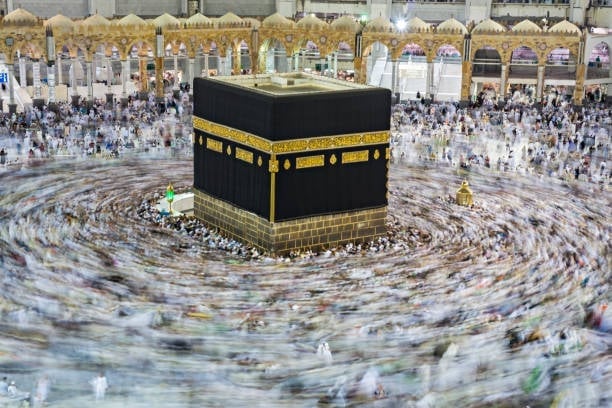
For Muhammadiyah cadres, Dicky said, studying in the country offers both an academic experience and a religious one. The presence of the Masjid al-Haram and the Prophet’s Mosque is an attraction in its own right for students.
“One of the main attractions in the country is the Haramain,” Dicky said.