
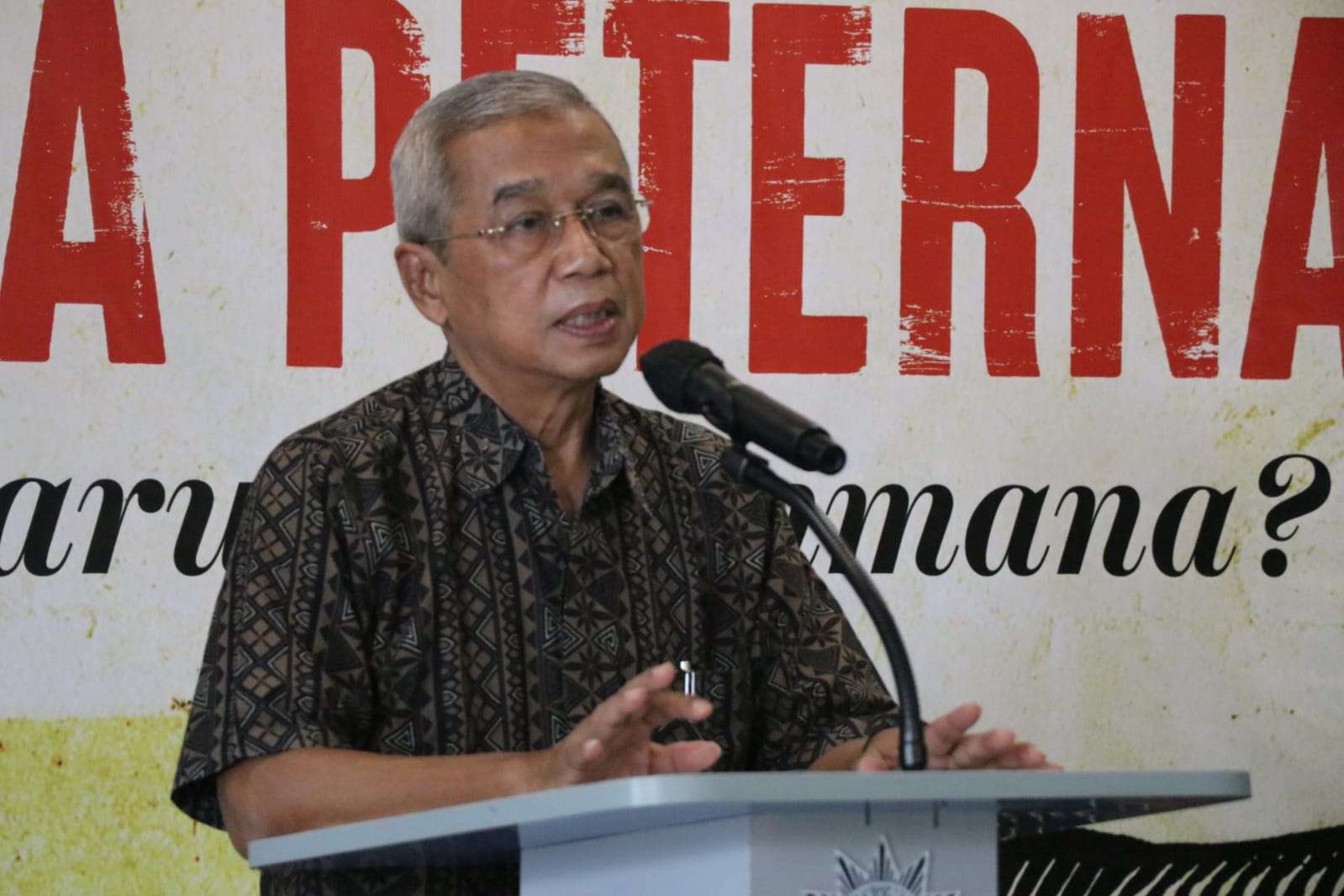
MUHAMMADIYAH.OR.ID, SORONG – The Chairman of the Main Board of Muhammadiyah, Busyro Muqoddas, described that Muhammadiyah is an Islamic organization with a tajdid (reformist) spirit and dynamic outlook. It is performed based on the knowledge rooted in faith with the Qur’an and Hadith as its foundation.

The spirit of tajdid carried out by Muhammadiyah makes this movement remain undoubtedly relevant with the ever-changing world. Muhammadiyah responds to such changes with the spirit of knowledge.
“It makes all the policies formulated by Muhammadiyah from the past to the future come out of the doctrine of the Qur’an and Sunnah, but through an approach grounded in collective ijtihad.” Busyro explained during the opening of the Sekolah Agraria (Agrarian School), organized by the Department of Politics and Public Policy of Muhammadiyah’s Central Board in collaboration with Unimuda Sorong on Friday (26/9).
The approach Muhammadiyah takes in addressing change, Busyro asserted, is firmly based on the clarity of knowledge. Therefore, in his view, the reformist character of Muhammadiyah is carried out through education.
Human dynamics and change, he added, are inseparable from the universe. Muhammadiyah, thus, is also closely tied to human issues, including those in the agrarian sector.
Agrarian affairs, he emphasized, are not limited to farmlands, but also include our forests and seas. All of these resources must be managed for the benefit of all people, not just a privileged few.
The vast potential of the agrarian sector also makes it vulnerable to corruption. Citing accountable research, Busyro pointed out that agrarian resources have long been fertile ground for corruption to grow.
“If such practices are left unchecked, it would amount to a betrayal of Allah’s mercy as Ar-Rahman and Ar-Rahim. He stressed that the universe was never meant to be destroyed or its benefit monopolized by middlemen and tycoons profiting through corrupt practices.”
Busyro expressed hope that the collaboratively-organized Agrarian School could be expanded to different regions to raise awareness of the severe dangers of corruption in the agrarian sector.
He also called on Muhammadiyah-’Aisyiyah-owned universities to produce researches and ideas that serve the people and contribute to both national and regional policymaking. (Bintang Adrian)