

EN.MUHAMMADIYAH.OR.ID, YOGYAKARTA — Education remains a critical need that nations must continue to strengthen. One approach is to develop an education system that strikes a balance between religious studies and general academic knowledge.

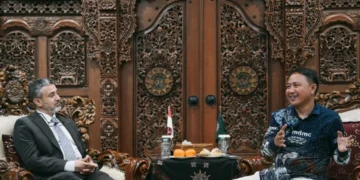
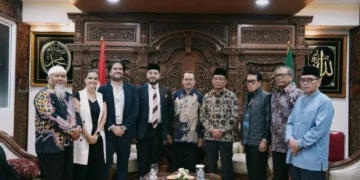
That approach is also a priority for Yobe State, one of Nigeria’s 36 states. The issue was raised during a delegation from Yobe State’s visit to the Muhammadiyah Central Board’s office in Yogyakarta on Friday (9/11).
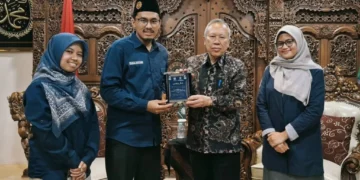
The delegation included Abba Idris Adam, Yobe State Commissioner for Elementary and Secondary Education. The visit was intended to explore a potential partnership through a Memorandum of Understanding (MoU) between Yobe State and Muhammadiyah. The goal is to develop a school model integrating Islamic religious education with general education.
The delegation was received by Muhammadiyah Central Board President Haedar Nashir. He was also accompanied by the Muhammadiyah Secretary Muhammad Sayuti and representatives of the Central Board’s Council for Higher Education, Research, and Development (CHERD).
Yobe State Chooses Muhammadiyah as a Model
Haedar welcomed the proposed partnership. He said Muslims in various countries need to continue improving their religious life while. However, he added, Muslims must also stay connected to knowledge, science, technology, and the changing demands of the times.
According to Haedar, integrating Islamic values with advances in knowledge is essential to developing Muslim civilization. Consequently, Muslim societies can progress rather than fall behind other nations.
“So that, as Muslims, we do not fall behind other countries,” Haedar said.
Haedar reaffirmed Muhammadiyah’s commitment to supporting the partnership. He said improving the conditions and governance of Muslim communities requires concrete action, with education being one of the key sectors to strengthen.
“To improve the organization and conditions of Muslim communities, concrete, and tangible action is necessary,” he concluded.
Adam explained that Yobe State chose Muhammadiyah as a potential partner after visiting and studying various educational models in several places, particularly in Indonesia and Malaysia.
“We visited many places, but in the end, we realized that the best example, the best model we found, was Muhammadiyah,” he said. (Alam)