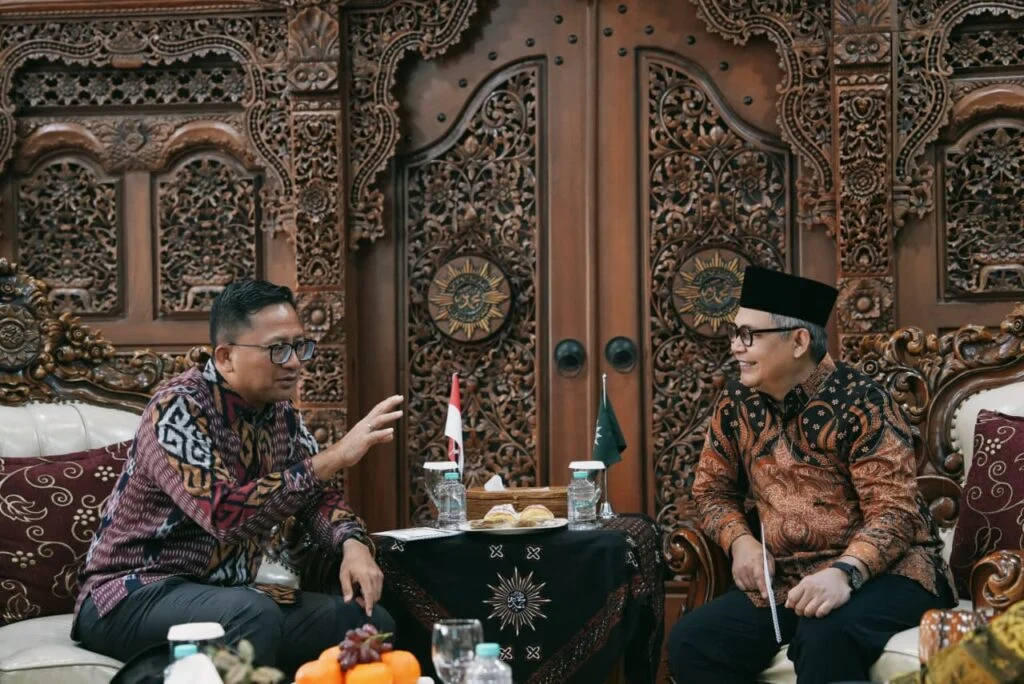
EN.MUHAMMADIYAH.OR.ID, JAKARTA – The Central Board of Muhammadiyah is exploring cooperation with the Indonesian Embassy in Yaoundé across several sectors. Those are education, healthcare, entrepreneurship, Islamic outreach, and volunteerism.

The initiative aims to support community empowerment in Cameroon and the wider Central African region.
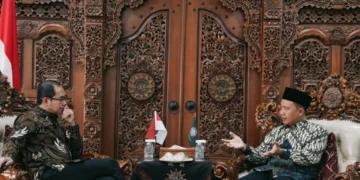
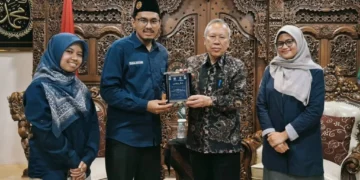
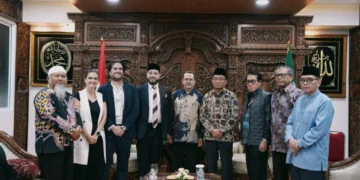
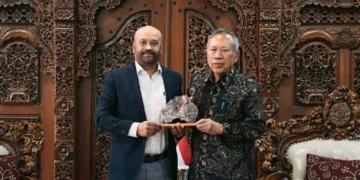
The proposed collaboration was discussed on Wednesday (10/21) during a visit by Indonesian Ambassador to Cameroon Agung Cahaya Sumirat to the Muhammadiyah Central Board headquarters in Menteng, Central Jakarta.
The delegation was received by the Muhammadiyah Central Board Secretary M. Izzul Muslimin and Bunyan Saptomo, a member of the Central Board Department of International Relations and Cooperation (LHKI).
Agung explained that Cameroon has an estimated Muslim population of 8-9 million out of approximately 30 million people. Muslim communities are found particularly in the northern and western regions. Those regions are also where several educational institutions and social service organizations operate.
He said these conditions create opportunities for collaboration with Muhammadiyah, which has extensive experience in education, healthcare, and volunteerism.
“I see Muhammadiyah as a best practice, an excellent example of how Islamic values can serve as a foundation for strengthening social and economic empowerment,” Agung said.
He noted that several Islamic organizations in Cameroon need support from Indonesia to develop their education, healthcare, and volunteer programs. The Indonesian Embassy in Yaoundé is therefore seeking to connect these organizations with civil society groups in Indonesia.
Muhammadiyah Sees Opportunities for Community Empowerment
Secretary M. Izzul Muslimin welcomed the initiative, saying Cameroon offered opportunities to expand Muhammadiyah’s dakwah through activities suited to the organization’s capacity.
“There are several promising areas of cooperation between the Indonesian Embassy in Yaoundé and Muhammadiyah,” Izzul said.
He identified education, healthcare, and volunteerism as potential areas for collaboration, including positive volunteer programs involving young Muhammadiyah members to support community empowerment in the region.
Izzul added that civil society organizations could complement government-to-government relations by strengthening ties between the Indonesian and Cameroonian communities.
The initiative aligns with Muhammadiyah’s Treatise of Universality which encourages international cooperation and efforts to benefit communities through Islamic outreach, education, healthcare, economic empowerment, and humanitarian services. (Taufik)