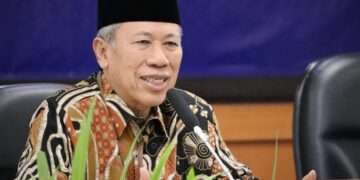


EN.MUHAMMADIYAH.OR.ID, BANDUNG – Syafiq A. Mughni, chairperson of Muhammadiyah Central Board, has urged the organization to adopt a global outlook as its influence continues to expand internationally.

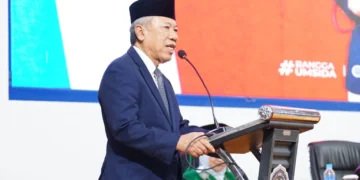
He delivered the message on Saturday (6/6) during the Muhammadiyah Diplomacy Training (MDT) program at Muhammadiyah University of Bandung. The event was organized by Muhammadiyah’s Department for International Relations and Cooperation.
From Local Thinking to Global Engagement
According to Syafiq, advances in communication technology have erased many geographical barriers. As a result, Muhammadiyah can no longer limit its perspective to local concerns alone.
He argued that the organization must shift its mindset from a local orientation to a global one.
Referring to Muhammadiyah’s Risalah Islam Berkemajuan (Treatise of Progressive Islam), Syafiq explained that the movement focuses on three major areas of engagement: issues affecting the Muslim community, national development, and universal humanitarian concerns.
This broader framework has expanded the scope of Muhammadiyah’s mission.
Global challenges, growing international interconnectedness, and rising expectations from the world community all require Muhammadiyah to play a more active role on the global stage.
“Muhammadiyah has gained international recognition as one of the world’s largest religious organizations,” he said. “It is widely regarded as highly successful in developing the education and healthcare sectors.”
Expanding International Networks
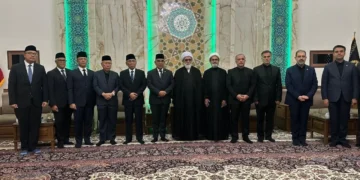
Syafiq noted that Muhammadiyah now maintains an official organizational presence in more than 30 countries.
These overseas branches serve as important channels for building partnerships and strengthening international cooperation.
Beyond its formal structure, Muhammadiyah has also expanded its global reach through collaborations with sister organizations and through humanitarian, educational, and healthcare initiatives in various countries.
Such efforts, he said, demonstrate that Muhammadiyah’s mission extends beyond Indonesia and contributes to broader global challenges.
Preparing Future Global Leaders
To support this growing international role, Syafiq encouraged Muhammadiyah members to strengthen their ability to build global networks.
He emphasized that foreign-language proficiency is one of the most important tools for effective diplomacy and international engagement.
According to him, mastering foreign languages can help Muhammadiyah cadres communicate across cultures, establish strategic partnerships, and represent the organization more effectively in international forums.
As globalization continues to reshape societies around the world, Syafiq stressed that Muhammadiyah must remain responsive to international developments while continuing to advance its mission of promoting education, social welfare, and humanitarian values on a global scale.