

EN.MUHAMMADIYAH.OR.ID, KUALA LUMPUR — Indonesia’s Embassy in Malaysia has voiced strong support for this year’s Eid al-Adha sacrifice program organized by Muhammadiyah Special Branch Board (PCIM) of Malaysia and ‘Aisyiyah Special Branch Board (PCIA) of Malaysia, praising its inclusive distribution model that reaches some of Malaysia’s most vulnerable communities.

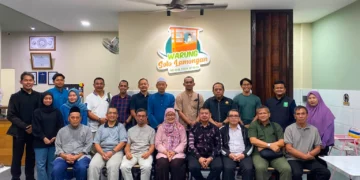
The 1447 Hijri qurban observance took place Wednesday (27/5) at Falah Farm in Batu Caves, drawing senior Indonesian diplomatic officials and members of the broader Muhammadiyah network.
Among those in attendance was Mohammad Iman Hascarya Kusumo, Indonesia’s ambassador to Malaysia, accompanied by senior officials from the Embassy of the Republic of Indonesia in Kuala Lumpur.
This year’s program distributed at least 11 cows and 10 goats, including one cow and one goat donated by the ambassador and embassy officials. Organizers scontributed additional sacrificial animals during the slaughtering process, reflecting growing enthusiasm for the initiative.
“Today we carry out qurban together,” Ambassador Kusumo told reporters in Selangor. “The Indonesian Embassy is working closely with Muhammadiyah Malaysia, and thankfully everything has proceeded smoothly and safely.”
He also thanked Muhammadiyah volunteers for their commitment in preparing and executing the event.
Inclusive Outreach Through Faith and Service
The program’s broader significance, however, extended beyond ritual sacrifice.
Danang Waskito, Indonesia’s deputy ambassador to Malaysia, praised several innovations introduced by organizers, including a Kids Corner designed to provide educational activities for children during the event.
“We see this as a progressive and thoughtful form of Islamic outreach,” Waskito said. “Initiatives like this create a positive image for both Muhammadiyah and Indonesia here in Malaysia.”
He also commended committee members who worked late into the night to prepare the site.
“To those who were still sharpening knives and making final preparations last night, may your efforts become a source of spiritual reward,” he said.
Waskito emphasized that qurban should not be viewed as a yearly routine alone. Instead, he described it as an opportunity to deepen gratitude and strengthen spiritual consciousness.
More importantly, he highlighted the inclusive distribution strategy adopted by organizers.
“This is a manifestation of Islam as rahmatan lil alamin — a mercy to all creation,” he said. “The fact that this meat will reach Rohingya refugees, local Malaysian residents and Indonesian migrant workers demonstrates how Islamic values create tangible benefits for society.”
Reaching Communities Often Overlooked
Fauzi Fatkhur, chairman of Muhammadiyah Malaysia, said the observance reflected the deeper spiritual lessons of the Prophet Ibrahim and the Prophet Ismail.
“Qurban is not merely about slaughtering animals,” he said. “It is a spiritual reflection on obedience, sacrifice and devotion.”
He explained that the meat would be distributed through Muhammadiyah’s branch network across Malaysia, reaching local residents, Indonesian migrant workers, Rohingya refugees and Orang Asli communities in Gombak.
Fatkhur noted that this year’s collaboration with the Indonesian Embassy gave the program added momentum and wider reach.
The event also involved support from Muhammadiyah-affiliated organizations, including Ikatan Mahasiswa Muhammadiyah, Lazismu, Muhammadiyah Disaster Management Center and Tapak Suci.
Together, organizers said, the program reflects Muhammadiyah’s commitment to ensuring that the spirit of sacrifice translates into meaningful service for those most often left at society’s margins.