Thursday, September 24, 2026
  • AR
  • ENG
  • IDN
Muhammadiyah Media
  • EDUCATION
  • HEALTH
  • ECONOMY
  • HUMANITY
  • OTHERS
    • RELIGION
    • LAW & POLITICS
    • IDEOLOGY
    • SOCIO-CULTURE
    • ENVIRONMENT
    • MEDIA
No Result
View All Result
  • Login
Muhammadiyah Media
  • EDUCATION
  • HEALTH
  • ECONOMY
  • HUMANITY
  • OTHERS
    • RELIGION
    • LAW & POLITICS
    • IDEOLOGY
    • SOCIO-CULTURE
    • ENVIRONMENT
    • MEDIA
No Result
View All Result
  • Login
Muhammadiyah Media
No Result
View All Result
  • EDUCATION
  • HEALTH
  • ECONOMY
  • HUMANITY
  • OTHERS
Home Islamic Law

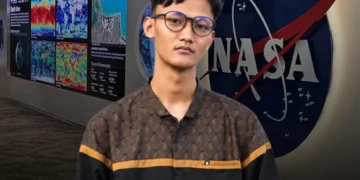
Is It Allowed to Ask AI About Religious Matters?

by Persyarikatan Muhammadiyah
2 months ago
in Islamic Law, News, Religion, Technology
Reading Time: 3 mins read
A A
Is It Allowed to Ask AI About Religious Matters?

Is It Allowed to Ask AI About Religious Matters?

EN.MUHAMMADIYAH.OR.ID, YOGYAKARTA — Muslims may use artificial intelligence (AI) to ask questions about religious matters only if the technology serves as a supporting tool, and not a substitute for qualified scholars. Users must also exercise discernment, verify sources, and recognize its limitation in addressing Islamic issues.

The message was delivered by Mukhlis Rahmanto, a member of the Muhammadiyah Central Board’s Council for Religious Opinion and Reform, during a Pengajian Tarjih session on Wednesday (22/7), where he discussed the use of AI in accessing Islamic knowledge. 

Mukhlis explained that the Qur’an itself provides guidance for those seeking religious knowledge. He cited Surah Al-Anbiya (21:7): fas’alū ahla al-dzikri in kuntum lā ta’lamūn (ask those who possess knowledge if you do not know).

According to him, the phrase ahl al-dhikr explicitly refers to people with recognized scholarly competence. Therefore, religious authority remains in the hands of scholars who possess expertise in the Qur’an, Hadith, Arabic, Islamic legal methodology (istinbat), and other branches of Islamic scholarship.

“This verse makes it clear that religious authority cannot be transferred from human beings to machines, Mukhlis said. “AI should function only as a tool that assists scholars and the wider public.”

AI Can Improve Access to Islamic Knowledge

Despite those limitations, Mukhlis emphasized that AI offers significant benefits by making Islamic scholarship more accessible. Digital Qur’an applications and online Islamic libraries containing thousands of classical texts, for example, have dramatically reduced the time required to locate relevant references and legal evidence.

He said AI can assist users in finding basic information, such as scriptural evidence for a legal ruling or summaries of scholarly opinions, as long as the underlying sources are reliable and academically credible.

As an example, Mukhlis pointed to Muhammadiyah’s Global Unified Hijri Calendar (Kalender Hijriah Global Tunggal or KHGT). The project integrates official documents, research findings, and decisions issued by the Council for Tarjih into an AI system capable of answering public questions about Islamic jurisprudence and astronomical calculations quickly and accurately.

“When the source material is valid, AI can make knowledge much easier to access,” he explained. “However, It only works with the data provided to it.”

Ethical Responsibility Remains Essential

Mukhlis cautioned that AI should always be used responsibly in religious matters. One major concern, he noted, is that AI may generate responses based on unreliable references or interpretations that contradict established Islamic principles.

He warned that an AI system could mistakenly justify practices unanimously prohibited by Islamic scholars if it relies on flawed or misleading sources. Therefore, every AI-generated answer should be verified against authentic scholarly references.

Beyond accuracy, Mukhlis also highlighted unresolved copyright issues surrounding AI. Since AI systems learn from books, academic publications, and other copyrighted works, legal experts continue to debate the boundaries of their permissible use.

RelatedArticle

Muhammadiyah UK Brings Indonesian Islam to Visit My Mosque Campaign in London

Syafiq Mughni: Muhammadiyah Must Engage the Global Arena for a More Peaceful and Just World

Muhammadiyah Cadres Must Master Artificial Intelligence with Ethics

He further warned against the misuse of AI to create deepfakes, arguing that fabricated images, audio, and videos could fuel slander and spread misinformation.

Fatwas Require Human Judgment

Mukhlis stressed that AI can never replace scholars in issuing religious rulings (fatwas). While AI processes information, scholars also weigh moral judgment, wisdom, and the unique circumstances of the person seeking guidance.

To illustrate this point, he cited the example of Abdullah ibn Abbas, who gave different answers regarding repentance for murder depending on the questioner’s situation. To someone who intended to commit murder, Ibn Abbas firmly discouraged the act. However, to someone who had already committed murder and sincerely sought repentance, he offered hope in Allah’s mercy.

“A fatwa is not based solely on textual evidence,” Mukhlis said. “It also considers the circumstances of the individual asking the question. This is where AI reaches its limits, because it cannot replace a scholar’s conscience and wisdom.”

He added that AI remains useful for answering straightforward, text-based questions such as how to perform ablution (wudu), prayer (salat), or identifying well-established scriptural evidence. However, more complex, case-specific issues still require human scholarly judgment.

As practical guidance, Mukhlis encouraged Muslims to distinguish between uṣūl (fundamental principles of the faith) and furūʿ (secondary matters where scholarly disagreement is acceptable). Understanding that distinction, he said, will help AI users evaluate whether a response remains within the framework of Islamic teachings or contradicts its foundational principles.


 

Tags: artificial intelligenceislamic lawjurisprudencetechnology
ShareTweetSendShareShare
Previous Post

When Athletes Need Hydration Breaks, What About the Earth

Next Post

Muhammadiyah Launches Suryavena, Calls on All Muhammadiyah Hospitals to Strengthen Coordination

RelatedPosts

If a Masbuq Joins During the Imam’s Bowing, Must They Still Recite Al-Fatihah?
Islamic Law

If a Masbuq Joins During the Imam’s Bowing, Must They Still Recite Al-Fatihah?

4 September 2026
Understanding Different Definitions of Hadith Can Foster Religious Tolerance
Islamic Law

Understanding Different Definitions of Hadith Can Foster Religious Tolerance

15 August 2026
Different Forms of Worship Share the Same Prophetic Foundation, Muslims Must Not Judge One Another
Islamic Law

Different Forms of Worship Share the Same Prophetic Foundation, Muslims Must Not Judge One Another

14 August 2026
Is It Permissible to Kiss the National Flag with Emotion? 
News

Is It Permissible to Kiss the National Flag with Emotion? 

11 August 2026
Next Post
Muhammadiyah Launches Suryavena, Calls on All Muhammadiyah Hospitals to Strengthen Coordination

Muhammadiyah Launches Suryavena, Calls on All Muhammadiyah Hospitals to Strengthen Coordination

Haedar Nashir: Indonesian Universities Must Prioritize Quality Over Enrollment

Haedar Nashir: Indonesian Universities Must Prioritize Quality Over Enrollment

PCIM and PCIA Malaysia Participated in the Humane Economy Global Discourse 2026

PCIM and PCIA Malaysia Participated in the Humane Economy Global Discourse 2026

Populer News

  • Safa and Marwa: Uncovering the Historical Depths of Two Sacred Hills

    Safa and Marwa: Uncovering the Historical Depths of Two Sacred Hills

    0 shares
    Share 0 Tweet 0
  • Muhammadiyah Appoints Crown Prince of Perlis as UMAM’s First Chancellor

    0 shares
    Share 0 Tweet 0
  • Leader’s Profile: dr. H. Agus Taufiqurrohman, Sp.S., M.Kes.

    0 shares
    Share 0 Tweet 0
  • Is It Permissible to Listen to Songs Sung by Women?

    0 shares
    Share 0 Tweet 0
  • Leader’s Profile: Dr. H. M. Busyro Muqoddas, S.H., M.Hum.

    0 shares
    Share 0 Tweet 0
  • Man of Action, Man of Dialogue: The Legacy of KH Ahmad Dahlan

    0 shares
    Share 0 Tweet 0
  • PRIM and PRIA Klang Lama Mark a New Chapter for Muhammadiyah in Malaysia

    0 shares
    Share 0 Tweet 0
  • Historical Events

    0 shares
    Share 0 Tweet 0
  • Muhammadiyah Strengthens School Management through Training Program in China

    0 shares
    Share 0 Tweet 0
  • Ta’aruf in Islam: Ethical Guidelines for Getting to Know Potential Spouse

    0 shares
    Share 0 Tweet 0

Council

  • Religious Opinion & Tajdid
  • Religious Preaching
  • Higher Education, Research, & Development
  • Elementary, Secondary, & Non-Formal Education
  • Cadre & Human Resources
  • Public Health
  • Social Welfare
  • Economy, Business, & Tourism
  • Waqf Utilization
  • Community Empowerment
  • Law and Human Rights
  • Enviromental Preservation
  • Publications & Information

Institutions

  • Islamic Boarding School
  • Branch & Mosque Development
  • Strategic Studies & Partnerships
  • Financial Supervision & Development
  • Disaster Management Center
  • Charity Management
  • Micro, Small, & Medium Enterprise
  • Politics & Public Policy
  • Arts & Culture
  • Sports & Development
  • International Relations & Cooperation
  • Community Da'wah
  • Halal Auditing & "Halalan Thayyiban" Studies
  • Hajj & Umroh
  • Legal Aid & Public Advocacy

Bureau

  • Organization Development
  • Financial Management
  • Communication & Public Services

Ortom

  • 'Aisyiyah Woman Association
  • Muhammadiyah Youth Association
  • Nasyiatul 'Aisyiyah Young Woman Association
  • Muhammadiyah University Student Association
  • Muhammadiyah Student Association
  • Muhammadiyah Tapak Suci Martial Arts
  • Muhammadiyah Hizbul Wathan Scouts

Sumatra Region

  • Nanggroe Aceh Darussalam
  • Sumatra Utara
  • Sumatra Selatan
  • Sumatra Barat
  • Bengkulu
  • Riau
  • Kepulauan Riau
  • Jambi
  • Bangka Belitung

Kalimantan Region

  • Kalimantan Barat
  • Kalimantan Timur
  • Kalimantan Selatan
  • Kalimantan Tengah
  • Kalimantan Utara

Jawa Region

  • D.I. Yogyakarta
  • Banten
  • DKI Jakarta
  • Jawa Barat
  • Jawa Tengah
  • Jawa Timur

Bali & Kepulauan Nusa Tenggara

Region

  • Bali
  • Nusa Tenggara Barat
  • Nusa Tenggara Timur

Sulawesi Region

  • Gorontalo
  • Sulawesi Barat
  • Sulawesi Tengah
  • Sulawesi Utara
  • Sulawesi Tenggara
  • Sulawesi Selatan

Maluku dan Papua Region

  • Maluku Utara
  • Maluku
  • Papua
  • Papua Barat
  • Papua Barat daya

Special Branch

  • Kairo Mesir
  • Iran
  • Sudan
  • Belanda
  • Jerman
  • United Kingdom
  • Libya
  • Malaysia
  • Prancis
  • Amerika Serikat
  • Jepang
  • Tunisia
  • Pakistan
  • Australia
  • Rusia
  • Taiwan
  • Tunisia
  • TurkI
  • Korea Selatan
  • Tiongkok
  • Arab Saudi
  • India
  • Maroko
  • Yordania
  • Yaman
  • Spanyol
  • Hongaria
  • Thailand
  • Kuwait
  • New Zealand

Category

  • Education
  • Health
  • Economy
  • Humanity
  • Religion
  • Law & Politics
  • Ideology
  • Culture
  • Media

About

  • History
  • Brand Guideline

Services

  • Information

Apps

  • Muhammadiyah ID
  • MASA
  • EventMu
  • BukuMu
  • SehatMu
  • KaderMu
  • LabMu

More Information

  • Editorial
  • Contact
  • Privacy Policy
© 2024 Persyarikatan Muhammadiyah

Welcome Back!

Login to your account below

Forgotten Password?

Retrieve your password

Please enter your username or email address to reset your password.

Log In

Add New Playlist

No Result
View All Result
  • icon bendera arab
  • bendera indonesia
  • EDUCATION
  • HEALTH
  • ECONOMY
  • HUMANITY
  • OTHERS
    • RELIGION
    • LAW & POLITICS
    • IDEOLOGY
    • SOCIO-CULTURE
    • ENVIRONMENT
    • MEDIA
  • Login

© 2024 Persyarikatan Muhammadiyah - Cahaya Islam Berkemajuan.