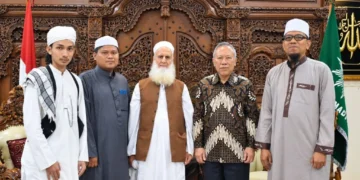


MUHAMMADIYAH.OR.ID, MOROCCO – Strive to strengthen networks and enhance the effectiveness of zakat management internationally, Muhammadiyah’s Department of Charity Management (Lazismu) of Morocco and Turkey organized an online comparative study session. The agenda also served as a platform for both parties to exchange information, share experiences, and discuss strategies in carrying out zakat programs abroad, particularly within the diaspora community.

During the discussion session, Muhammad Dihya Rafi Akhtar from Lazismu Morocco explained that the interactive dialogue generated constructive proposals and solutions for improving Lazismu’s international programs.
“Lazismu international networks must be established in order to encourage individuals to actively serve as social and da’wah agents. At the same time, digitalization of fundraising should be a key to focus, along with strengthening communication strategies through more engaging and creative content for the zakat contributors (muzzaki),” Dihya stated at the online comparative study held on Friday (10/10)
He further emphasized that in order to realize effective communication strategies for the spread of da’wah, zakat managers (amil) must remain adaptive and maintain good relations with local communities.
“Amil must be flexible, adaptive, and able to position themselves appropriately when engaging with the surrounding community. By doing so, the mission of becoming social agents and spreading da’wah internationally will be much easier and more far-reaching,” he added.
Meanwhile, Lazismu Turkey presented several flagship programs they have implemented including the International Qurban Program, Blessed Friday, Ziska Talks, regular Ramadan initiatives, and social services for Indonesian communities in Turkey.
This online comparative study is expected to mark the beginning of closer cooperation between Lazismu branches in different countries. With a spirit of collaboration and innovation, both institutions are optimistic about fulfilling their mandate to the fullest while making tangible contributions to society through relevant, inspiring, and sustainable programs. (Bintang Adrian)