
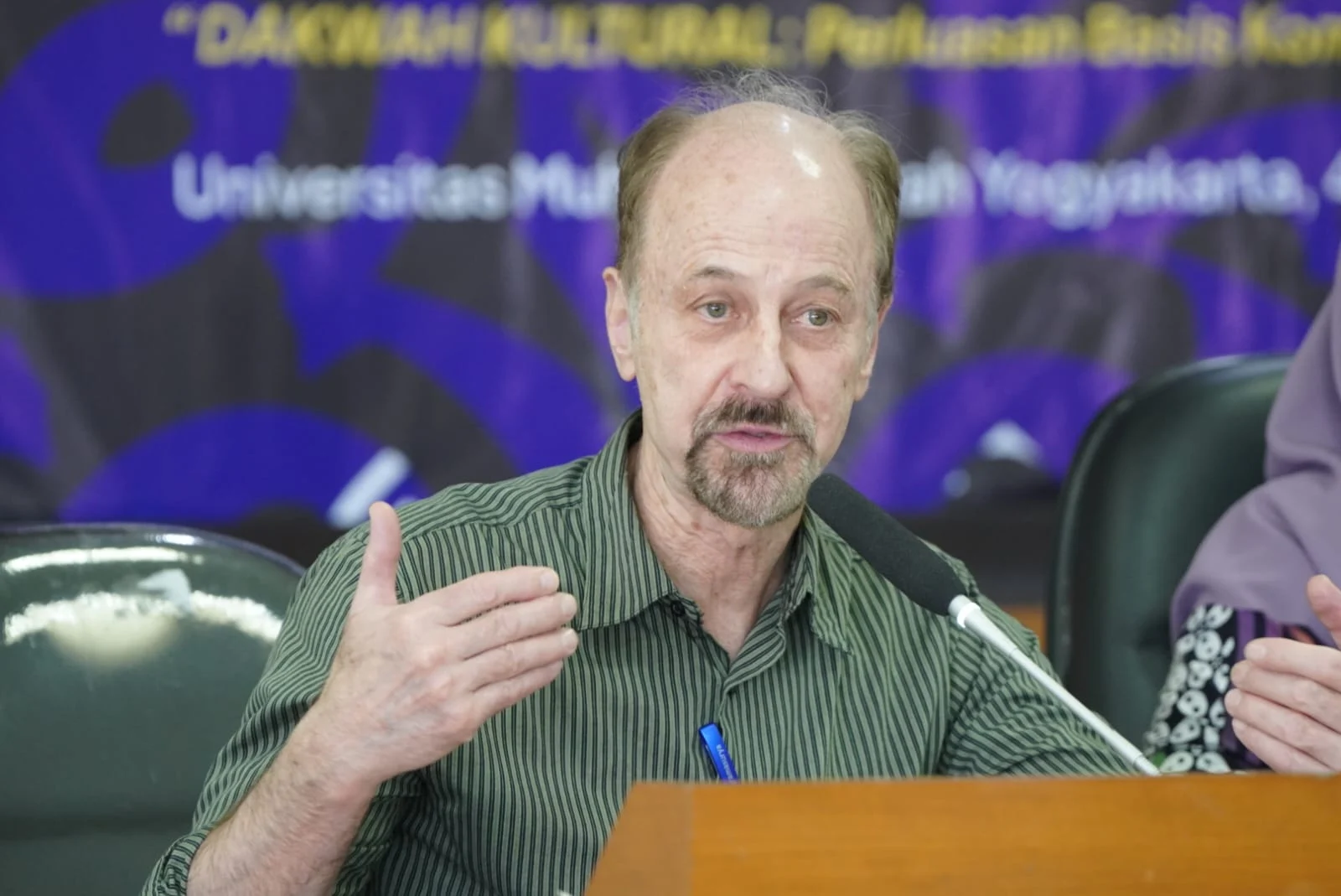
MUHAMMADIYAH.OR.ID, JAKARTA – Indonesianist and Boston University lecturer Robert W. Hefner stated that the Indonesian people should be grateful to be the home of the two largest religious mass organizations in the world: Muhammadiyah and Nahdlatul Ulama (NU).

According to him, the scale of Muhammadiyah said NU is unmatched anywhere in the world, even when compared to organizations or religious movements in countries with Muslim-majority populations.
“Sometimes, people in Indonesia don’t realize that these two organizations, Muhammadiyah and NU, are the largest religion-based organizations in the world,” Hefner said on the YouTube channel Jeda Nulis, uploaded on Wednesday (26/11).
He explained that their community is not only the largest within the Islamic world. Muhammadiyah and NU, in his view, are also the largest religion-based organizations across faith-based movements worldwide.
Hefner said that Muhammadiyah and NU are not only large in size, but their movements are active and have real, tangible impact. He praised both organizations for conducting their work in an impressive manner.
“These organizations uphold a social ethic that is deeply rooted to what in Islam is called maslahat,” he said.
The Guardians of Indonesian Nationalism
Furthermore, beyond their brilliant religious missions, Muhammadiyah and NU also serve as pillars of nationalism in Indonesia. Regarding this spirit of nationalism, Hefner identified a unique relationship between religion and national identity in Indonesia.
He compared Indonesia’s nationalism with that of France—where nationalism pushes religion away from national discourse, instead of embracing or involving it.
“Indonesian nationalism does not only accommodate religion, especially Islam, but also all officially recognized religions,” he added.
This reality affirm that although Muhammadiyah and NU are da’wah based organizations, both have made major contributions to Indonesia’s nationalism, ensuring that the pillars of democracy remain strong in the country.
“Citizenship and democracy in Indonesia arise from a belief, a spiritual conviction—a kind of spiritual conviction that I find very inclusive. And this truly reflects the contribution of Muslims in general, including Muhammadiyah and NU,” he explained.
Another impressive aspect for Hefner is that Islam, wherever it is, remains Islam; however, when he observed Islam in Southeast Asia, particularly in Indonesia, he found something exceptional. According to him, the Islamic civilization in Indonesia is distinct from that of other regions. (Bintang Adrian)