

EN.MUHAMMADIYAH.OR.ID, BERLIN – Muhammadiyah Special Branch Board of Germany has launched a new initiative aimed at opening safer and more structured migration opportunities for Indonesian skilled workers seeking careers in Germany and across Europe.

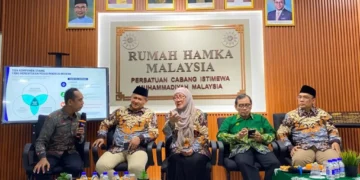
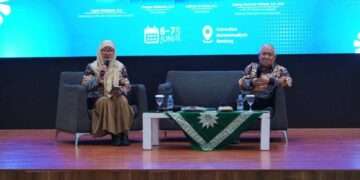
The program, called Muhammadiyah Advisory for German Migration Access (MAGMA), received financial support from Deutsche Gesellschaft für Internationale Zusammenarbeit, the German government’s development cooperation agency. Organizers introduced the initiative during an online webinar held Monday (25/5) through Zoom and livestreamed on the YouTube channel of Council for Higher Education, Research, and Development (CHERD) of Muhammadiyah Central Board.
MAGMA seeks to establish a migration ecosystem that is fair, secure and sustainable. It comes at a time when demographic realities are reshaping labor markets globally.
Germany continues to face mounting labor shortages as its population ages. Meanwhile, Indonesia is experiencing a demographic bonus, with a growing working-age population expected to dominate until 2030 or 2035.
“This productive-age majority could become a tremendous advantage if managed properly,” said McDonald Anwar, principal adviser at GIZ Indonesia. “However, without careful planning, it could just as easily create serious challenges.”
Building Skills, Access, and Legal Protection
According to project manager Pelita Oktorina, MAGMA was designed to close critical gaps in information, language preparation and cultural readiness.
“Our main goal is to build migration pathways that are fair, safe, official and dignified for Indonesia’s skilled workforce,” she said.
The initiative rests on three main pillars. First, it offers educational outreach through seminars and webinars focused on safe migration channels. Second, it provides soft-skills training and cross-cultural competency development. Third, it operates a digital information hub that participants can access around the clock.
Notably, all services are offered free of charge.
“These programs are fully funded by the German government through GIZ,” Oktorina said.
Officials also emphasized the risks of unsafe migration.
Sofyan Arif warned that human trafficking often begins with unrealistic promises and inadequate preparation.
“Many exploitation cases start with offers that highlight only the benefits,” he said. “People must ensure that every migration process follows legal procedures and relies on verified information.”
A Model for Brain Circulation
Indonesia’s ambassador to Germany, Abdul Kadir Jailani, welcomed the initiative as an important step in strengthening Indonesia’s economic diplomacy and workforce competitiveness.
“These opportunities will create real benefits when pursued through orderly, fair and secure channels,” he said.
Meanwhile, Noam Lazuardi urged a broader perspective on overseas employment.
Labor migration, he said, should no longer be viewed as brain drain. Instead, it should be understood as brain circulation, where knowledge gained abroad eventually returns to benefit Indonesia.
MAGMA will run as a pilot project from 2026 through 2027 in seven Indonesian cities. Organizers hope it will equip young Indonesians with the tools to compete globally while ensuring they remain legally protected abroad.