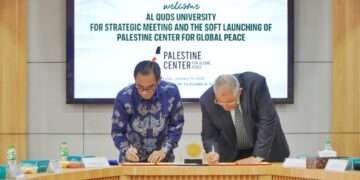


MUHAMMADIYAH.OR.ID, YOGYAKARTA — Muhammadiyah on Tuesday (13/01) underscored its long-standing commitment to peace in Palestine with the soft launch of the Palestine Center for Global Peace, a new academic initiative developed with Muhammadiyah University of Yogyakarta (UMY) and Al-Quds University.

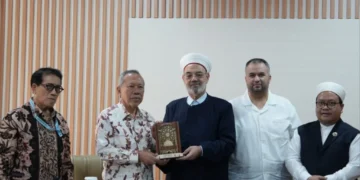
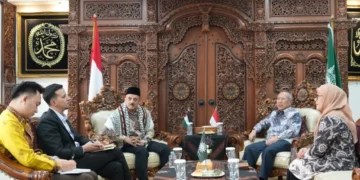
The event took place at the A.R. Fakhrudin Building on the UMY campus and brought together senior leaders from all three institutions. Among those in attendance were Syamsul Anwar, chairperson of Muhammadiyah Central Board, and Imad Abu Kishek, president of Al-Quds University, along with university administrators and representatives of Muhammadiyah-affiliated institutions.
During the ceremony, participants discussed ways to strengthen Muhammadiyah’s academic networks with a focus on global peace and justice. In particular, they highlighted the role of higher education in shaping ethical responses to humanitarian crises.
Syamsul Anwar said the establishment of the Palestine Center for Global Peace reflects Muhammadiyah’s consistent effort to promote what it calls “progressive Islam,” grounded in universal humanitarian values. Through the center, he said, Muhammadiyah aims to contribute ideas and dialogue that support peace and a just global civilization.
“The Palestine Center for Global Peace is Muhammadiyah’s platform for contributing to peace and humanitarian issues through education and intellectual exchange,” Syamsul said. Therefore, he added, the initiative is not symbolic, but strategic.
Education as a Pathway to Peace
Imad Abu Kishek welcomed the initiative and praised Muhammadiyah’s universities for their role in advancing academic solidarity. According to him, the center’s location at UMY’s Innovation and Research Center signals a serious commitment to knowledge-based collaboration.
For Palestinians, Imad said, education remains an invaluable investment in the future. Consequently, partnerships that prioritize learning and research carry deep significance. “This initiative demonstrates real support through education and academic cooperation,” he said. “That support matters greatly for Palestine’s future.”
Beyond the launch itself, the meeting also served as an initial forum to explore broader cooperation between Muhammadiyah universities and Palestinian institutions. The discussions covered potential collaboration in educational research, humanitarian studies, business and economics, and waqf development.
Such cooperation, participants said, could strengthen humanitarian contributions in Palestine while also building durable, long-term institutional ties. In that sense, the new center represents more than a single program.
With the launch, Muhammadiyah reaffirmed its position within the global academic community as an active advocate for peace and humanitarian engagement. Palestine, leaders emphasized, will remain a central focus of that commitment. (Ghulam/Bhisma)
Translator: Bintang Adrian