
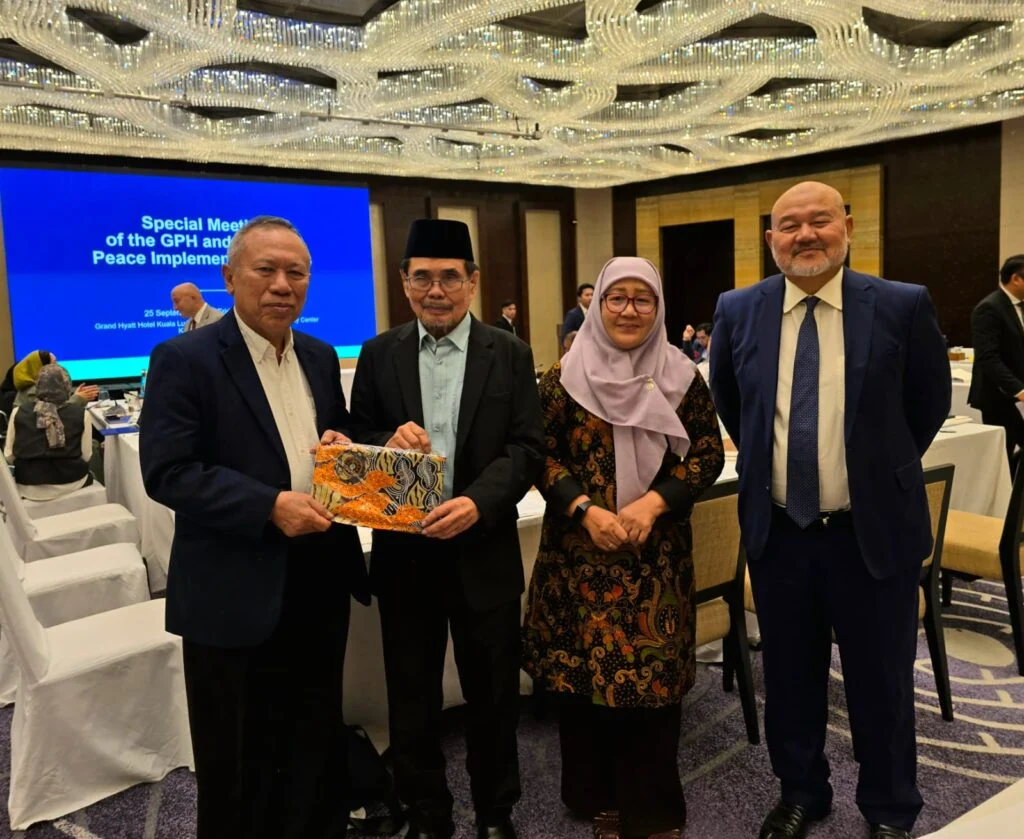
EN.MUHAMMADIYAH.OR.ID, KUALA LUMPUR – Muhammadiyah has reaffirmed its commitment to peace and humanitarian causes through its active involvement in the International Contact Group (ICG), which supports the peace process between the Government of the Philippines (GPH) and the Moro Islamic Liberation Front (MILF) in Bangsamoro.

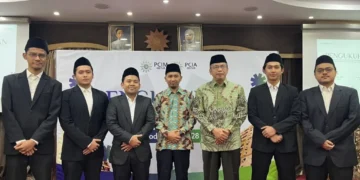
Syafiq A. Mughni, Chairperson of the Central Board of Muhammadiyah, and Yayah Khisbiyah, the Central Board’s Department of International Relations and Cooperation (LHKI), attended a special GPH-MILF meeting in Kuala Lumpur, Malaysia, on Friday (25/9).
Their participation was part of Muhammadiyah’s contribution to supporting dialogue, sharing information, and building confidence among stakeholders in the Bangsamoro peace process.
The meeting brought together the Peace Implementing Panels of the GPH and MILF with the Malaysian Third-Party Facilitator, along with ICG members and international partners.
From Agreement to Implementation
Syafiq explained that Muhammadiyah’s involvement in the ICG reflects its commitment to contributing to peacebuilding through civil society engagement, dialogue among different parties, and stronger international cooperation.
For Muhammadiyah, the peace process does not end with a political agreement. It must translate into tangible changes in people’s lives, particularly through the protection of civilians, socioeconomic development, reconciliation, transitional justice, and stronger peace institutions.
In this context, the ICG serves as an important forum for maintaining communication and information exchange between the parties and the international community. It also helps monitor developments that could affect the continued implementation of the peace agreement.
This role has become increasingly important following Bangsamoro’s first parliamentary election in September 2026, which marked a significant development along the political track of the peace process. The Philippine government reported voter turnout of around 84 percent. At the same time, various elements of the normalization track still require further implementation.
Muhammadiyah’s Role in Peace Diplomacy
Muhammadiyah’s involvement in the ICG is in line with the organization’s internationalization agenda, which places peace, humanitarianism, justice, and cooperation among nations among its contributions to the global community.
Syafiq emphasized that Muhammadiyah needs to engage in global affairs as a civil society organization that complements and supports the role of states, with the shared goal of building a peaceful and just international order.
Within the ICG framework, Muhammadiyah’s participation also strengthens the perspectives of civil society and faith-based organizations in the peace process. Its experience in peace education, interfaith dialogue, community empowerment, and humanitarian work provides social capital for contributing to a sustainable peace agenda.
Through its involvement, Muhammadiyah will continue to support dialogue, confidence-building, information exchange, civilian protection, reconciliation, and peace implementation centered on people’s lives, particularly those of the Bangsamoro communities who are the primary beneficiaries of the peace process.
The Kuala Lumpur meeting was an important moment to ensure that, following various political achievements, collective attention remains focused on the implementation work that still needs to be completed.
The meeting resulted in several important agreements to advance implementation of the Comprehensive Agreement on the Bangsamoro (CAB). These included adopting the Terms of Reference for a Technical Working Group on the Roadmap Development for the Implementation of the CAB; strengthening socioeconomic programs for decommissioned combatants; extending the mandates of the Ad Hoc Joint Action Group (AHJAG) and the Civilian Protection Component (CPC); and making progress on the agenda for managing Small Arms and Light Weapons (SALW).
The parties also agreed on follow-up measures concerning transitional justice and reconciliation, including recommendations to refine draft legislation establishing the National Transitional Justice and Reconciliation Commission for the Bangsamoro.