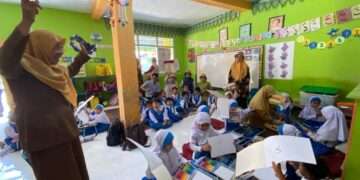


EN.MUHAMMADIYAH.OR.ID, JAKARTA – The program, officially titled Gerakan Pendidikan Inklusif untuk Generasi Emas Muhammadiyah (Inclusive Education Movement for Muhammadiyah’s Golden Generation), was soft-launched during a hybrid workshop held on May 13–14, 2026, at the organization’s headquarters in Jakarta.

Speaking at the event, Didik Suhardi, Chairperson of Muhammadiyah’s Primary, Secondary, and Nonformal Education Council, said the initiative seeks to create a more welcoming and empowering educational environment for children with disabilities.
“Education must begin with empowerment,” Didik said. “Children with special needs deserve educational services that help them develop their potential and independence.”
He noted that Muhammadiyah possesses extensive human resources and institutional networks that could support the expansion of inclusive education nationwide. However, he stressed the importance of accurately mapping the population of children with disabilities so educational services can better respond to local needs.
Collaboration With Government Programs
Didik also called for stronger collaboration with existing government programs, including special schools, inclusive schools, and volunteer-based education initiatives overseen by Indonesia’s Ministry of Education.
“Existing services should work together so inclusive education can operate more effectively and reach more children,” he said.
According to him, Indonesia already has many of the necessary resources to improve inclusive education. The challenge now lies in building public awareness and ensuring consistent implementation.
To illustrate the importance of early independence training, Didik pointed to educational practices abroad. There, educators often encouraged children to become self-reliant through systems specifically designed around their needs.
He said public understanding of special education must continue to grow so schools can provide learning environments that are supportive, joyful, and accessible to every child.
Building Long-Term Inclusive Education Capacity
Alongside the launch of GembiraMu, Muhammadiyah is also developing supporting programs, including Training of Trainers initiatives designed to strengthen the capacity of educators and institutions working in inclusive education.
Didik expressed hope that the programs would continue consistently and evolve into a sustainable national movement.
At the close of his remarks, he urged broader cooperation among educational institutions, communities, and policymakers to ensure the long-term success of the efforts.
“Inclusive education cannot be handled by one party alone. Strong collaboration is essential if this movement is to continue growing and benefit society widely,” Didik concluded.