

MUHAMMADIYAH.OR.ID, YOGYAKARTA — A new national survey suggests that a majority of young Indonesians support the Unified Global Hijri Calendar proposed by Muhammadiyah, reflecting growing fatigue over recurring debates on the timing of major religious holidays.

The survey, titled “Muhammadiyah from the Perspective of Youth,” was released on Monday (30/3) by the Public Policy Study Center of Ahmad Dahlan University. It highlights strong support for the Unified Global Hijri Calendar (Kalender Hijriah Global Tunggal/KHGT).
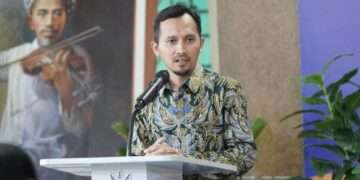
According to Azaki Khoirudin, head of the research center, 82.9% of the 758 respondents aged between 17 and 40 expressed support for KHGT. Meanwhile, 11.7 percent said they were unfamiliar with the concept, and only 5.4 opposed it.
“The higher percentage of respondents who are unaware, compared to those who oppose it, shows that Muhammadiyah’s challenge ahead lies in education, not resistance,” Azaki said.
A Shift toward Certainty and Practicality
The findings, he added, point to a broader shift among younger generations, who increasingly seek certainty in determining the start of Ramadan and Eid al-Fitr. In contrast to earlier generations, many young people appear less interested in prolonged debates over differing methods of moon sighting and calculation.
“Young people seem to have grown tired of annual disputes over the date of Eid,” Azaki said. “This survey shows that the majority have accepted and support KHGT as a solution.
Notably, the KHGT approach combines religious principles with modern astronomical science. This blend, observers say, aligns well with the preferences of Generation Z and millennials, who tend to value clarity, efficiency, and practical solutions.
A Positive Signal for Reform
Furthermore, Azaki described the strong level of support as an encouraging sign for Muhammadiyah’s broader vision of reforming the Islamic calendar system. By promoting a globally integrated framework, the organization aims to unify the Muslim community in determining key religious dates.
“This data signals that Muhammadiyah’s larger vision—to unite Muslims through a scientific approach—resonates positively with the younger generation,” he said. “KHGT offers a modern solution to a longstanding issue.”
In conclusion, the survey underscores a generational shift in how religious practices intersect with science and modernity. As support grows among young people, the prospect of a unified Islamic calendar may gain further momentum, potentially reshaping how Muslims mark some of their most important observances.