

MUHAMMADIYAH.OR.ID, YOGYAKARTA – International Volunteer Day, commemorated every 5 December, serves as a reminder of the essential role volunteers play in humanitarian work. The United Nations established this day to honor volunteerism across the world and to encourage broader public participation in humanitarian efforts.

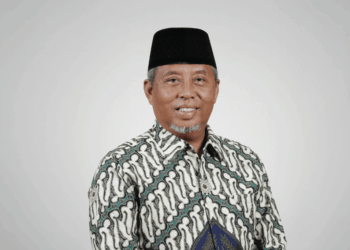
In an exclusive interview, Budi Setiawan, Chairperson of Muhammadiyah Disaster Management Center (MDMC), emphasized that the UN’s initiative aims to increase recognition for volunteers and inspire more people globally to engage in humanitarian service.
“We highlight this moment on 5 December, regardless of whether disaster strikes or not, to call on the public to become volunteers committed to humanitarian efforts,” he said on Monday (8/12).
Budi explained that the spirit of volunteerism has long been embedded within Muhammadiyah, tracing back to the teachings of K.H. Ahmad Dahlan. From the beginning, Muhammadiyah has upheld the value of helping others sincerely, without expecting anything in return.
“We see humanitarian issues as vast and complex. Therefore, religious values must be translated into real acts of goodness, which is exactly what volunteerism represents,” Budi noted.
Volunteer Strategy: Data-Driven, Measured, and Targeted
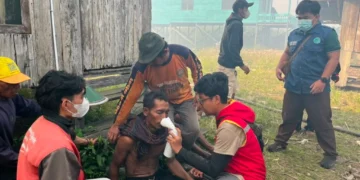
According to Budi, the current era requires volunteerism that goes beyond good intentions. Humanitarian action must be structured, evidence-based, and aligned with actual needs. This is a principle MDMC clings on to in all its disaster response operations.
“Volunteers on site must truly understand what to give and what actions to take. This ensures that aid is meaningful and accurately delivered. We must give what survivors need, not simply what we have,” he stressed.
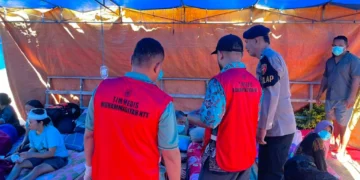
A crucial part of MDMC’s approach is conducting continuous assessment to map the real conditions of disaster survivors. In many cases, MDMC collaborates with various partners, including ‘Aisyiyah, to build women’s communal kitchens and temporary shelters for affected families.
“If clean water is unavailable, we distribute ready to eat meals. We also map out the needs of children, the elders, and women,” Budi explained.
He added that in several disaster situations, Muhammadiyah and ‘Aisyiyah have jointly operated women-led kitchens while also providing temporary housing. Privacy for families, Budi said, is an important aspect often overlooked in emergency situations. MDMC ensures that it is protected.
Strengthening Coordination Across Disaster Zones
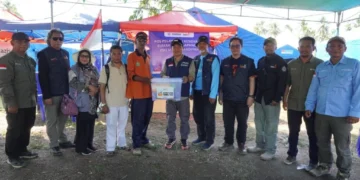
Budi shared additional updates on disaster responses in Sumatra, noting that MDMC has established a National Coordination Center (Poskor Nas) in all affected areas. This system allows faster and more effective coordination across provinces.
“For example, in Sumatra we have now divided the work into three provincial zones. Moving forward, we will designate which regions require the most urgent attention,” he said.
In reflecting on International Volunteer Day, Budi reminded the public that disasters can occur at any moment, often without warning. Volunteers, therefore, must remain resilient and prepared to act swiftly.
He affirmed that MDMC will continue inviting communities to take part in recovery efforts, as Muhammadiyah has done in major disasters in Aceh, Palu, and Yogyakarta.
“In the emergency phase, we must move quickly to help. After that, we focus on restoring survivors to their original living conditions. God willing, through these efforts, communities will truly feel the impact of the humanitarian work we carry out together,” Budi concluded. (Bhisma)