

MUHAMMADIYAH.OR.ID, YOGYAKARTA – As the world observed International Volunteer Day on December 5, the occasion served not only as a symbolic recognition but also as a moment to honor volunteers who dedicate themselves to humanitarian missions across the globe. For Muhammadiyah, one of Indonesia’s largest Islamic organizations, the day reaffirmed its long-standing commitment to global relief efforts.

dr. Corona Rintawan, head of the Emergency Medical Team of the Muhammadiyah Disaster Management Center (EMT MDMC), emphasized that Muhammadiyah’s involvement in international humanitarian work has opened more than a decade and continues to grow.
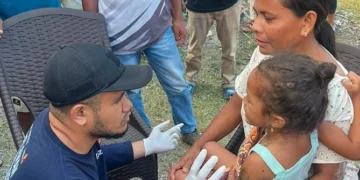
“We started sending medical response teams in 2008, beginning in the Gaza Strip, and have remained consistently active,” dr. Corona said in an interview on Monday (8/12). “Since then, we’ve responded to the Nepal earthquake, crises in Myanmar, the Türkiye earthquake, provided assistance after the Morocco quake, and helped manage severe flooding in Pakistan. International response has become part of our rhythm.”
A Decade of Global Engagement
More than ten years of continuous fieldwork has brought Muhammadiyah recognition on the global humanitarian stage. EMT Muhammadiyah now contributes not only in emergency deployments but also in shaping international humanitarian guidelines.
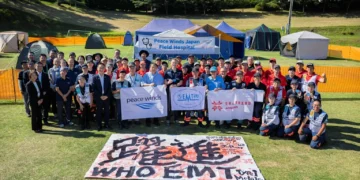
dr. Corona noted that the team is officially certified by the World Health Organization as an International EMT. This milestone, he said, reflects years of investment in training, coordination, structures, and quality standards.
The recognition does not end there. EMT Muhammadiyah is now an official partner in the Global Outbreak Alert and Response Network (GOARN), a WHO-led initiative that mobilizes institutions worldwide for rapid response to public health emergencies. With this partnership, Muhammadiyah becomes the third Indonesian organization integrated into the global emergency health network.
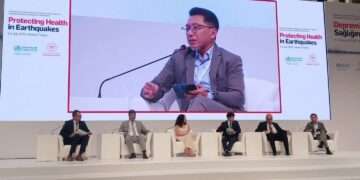
“In international humanitarian efforts, we’re not just joining missions,” dr. Corona said. “We are also contributing to guideline development and have been invited several times to present our work at the EMT Global Meeting and other international forums.”
To maintain these standards, the team enforces rigorous selection for new EMT members and frequently conducts field simulations to train volunteers in coordination, field simulation to train volunteers in coordination, operational procedures, and disaster-site responsibilities. According to dr. Corona, these steps are critical for ensuring commitment, readiness, and competence. Qualities are essential to high-stakes humanitarian work.
Preparing for the Next Phase After WHO Verification
Following WHO’s international verification, EMT Muhammadiyah is preparing a series of new initiatives to expand its role in global humanitarian response.
“We are planning missions in Palestine and evaluating security and access conditions there,” dr. Corona said. “But at the same time, we must respond to major disasters happening at home, especially in Sumatra. This requires mobilizing teams from Java and activating national EMT units from Muhammadiyah and ‘Aisyiyah hospitals.”
Looking ahead, MDMC and the Muhammadiyah Public Health Council (MPKU) plan to update and strengthen national EMT standards, especially those implemented in Muhammadiyah-’Aisyiyah hospitals, to ensure they align with international expectations.
At the end of the interview, dr. Corona stressed that volunteerism is more than the willingness to deploy during crises. “It’s also a commitment to continuous improvement,” he said. “Being a volunteer means being ready, not just emotionally but also technically and professionally.” (Bhisma) (Translated by Bintang Adrian)