

MUHAMMADIYAH.OR.ID, SLEMAN – Muhammadiyah has called on its community facilitators to ground their work in compassion and moral dignity, values it sees as central to its approach to education and social empowerment.

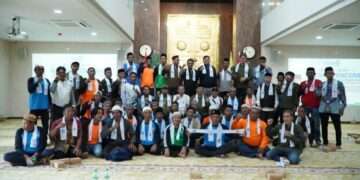
Irwan Akib, Chairperson of Muhammadiyah Central Board, delivered the message during the opening of the School for Community Empowerment Cadres (SEKAM) on Wednesday (21/01) in Sleman, Yogyakarta.
Irwan Akib said Muhammadiyah education aims to awaken consciousness, cultivate intelligence, and liberate people from ignorance and poverty. It must not remain abstract or elitist, he further added, but instead rooted in everyday social realities.
“Muhammadiyah education cannot stand on an ivory tower,” he said. “It must be grounded, bringing Islamic values into daily life with compassion for all living beings.”
Drawing on local wisdom from south Sulawesi, Irwan Akib compared the ethic of compassion to pacce, a Makassarese philosophy that emphasizes deep empathy, solidarity, and shared suffering. The concept, moreover, is often paired with siri, meaning shame, dignity, or self respect. Together, they form siri na pacce, a moral framework that balances empathy with honor.
“As facilitators who work directly with communities, this spirit of compassion must live within us,” he told participants.
Irwan Akib identified wasteful spending habits as one of the most persistent challenges among assisted communities, including farmers, fishermen, and migrant workers. Such patterns, he said, often stem from long-standing cultural practices and require patient, respectful engagement.
“We cannot change the old habit instantly,” he said. “They require careful communication so people can gradually shift their mindset and behavior and truly become empowered.”
Beyond moral commitment, furthermore, Irwan Akib said that facilitators must equip themselves with diverse methods suited to different social groups. For Muhammadiyah, empowerment is not about delivering aid and leaving. Instead, it is a long-term process of living alongside communities to help them grow.
“That work demands strong commitment and resilience,” Irwan Akib concluded. “The spirit must remain alive within us.”
Translator: Bintang Adrian