

MUHAMMADIYAH.OR.ID, YOGYAKARTA – Assisting victims of floods and landslides across Sumatra has proven far from easy for Muhammadiyah volunteers, who are confronting a disaster of vast scale, difficult terrain, and limited resources.

As of Thursday (22/01), official data showed that the disaster had affected 53 regencies and cities. At least 1,200 people were reported dead, 143 remained missing, and nearly 114,000 were displaced.
Damage extended beyond homes. Authorities recorded destruction at 215 health facilities, 4,646 schools, and 803 houses of worship. In addition, 810 bridges and 2,146 roads were impacted, while more than 175,000 houses were damaged.
Scale, Access, and Human Resources
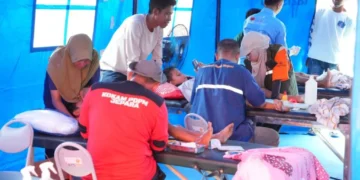
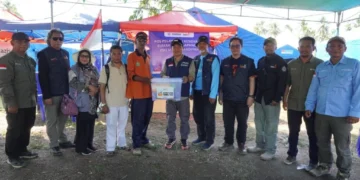
In response, Muhammadiyah Disaster Management Center (MDMC), had provided assistance to 80,526 people by Jan. 10. The organization operated 250 service points across Aceh, North Sumatra, and West Sumatra, deploying 526 volunteers.
Those service points delivered a wide range of aid, including health care, psychosocial support, logistics, water and sanitation services, education, temporary shelters, and public kitchens.
Budi Santoso, Vice Secretary of MDMC Central Board, presented the data during an online discussion hosted Thursday (22/01) by the Muhammadiyah Studies Center.
He said the first major challenge lay in the sheer scale of the disaster, which struck three provinces simultaneously. Geography posed a second obstacle. Many affected areas proved difficult to reach, requiring motorcycles or long walks after roads became impassable.
“The need for large numbers of volunteers over long periods, especially in health services, is unavoidable,” Budi said.
Coordination and Accountability
Another pressing issue, he added, involved securing materials for recovery and reconstruction, including access to clean water. At the same time, Muhammadiyah continued to emphasize community participation by involving local residents in response and recovery efforts.
With MDMC units established across most of Indonesia, Budi urged members not to lose resolve. He called for collective action to help Aceh, North Sumatra, and West Sumatra recover and rebuild.
Echoing those concerns, Ahmad Imam Mujadid Rais, Chairperson of Muhammadiyah Department of Charity Management (Lazismu), highlighted coordination as an ongoing challenge. He stressed the need for close cooperation with government agencies and other philanthropic groups to avoid overlapping aid.
Accountability, he added, remained essential. “We must safeguard the trust of donors and report our work transparently,” Ahmad said. (Janu)
Translator: Bintang Adrian