

MUHAMMADIYAH.OR.ID, BANTUL – Israeli policy toward Palestine has evolved from territorial occupation into a systematic strategy aimed at replacing the Palestinian population, particularly in Jerusalem, according to the president of Al-Quds University.

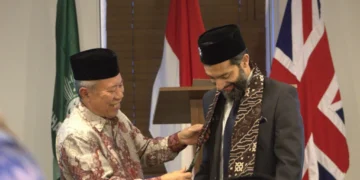
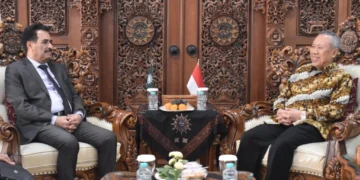
Prof. Dr. Imad Abu Kishek made the remarks during a guest lecture at Muhammadiyah University of Yogyakarta on Tuesday (13/01), titled “Life under Siege: Resistance and Hope of Palestine.” Speaking before hundreds of students, he said current Israeli policies target not only land, but also palestinian identity, social life, and long term survival.
According to Imad, the conflict is part of long-standing historical designs. Today, he said, Palestinians face a continuous and structured project of population replacement.
“Palestine is not only under occupation. It is facing a strategy of replacement. Israel pressured them to submit, forced to migrate, or eliminated if they remain,” Imad said.
He added that this approach has intensified in recent years alongside the rise of increasingly extreme Israeli governments, making the two-state solution increasingly difficult. Palestine, he argued, is no longer treated as occupied territory, but as land to be emptied.
Imad stressed that Jerusalem lies at the heart of the conflict due to its religious, political, and geopolitical significance. Control over the city is key to regional dominance. Palestinians in Jerusalem face administrative pressure, economic hardship, and the criminalization of civilian resistance. It makes the city both the most vulnerable and decisive arena of the conflict.
He also described the Al-Aqsa Mosque as a central symbol of Palestinian identity and resistance. He noted that efforts to restrict access to the site often provoke collective responses.
“For Palestinians, Jerusalem is not just a city, It is the center of identity, belief, and dignity,” he said.
Imad urged universities to engage critically with the Palestinian issue. He also emphasize that the conflict should be examined as the result of systematic political strategies rather than viewed solely as armed confrontation.
Translator: Bintang Adrian