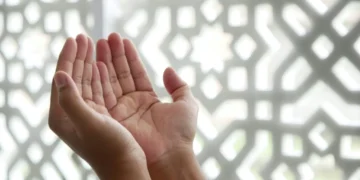


Before kickoff, Spain’s wonderkid Lamine Yamal often raised both hands in prayer. For many Muslim viewers, the gesture serves as a reminder that, regardless of preparation and talent, every outcome ultimately rests with Allah SWT.

Prayer (du’a) holds a special place in Islam. The Prophet Muhammad (peace be upon him) even described it as the essence of worship because it reflects a servant’s recognition of human weakness and complete dependence upon Allah. Accordingly, Islam also teaches proper etiquette for supplication, one of which is raising both hands while praying.
Regarding this practice, numerous hadith demonstrate that the Prophet raised his hands during supplication on many occasions. One narration from the Companion Abdullah bin Umar describes how the Prophet prayed after throwing the pebbles at the Jamarat during Hajj.
حَدَّثَنَا عُثْمَانُ بْنُ أَبِي شَيْبَةَ حَدَّثَنَا طَلْحَةُ بْنُ يَحْيَى حَدَّثَنَا يُونُسُ عَنِ الزُّهْرِيِّ عَنْ سَالِمٍ عَنِ ابْنِ عُمَرَ رَضِي اللهُ عَنْهُمَا أَنَّهُ كَانَ يَرْمِي الْجَمْرَةَ الدُّنْيَا بِسَبْعِ حَصَيَاتٍ يُكَبِّرُ عَلَى أَثَرِ كُلِّ حَصَاةٍ ثُمَّ يَتَقَدَّمُ حَتَّى يُسْهِلَ فَيَقُومُ مُسْتَقْبِلَ الْقِبْلَةِ فَيَقُومُ طَوِيْلاً وَيَدْعُو وَ يَرْفَعُ يَدَيْهِ ثُمَّ يَرْمِي الْوُسْطَى ثُمَّ يَأْخُذُ ذَاتَ الشِّمَالِ فَيَسْتَهِلُ وَيَقُومُ مُسْتَقْبِلَ الْقِبْلَةِ فَيَقُومُ طَوِيلاً وَيَدْعُو وَ يَرْفَعُ يَدَيْهِ وَيَقُومُ طَوِيلاً ثُمَّ يَرْمِي جَمْرَةَ ذَاتِ الْعَقَبَةِ مِنْ بَطْنِ الْوَادِي وَلاَ يَقِفُ عِنْدَهَا ثُمَّ يَنْصَرِفُ فَيَقُولُ هَكَذَا رَأَيْتُ النَّبِيَّ صَلَّى اللهُ عَلَيْهِ وَسَلَّمَ يَفْعَلُهُ (رواه البخاري، كتاب الحج، ج:1، ص:198)
“Narrated to us by ‘Uthman ibn Abi Shaybah, narrated to us by Talhah ibn Yahya, narrated to us by Yunus, from al-Zuhri, from Salim, from ibn ‘Umar (may Allah be pleased with them): Ibn ‘Umar used to stone the first Jamrah with seven pebbles, pronouncing takbir after each throw. He would then proceed to an open area, stand facing the qiblah for a long time, supplicate, and raise both of his hands. Next, he would stone the middle Jamrah, move to the left onto level ground, stand facing the qiblah for an extended period, supplicate while raising both of his hands, and remain standing for a long time. He would then stone Jamrat al-’Aqabah from the bottom of the valley without stopping there, after which he would depart, saying: ‘This is how I saw the Prophet (peace and blessings be upon him) perform it.’” (Sunan Bukhari)
Another narration conveys the same practice when the Prophet led a prayer for rain. Anas bin Malik narrated:
بَيْنَمَا النَّبِيُّ صَلَّى اللهُ عَلَيْهِ وَسَلَّمَ يَخْطُبُ يَوْمَ الْجُمُعَةِ إِذْ قَامَ رَجُلٌ فَقَالَ يَا رَسُولَ اللهِ هَلَكَ الْكُرَاعُ وَهَلَكَ الشَّاءُ فَادْعُ اللهَ أَنْ يَسْقِيَنَا فَمَدَّ يَدَيْهِ وَدَعَا
“When the Prophet (peace be upon him) was delivering the Friday sermon, a man stood and said, ‘O Messenger of Allah, our livestock have perished. Pray to Allah to send us rain.’ Thereupon, the Messenger of Allah stretched out both of his hands and supplicated.”
Likewise, Abu Musa al-Ash’ari narrated that the Prophet once prayed for Abu Amir after asking for water to perform ablution.
دَعَا النَّبِيُّ صَلَّى اللهُ عَلَيْهِ وَسَلَّمَ بِمَاءٍ فَتَوَضَّأَ بِهِ ثُمَّ رَفَعَ يَدَيْهِ فَقَالَ اللَّهُمَّ اغْفِرْ لِعُبَيْدٍ أَبِي عَامِرٍ…
“The Prophet (peace be upon him) asked for water to perform ablution. After completing his ablution, he raised both hands and prayed, ‘O Allah, forgive Abu Amir.’ I saw the whiteness of his armpits. Then he prayed again, ‘O Allah, grant him a rank on the Day of Resurrection above many among your creation.’”
Perhaps the hadith most frequently cited as evidence for the virtue of raising one’s hands in prayer is narrated by Salman al-Farisi:
إِنَّ رَبَّكُمْ حَيٌّ كَرِيمٌ يَسْتَحْيِي مِنْ عَبْدِهِ إِذَا رَفَعَ يَدَيْهِ إِلَيْهِ أَنْ يَرُدَّهُمَا صِفْرًا
“Indeed, your Lord is Ever-Living and Most Generous. He is too generous to let His servant raise both hands to Him and return them empty.” (Sunan Abu Dawud, al-Tirmidhi, Ibn Majah, and Ahmad; authenticated by al-Hakim)
This hadith presents a beautiful image. Raising both hands symbolizes a servant’s complete humility before Allah. Just as a beggar stretches out empty hands before a generous benefactor, a believer raises both hands toward Allah, the Most Rich and Most Generous.
There is, however, another narration from Anas bin Malik that states:
أَنَّ نَبِيَّ اللهِ صَلَّى اللهُ عَلَيْهِ وَسَلَّمَ كَانَ لَا يَرْفَعُ يَدَيْهِ فِي شَيْءٍ مِنْ دُعَائِهِ إِلَّا فِي الِاسْتِسْقَاءِ حَتَّى يُرَى بَيَاضُ إِبْطَيْهِ
“The Prophet (peace be upon him) did not raise his hands in any supplication except during the prayer for rain, until the whiteness of his armpits became visible.” (Sunan Muslim)
At first glance, this narration appears to contradict the previous reports. However, classical hadith scholars explained that the contradiction is only apparent. Imam al-Qasthalani in Irsyad as-Sari and Imam as-Shan’ani in Subul as-Salam clarified that Anas did not mean the Prophet never raised his hands while making du’a. Rather, he meant that the Prophet did not raise them exceptionally high except during the prayer for rain.
Reconciling the Hadith
Accordingly, these narrations can be harmonized. The Prophet regularly raised his hands while making supplications, but during istisqa’ he lifted them much higher than usual.
Muhammadiyah’s Council for Religious Opinion and Reform also adopted this reconciliatory approach. In its Manhaj Tarjih, when scriptural evidence appears to conflict, the first step is not to discard one narration in favor of another, but to apply al-jam;u wa at-taufiq (bringing all authentic evidence together and reconciling it whenever possible). After examining the relevant narrations, the council concludes that raising both hands while making du’a is sunnah, whereas raising them exceptionally high is specific to the prayer for rain.
Therefore, seeing a Muslim raise both hands before a football match, before traveling, before taking an examination, or before undergoing surgery is entirely consistent with the prophetic etiquette of supplication.
Raising one’s hands does not guarantee that Allah will answer every prayer exactly as one wishes. Rather, it expresses humility before Allah, acknowledges human limitations, and affirms the conviction that only Allah determines the best outcome.
Perhaps that is the deepest meaning behind Lamine Yamal’s raised hands before kickoff. While millions watch him prepare to face his opponents, he first turns to Allah, recognizing that the truest victory begins with surrender to the Lord of all the worlds.
Reference:
Council for Religious Opinion and Reform of the Central Board of Muhammadiayh, “Fatwa Tarjih Tentang Mengangkat Tangan Ketika Berdoa”, https://web.suaramuhammadiyah.id/2016/07/11/fatwa-tarjih-tentang-mengangkat-tangan-ketika-berdoa/, accessed Tuesday, July 7th, 2026.