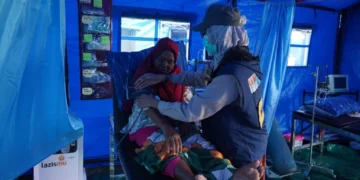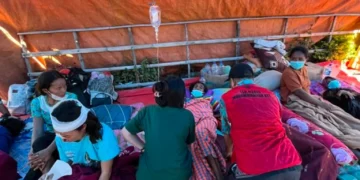


MUHAMMADIYAH.OR.ID, JAKARTA – Muhammadiyah, through its philanthropic arm Lazismu, has partnered with Indonesia’s Hajj Financial Management Agency (BPKH) to deliver disaster relief and recovery assistance across several regions in Sumatra and Aceh. The program focuses on North Sumatra, particularly South Tapanuli and Central Tapanuli, while also covering affected areas in West Sumatra and Aceh.

Director of Distribution and Utilization programs at Lazismu’s central office, Ardi Luthfi Kautsar, on Friday (02/01), asserted that Lazismu will remain committed to rehabilitation and community rebuilding. He also stressed that collaboration across institutions is essential to ensure aid reaches those who need it most.
“Through this synergy between BPKH and Lazismu, post-disaster handling in North Sumatra can proceed effectively and deliver a real positive impact for affected communities,” Ardi said.
Moreover, Lazismu expressed appreciation for BPKH’s trust and support in channeling response and rehabilitation assistance across multiple provinces. The partnership, Ardi noted, strengthens accountability while also reinforcing sustainability in humanitarian programming.
From Emergency Relief to Long-Term Recovery
Under the joint initiative, assistance prioritizes the renovation and provision of facilities for one school and one mosque in each affected region. These sites were selected to help restore not only education services, but also the social and spiritual life of local communities.
Consequently, Lazismu has emphasized that aid distribution will remain targeted, transparent, and aligned with long-term recovery goals. At the same time, cooperation with BPKH is viewed as a shared commitment to delivering broader public benefit rooted in Islamic social finance principles.
In addition, Ardi highlighted that the partnership accelerates disaster relief by implementing programs that are measurable, transparent, and compliant with sharia standards. For that reason, Lazismu and BPKH are coordinating closely with local stakeholders to verify needs and ensure assistance is appropriate.
Separately, Sulistyowati, a member of BPKH’s executive board, said last week that the agency is collaborating with seven humanitarian partners, including Lazismu. Planned assistance includes mosque equipment, worship facilities, and educational infrastructure for disaster-affected schools.
She added that the use of the Dana Abadi Umat, or Endowment Fund for the Ummah, aims to ensure that disaster survivors in Sumatra do not face recovery alone. “We want to stand with them and help them rise stronger through programs that create lasting benefits,” she said.
Ultimately, the recovery process will proceed in stages, with careful attention to urgency, feasibility, and long-term impact. Through this partnership, Muhammadiyah and BPKH reaffirm their commitment to humanitarian action that bridges emergency relief and sustainable rebuilding. (Bintang Adrian)