
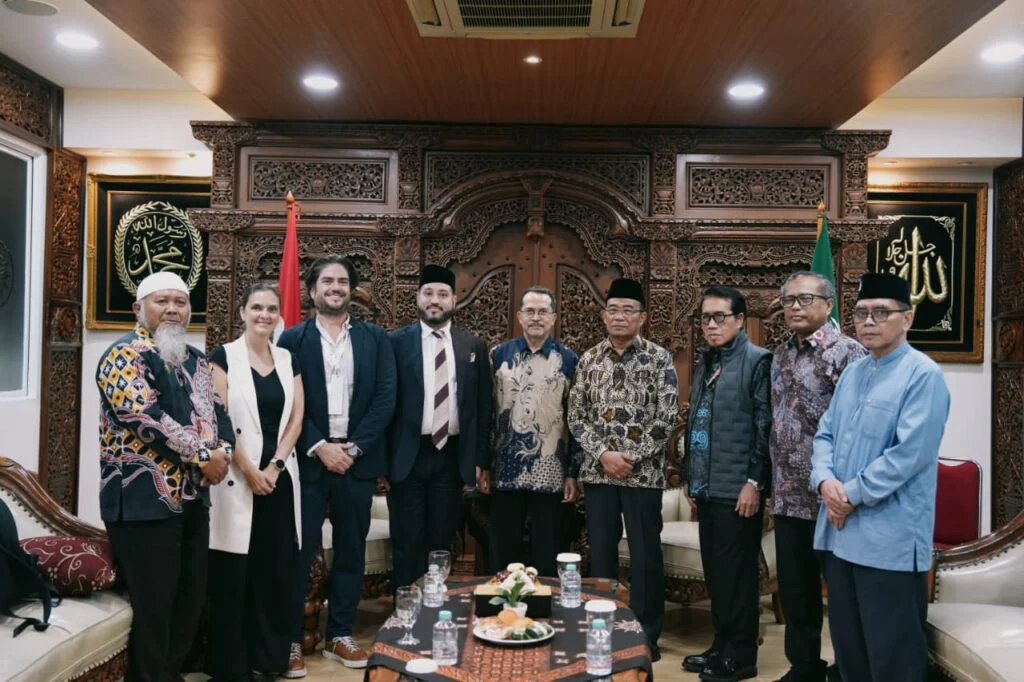
EN.MUHAMMADIYAH.OR.ID, JAKARTA – The Central Board of Muhammadiyah is exploring cooperation with Spanish partners in education, employment, healthcare, digital technology, and business development. Potential initiatives include seasonal work programs for Muhammadiyah vocational school students, student and faculty exchanges, and Islamic heritage tourism.

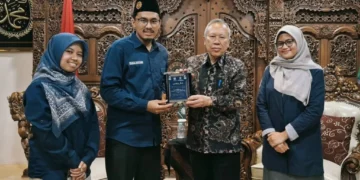
The meeting took place on Wednesday (14/10), at the Central Board of Muhammadiyah Headquarters in Central Jakarta. The Central Board was represented by Muhammadiyah Central Board Chairperson Muhadjir Effendy, Chairperson of the Economic and Business Council Mohammad Zainal Fatah, Chairperson of the Department of International Relations and Cooperation Imam Addaruqutni, department member Bunyan Saptomo, and East Java Provincial Board Treasurer Zainul Muslimin.
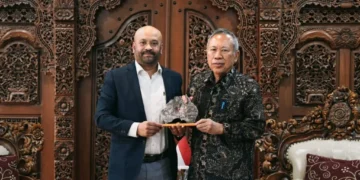
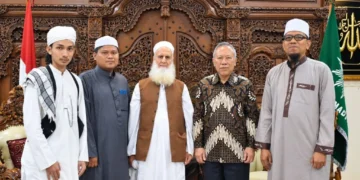
The Spanish delegation included Indonesian Ambassador to Spain Muhammad Najib, Director and Imam of the M-30 Mosque in Madrid Adil Mohamed Hachmi, Business Development Director Jacinta Dominguez, Commercial Strategy Director Fernando Delgado, and Ambassador’s Secretary Jonathan Petrarico.
Muhadjir Effendy said the discussions aimed to identify collaborative opportunities that align with the needs and potential of both parties. Muhammadiyah’s experience in managing educational institutions, healthcare facilities, and social services could provide a foundation for international partnerships.
“We want to identify mutually beneficial cooperation that can realistically be implemented. The next step is to establish a team to follow up on the opportunities discussed,” he said.
One proposal was a summer job program in Spain for students from Muhammadiyah vocational schools and universities. The initiative could provide international work experience while helping participants develop skills relevant to labor market needs. Before implementation, both parties would need to map workforce requirements and prepare participants with the appropriate competencies.
Beyond employment, the two sides explored student and faculty exchanges, joint research, academic publications, and Indonesian and Spanish language teaching. Potential cooperation also covers digital technology, coding, and healthcare.
Developing Business and Islamic Heritage Tourism
Muhammad Najib said relations between Indonesia and Spain had considerable room to grow, particularly through educational and economic cooperation. During the meeting, he brought around 30 Spanish business representatives to attend the Trade Expo Indonesia. According to Najib, several of them had expressed interest in exploring partnerships with Muhammadiyah.
Najib explained that diplomacy extends beyond formal channels. Engagement with business leaders and professional networks can open up broader opportunities for cooperation among Indonesia, Spain, and Muhammadiyah.
He described Spain as a European country with considerable untapped potential for stronger economic ties with Indonesia. He also encouraged Muhammadiyah to play an active role in pursuing these opportunities through business development and expanded international networks.
Najib also proposed travel packages combining the umrah pilgrimage with visits to historic sites of Islamic civilization in Spain. Cordoba and Granada, he said, could be a great tourism potential. Such packages would help develop religious tourism while introducing Indonesian visitors to the region’s Islamic heritage.
Economic discussions also covered professionalizing the management of Muhammadiyah’s business ventures and expanding their international reach. Najib suggested starting with practical, achievable initiatives and gradually developing them into broader partnerships.
Scholarships and Student Exchange Opportunities
Adil Mohamed Hachmi praised Muhammadiyah’s work in education, healthcare, and humanitarian services. He said the organization’s programs could serve as a foundation for cooperation that benefits communities regardless of religious or ideological background.
Although he was already familiar with Muhammadiyah, the meeting gave him an opportunity to learn more about its leadership and activities. He hoped the discussions would mark the beginning of more concrete collaboration.
“I appreciate Muhammadiyah’s warm welcome and the various programs it has carried out, particularly in education, healthcare, and humanitarian work. We hope to establish practical cooperation, especially through scholarships and student exchanges,” he said.
According to Adil, Indonesian students could pursue their studies in Spain and other countries, including Australia, New Zealand, and Canada. Conversely, students from Spain and Latin America could have opportunities to study in Indonesia.
To advance these proposals, his team plans to establish a joint coordination team with Muhammadiyah to identify potential areas of cooperation and develop feasible programs.
Muhadjir emphasized that the opportunities discussed must be translated into tangible initiatives. He said the success of the partnership should not be measured solely by the number of plans agreed upon, but also by the programs that are actually implemented.
“Even if only around 20 percent of the plans we have discussed can be realized, that would already be a good result. What matters is that we start a dialogue with various partners and identify forms of cooperation that can genuinely be put into practice,” he said.
The discussions are expected to mark an initial step toward strengthening Muhammadiyah’s ties with Spanish partners through concrete and sustainable cooperation in education, employment, healthcare, technology, and business.