EN.MUHAMMADIYAH.OR.ID, JAKARTA — Muhammadiyah emphasized the importance of critically examining arts and cultural events perceived to be associated with support for Israel’s occupation of Palestine. The issue has emerged following plans for Italian tenor Andrea Bocelli to perform in Indonesia in October and November 2026.

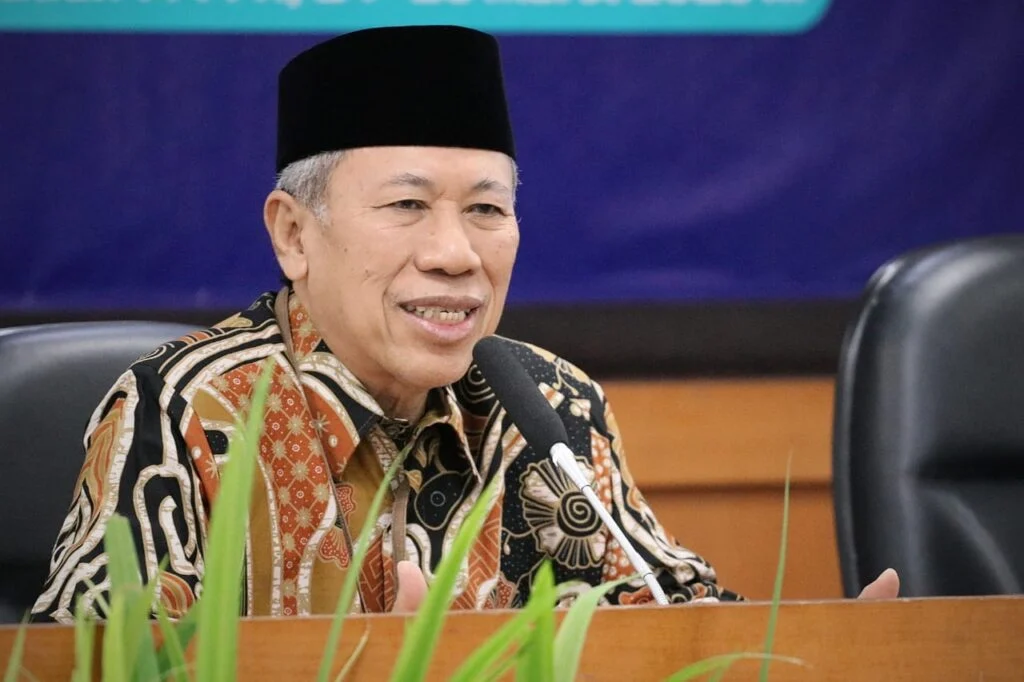
The position was conveyed by Syafiq A. Mughni, Chairperson of Muhammadiyah Central Board, in an introductory segment of TVMu’s Ruang Publik program on Sunday (14/10). Syafiq stressed that Muhammadiyah remains firmly committed to supporting the Palestinian people’s struggle for independence and sovereignty.
According to Syafiq, all forms of colonialism, injustice, occupation, and dispossession must be opposed. This commitment also includes rejecting propaganda that supports Israeli Zionism, including through artistic performances, sports, and commercial activities.
Syafiq urged Indonesians to exercise caution and avoid directly or indirectly supporting activities that reinforce such propaganda. He argued that spending money on entertainment should also be reconsidered when an event is linked to support for occupation.
“If a concert is intended to raise funds to support injustice, then that is something we cannot condone,” he said.
He added that solidarity with Palestine is a humanitarian responsibility consistent with the Preamble to Indonesia’s 1945 Constitution. Muhammadiyah therefore calls on Indonesians to work together to pursue justice and peace, including for the Palestinian people.
MUI Reaffirms Its Opposition
In the same discussion, Sudarnoto Abdul Hakim, Head of the Indonesian Ulema Council’s (MUI) Foreign Relations and International Cooperation Division, explained that the objection to Bocelli’s planned concert was based on an examination of the singer’s past activities.
He emphasized that MUI’s position was not related to the quality of Bocelli’s music, his song lyrics, or his religion. Rather, it concerned a record of involvement that MUI considers inconsistent with the principle of opposing occupation.
Sudarnoto also said MUI had submitted its official position, along with supporting documents, to three ministries. Those are the Ministry of Tourism, the Ministry of Culture, and the Ministry of Creative Economy. The statement was also sent to the Indonesian National Police.
He urged the government to issue an official response to the controversy promptly. In his view, the economic benefits of holding a concert should not take precedence over solidarity with the Palestinian struggle.
Arts, Culture, and Social Responsibility
Gunawan Budianto, head of the Muhammadiyah Central Board’s Department for Arts and Culture, said arts and culture can serve as instruments of diplomacy, or soft power, to advance particular interests. He argued that the controversy surrounding Bocelli’s concert should therefore be viewed in a broader context. Bocelli, Gunawan said, exploits the use of cultural diplomacy to foster acceptance of a country’s political policies.
Gunawan recalled that the Preamble to Indonesia’s 1945 Constitutions affirms that independence is the right of all nations and calls for the abolition of colonialism throughout the world. He said these principles provide a foundation for Indonesians to respond to international events involving humanitarian issues.
He also called for greater public awareness of the various forms of diplomacy that can be used to build support for Israel, including through education, politics, economics, and culture.
Meanwhile, Dwi Setyowati, Chairperson of the Advocacy, Hikmah, and Public Policy Division of the Central Board of Nasyiatul ‘Aisyiyah for the 2026–2030 term, expressed support for MUI’s opposition to the concert. She stressed the importance of considering the suffering of conflict victims, particularly Palestinian women and children, when responding to arts and entertainment events.
Dwi clarified that supporting Palestine does not mean rejecting the arts, culture, or the government’s efforts to develop tourism. The government, she said, could still invite other international artists while taking humanitarian values into account.
She also urged the government to be more selective in organizing public events so that its decisions could serve as a form of social education for younger generations.