

MUHAMMADIYAH.OR.ID, JAKARTA – Muhammadiyah Aid (MuAID) is drafting its 2026–2030 Strategic Plan to reinforce Muhammadiyah’s global humanitarian mission, with a sharper focus on humanitarian crises and women’s issues.

As part of the process, MuAID held an online socialization forum on Friday to present the draft plan and map the roles and responsibilities of Muhammadiyah councils and affiliated bodies. The meeting aimed at institutions, and autonomous organizations within the Muhammadiyah movement.
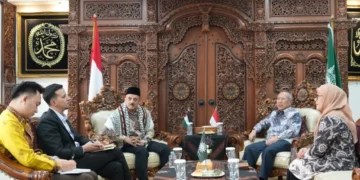
Syafiq A. Mughni, chairman of Muhammadiyah’s central leadership, said humanitarian crises, especially those rooted in conflict, require peacebuilding efforts that actively involve local actors. According to him, peacebuilding has become a core mandate following Muhammadiyah’s most recent congress and represents a key area of contribution for MuAID.
Moreover, he emphasized that humanitarian work must rely on clear and complementary divisions of responsibility. “MuAID is not meant to replace the roles of existing councils or institutions,” Mr. Syafiq said. “Instead. it fills gaps that cannot yet be addressed, so collective action remains effective and avoids overlap.”
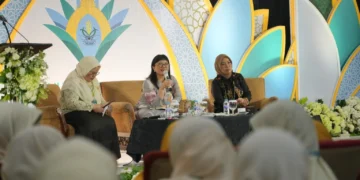
Yayah Khisbiyah, the coordinator of MuAID echoed that message. She noted that the forum served as a shared space to synchronize strategies and ensure that every element of Muhammadiyah contributes in a mutually reinforcing way. Through the new strategic plan, she added, MuAID aims to deliver humanitarian impacts that are not only immediate but also sustainable and transformative.
Expanding the Scope of Crisis Response and Women’s Leadership
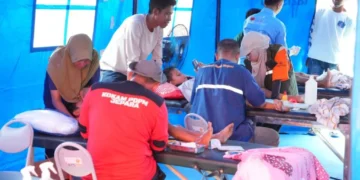
Representing ‘Aisyiyah, Rahmawati Husein, Chairperson of its Environmental and Disaster Management Department, offered strategic input on program scope and funding strategy. She urged MuAID to broaden its humanitarian crisis pillar beyond natural disasters to include crises caused by conflict and war.
Such an approach, she argued, would allow Muhammadiyah to design humanitarian responses with longer-term impact. In addition, she stressed the importance of explicitly strengthening women’s issues within the strategic framework, rather than treating them solely as a cross-cutting concern.
According to Rahmawati, women often face heightened vulnerability during crises, yet they also hold critical potential for community leadership and recovery. Therefore, she said, women’s empowerment should stand as a clear program pillar, supported by well-defined and sustainable funding strategies.
MuAID functions as a task force under Muhammadiyah’s central leadership, coordinating international humanitarian assistance across multiple affiliated bodies. Through this structure, Muhammadiyah seeks to ensure that its global humanitarian efforts operate in an integrated, solid, and well-coordinated manner.