

Seventy-seven years ago, on 22 December 1948, a pivotal event crucial to the survival of the Republic of Indonesia took place: the establishment of the Emergency Government of the Republic of Indonesia (Pemerintah Darurat Republik Indonesia/PDRI).

The PDRI played an indispensable role at a moment of national crisis. It filled the leadership vacuum created by the Dutch Second Military Aggression, ensuring the continuity of the Republic. This raises an important question: what was the relationship between the PDRI and Muhammadiyah? The following discussion seeks to address this connection.
Bloody Tears in the Struggle for Independence
Bukittinggi, West Sumatra, stands as a key witness to this historic episode. At the time, the Netherlands was determined to redeem Indonesia, exploiting the power vacuum left by Japan’s defeat in World War II. Meanwhile, Indonesia, newly independent and institutionally fragile, was forced to confront renewed colonial aggression. This period of resistance is known as the struggle to defend independence, marked by the First and Second Dutch Military Aggressions between 1945 and 1949.
According to Syafii Maarif (2021), writing for kompas.id, Dutch colonial strategists assumed Indonesia could not prevail militarily. What they failed to anticipate, however, was the people’s unyielding resolve to defend their independence, a force that modern weaponry could not suppress.
The spirit of resistance is enshrined in the opening paragraph of the 1945 Constitution of Indonesia”
“Bahwa sesungguhnya kemerdekaan itu ialah hak segala bangsa dan oleh sebab itu, maka penjajahan di atas dunia harus dihapuskan karena tidak sesuai dengan peri kemanusiaan dan peri keadilan.”
Which translates into: “that independence is the right of all nations, and therefore colonialism must be abolished in this world, as it is not in accordance with humanity and justice.”
The cost of this struggle was immense. Thousands lost their lives, and suffering spread across the archipelago, particularly during the Dutch military offensives of 21 July 1947 and 19 December 1948.
Another critical moment occurred on 4 January 1946, when Indonesia relocated its capital from Jakarta to Yogyakarta after Jakarta fell under Allied/NICA control. The subsequent capture and exile of President Soekarno, Vice President Mohammad Hatta, and several cabinet ministers marked one of the darkest chapters in the early Republic’s history. Even Yogyakarta, the temporary capital, was eventually forced into submission.
Did the Republic Truly Fall?
The answer lies in the resolve of Indonesia’s leaders and people. Foremost among them was Sri Sultan Hamengkubuwana IX of Yogyakarta, who firmly rejected Dutch offers to serve as “Super Wali Negara” of Java and Madura. Instead, he committed the Sultanate’s resources to sustaining the Republican government.
Equally vital was the establishment of the PDRI on 22 December 1948. Following the Dutch assault on Yogyakarta, Indonesia experienced a three-day power vacuum from 19 to 21 December 1948. Anticipating this crisis, Mohammad Hatta had earlier mandated Sjafruddin Prawiranegara, then Minister of Prosperity, to form an emergency government in West Sumatra.
Supported by General Sudirman, the PDRI (1948-1949) became decisive in safeguarding Indonesia’s political legitimacy. Its existence demonstrated to the international community that the Republic remained alive and functioning.
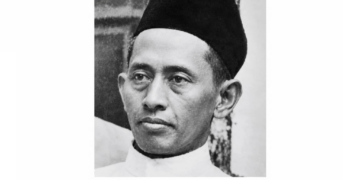
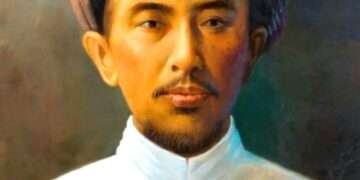
Led by Sjafruddin Prawiranegara, the PDRI was supported by prominent national figures, including Teuku Mohammad Hassan, Mohammad Rasjid, Lukman Hakim, KH Masykur, Indra Cahya, Mananti Sitompul, Sudirman, Abdul Haris Nasution, Hidayat, Umar Said, Muhammad Nazir, Hubertus Suyono, A.A Maramis, Sukiman, Kasimo, Susanto Tirtoprojo, and others. Operating under severe constraints, the PDRI functioned as a mobile government, constantly relocating to evade Dutch forces.
In a radio address delivered one day after the PDRI’s formation, Sjafruddin declared:
“The Indonesian state does not depend on Soekarno-Hatta, however valuable they are to the nation. When one government falls, another will arise.”
At the time, communication limitations meant Sjafruddin was uncertain whether Soekarno and Hatta had indeed been captured, underscoring the gravity of the situation.
Muhammadiyah’s Support Behind the PDRI
Historically, the PDRI’s formation in West Sumatra is significant, as the region represented Muhammadiyah’s largest base outside Java. Muhammadiyah figures and members played an active role in sustaining the Republic, both directly and indirectly.
Numerous Muhammadiyah leaders, including Saalah Yusuf Sutan Mangkuto, Malik Ahmad, Duski Samad, Idris Manaf, Hasan Ahmad, and Chatib Sulaiman, contributed to the resistance. Muhammadiyah’s educational and social institutions were mobilized as logistical and organizational support centers, although many schools and orphanages were forced to close, and assets were destroyed or looted.
Behind the PDRI stood millions of Indonesians across citizens and villages. Their collective resolve, mutual support, and willingness to resist colonialism with limited resources formed an extraordinary force that ultimately determined Indonesia’s future.
As conditions stabilized, Soekarno and Hatta resumed leadership of the central government. The PDRI had successfully fulfilled its mission: preserving the Republic during its most vulnerable moment. In recognition of this historic role, Presidential Decree No. 28 of 2006 designated 19 December as National Defense Day.
References:
- https://www.kompas.id/artikel/pdri-menjawab-krisis-kepemimpinan-nasional
- https://web.suaramuhammadiyah.id/2019/12/18/pdri-mengisi-kekosongan-kekuasaan-ri/
- https://web.suaramuhammadiyah.id/2019/12/18/muhammadiyah-di-belakang-pdri/
- Kompas Archive
(Translated by Bintang Adrian)