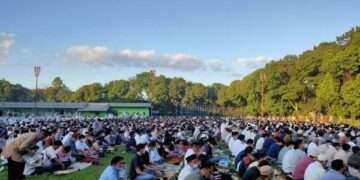


As Eid al-Fitr approaches, shopping centers often fill with crowds. An unwritten “tradition” seems to compel people to wear new clothes on the holiday. However, a closer reading of Islamic teachings suggests a different emphasis. The essence of Eid lies not in the price of one’s outfit, but in honoring the day itself.

A hadith narrates:
عَنْ جَعْفَرِ بْنِ مُحَمَّدٍ عَنْ أَبِيْهِ عَنْ جَدِّهِ أَنَّ النَّبِيِّ صَلَّى اللهُ عَلَيْهِ وَسَلَّمَ كاَنَ يَلْبَسُ بُرْدَ حِبَرَةٍ فِيْ كُلِّ عِيْدٍ
“Reported from Ja‘far ibn Muhammad, from his father, from his grandfather, that the Prophet would wear a patterned Yemeni cloak on every Eid.” (Narrated by al-Shafi‘i).
At the time, such a cloak represented refined yet reasonable clothing. Thus, the Prophet demonstrated that meeting God and gathering with fellow Muslims should involve presentable attire without excess.
“Best” Does Not Mean “Newest”
Nevertheless, a common misunderstanding equates “best” with “new.” A narration from Hasan ibn Ali, the grandson of the Prophet, clarifies this distinction:
عَنِ اْلحَسَنِ السِّبْطِ قَالَ: أَمَرَناَ رَسُوْلُ اللهِ صلى الله عليه وسلم فِيْ العِيْدَيْنِ أَنْ نَلْبَسَ أَجْوَدَ ماَ نَجِدُ وَأَنْ نَتَطَيَّبَ بِأَجْوَدِ ماَ نَجِدُ… وَأَنْ نُظْهِرَ التَّكْبِيْرَ وَالسَّكِيْنَةَ وَاْلوٍقَارَ.
“Reported from al-Hasan, the grandson of the Messenger of God, he said: We were instructed by the Prophet on the two Eids to wear the best clothes we possess, to apply the best fragrance available… and to manifest the glorification of God, along with tranquility and dignity.” (Narrated by al-Hakim).
The phrase “the best we possess” carries an important implication. It allows flexibility. A well-maintained, clean, and appropriate outfit—regardless of age—fulfills the Sunnah. Therefore, Islamic law does not require purchasing new clothes solely for display or prestige.
Moreover, Eid represents gratitude (tasyakkur) and the exaltation of God (takbir). It is not a fashion showcase or a platform for social comparison. Clothing and fragrance serve as outward expressions. Ideally, they reflect inner humility and spiritual clarity after the discipline of Ramadan.
Furthermore, elegance should align with sakinah (calmness) and wiqar (dignity). External appearance alone holds little meaning without sincerity. Expensive garments cannot replace a humble heart. Likewise, fragrance does not compensate for a lack of forgiveness or compassion.
In conclusion, preparing for Eid involves both outward readiness and inward refinement. While presentable attire is encouraged, its true purpose lies in reflecting devotion, not display.
Referensi:
Council for Religious Opinion and Reform of Muhammadiyah Central Board, Tuntunan Idain dan Qurban, Yogyakarta: Suara Muhammadiyah.